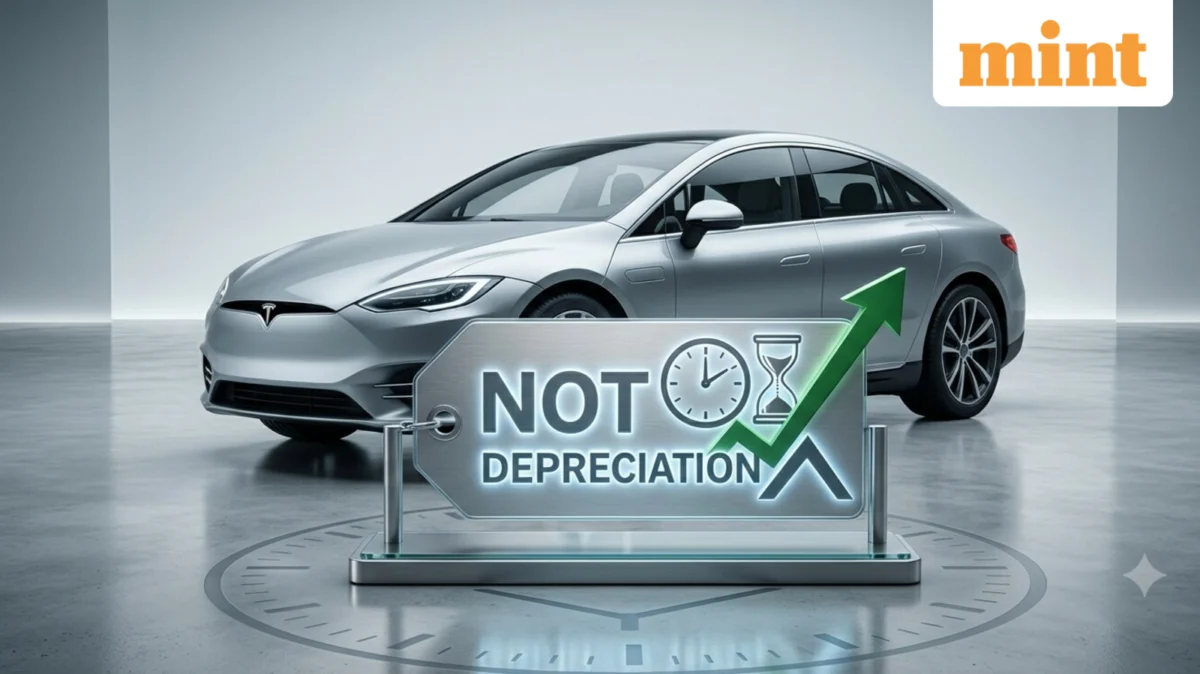
New Delhi, India – In a significant departure from prevailing financial advice, Amit Kilhor, a prominent UPSC educator, has ignited a fervent debate by challenging the widely accepted notion that purchasing a car is inherently a poor financial decision due to its nature as a depreciating asset. Kilhor argues for a paradigm shift, urging individuals to view automobiles not as investments but as essential functional purchases that yield substantial returns in time saved and enhanced utility. His provocative stance suggests that for those earning above ₹1 lakh per month, a car can be the "best investment one can make for oneself," a cornerstone of modern living that significantly boosts personal efficiency and quality of life.
Kilhor’s unconventional perspective emerged in response to a social media post, swiftly gaining traction and polarizing opinions across financial and automotive circles. He posits that the financial community’s singular focus on depreciation overlooks the profound practical benefits and time-saving potential that a personal vehicle offers, particularly in India’s often-challenging urban and semi-urban landscapes.
Main Facts: Redefining the Value of Personal Mobility
Amit Kilhor’s core argument pivots on the reclassification of a car from a purely financial asset to a vital utility. He contends that applying the "depreciating asset" label as a primary deterrent to car ownership is a "stupidest sentence in finance" when considering functional items. This bold claim seeks to dismantle a long-held tenet of personal finance, which often advises against car purchases, especially via loans, due to immediate value loss and ongoing operational costs.
According to Kilhor, the true value of a car lies in its ability to deliver convenience, independence, and, crucially, significant time savings. He estimates that owning a car can save individuals between 250 and 700 hours annually by drastically cutting down commuting time. For a working professional, especially in sprawling metropolitan areas, such a saving translates into invaluable hours that can be reinvested in work, family, leisure, or personal development.
Kilhor specifically targets individuals earning upwards of ₹1 lakh per month, advising them to consider a car purchase. He likens a car to other essential modern conveniences like mobile phones, laptops, air conditioners, and even basic necessities like food and clothing – all of which are depreciating assets but are bought for their inherent utility and contribution to daily life. He starkly differentiates these functional purchases from traditional investment vehicles such such as stocks, gold, or real estate, whose primary purpose is capital appreciation.
His perspective was crystallized in a viral X (formerly Twitter) post, which declared: "Buy a car moment anyone starts earning more than 1 lakh per month. Car is a deprecating asset is the stupidest sentence in finance. phone, food, clothes, laptops, ACs, water bottles, movies, literally everything you buy is a deprecating asset. You yourself, your body is a deprecating asset. Car is the best investment one can make for oneself. Automobile is the cornerstone of modern civilization. Get it asap." This unequivocal statement has not only challenged existing norms but also forced a re-evaluation of what constitutes a "smart" financial decision in the context of personal mobility.
Chronology: The Spark, The Rebuttal, and The Elaboration
The genesis of this debate can be traced back to an X post by user Suraj Kumar Talreja. Talreja articulated a widely held financial caution, stating his personal aversion to car loans. His reasoning was straightforward: vehicles inherently lose value over time, while the cumulative burden of interest payments, fuel expenses, insurance premiums, and maintenance costs only exacerbates the financial strain. Talreja underscored that car purchases should be driven by convenience, but never "at the cost of financial freedom," echoing the sentiment of many who prioritize long-term financial stability over discretionary spending on depreciating assets.
It was this very post that prompted Amit Kilhor’s sharp and immediate rebuttal. Kilhor’s response on X was direct and uncompromising, labeling the "depreciating asset" argument as "stupid" when applied to functional items. His initial post served as a direct challenge to Talreja’s perspective, broadening the discussion beyond individual financial choices to a fundamental re-examination of personal finance philosophy.
Following the initial social media skirmish, Kilhor further elaborated on his views in an Instagram video. In this video, he delved deeper into the concept of a "category error," explaining that confusing a utility purchase with an investment product leads to flawed decision-making. He systematically compared cars to everyday items like mobile phones, shoes, and bags – all of which lose monetary value post-purchase but are indispensable for daily life due to their practical utility. Kilhor emphasized that unlike shares, gold, or real estate, which are acquired with an expectation of profit or capital growth, cars are bought for their immediate and tangible benefits: convenience, ease of travel, and, most significantly, time efficiency.
He continued to reinforce his argument by providing practical advice on car purchasing. While advocating for ownership, he concurrently stressed the importance of financial prudence, cautioning against overspending. His advice included a benchmark: allocate roughly half of one’s annual income for a car purchase, with a slight allowance for younger buyers. He provided illustrative examples: a person earning ₹12 lakh annually should opt for an affordable model like a Maruti Suzuki Baleno, not overstretch for a Mahindra Scorpio. Similarly, an individual with a ₹30 lakh annual income should consider a Toyota rather than an Audi, aligning expenditure with sustainable financial capacity.
Kilhor also directly addressed the concern regarding car loan interest, a key point raised by Talreja. He posited that for a ₹10 lakh vehicle, an interest cost of approximately ₹80,000 over five years is "reasonable" when weighed against the immense utility and time savings offered by the vehicle. He further elaborated on depreciation, noting that a ₹10 lakh car might lose ₹5 lakh in value over five years, equating to an annual depreciation of ₹1 lakh. However, he argued that this cost must be evaluated in conjunction with the convenience, independence, and invaluable time gained, asserting that the economic value of time saved could far outweigh the annual cost of ownership.
Supporting Data: Quantifying Utility and Costs
The debate sparked by Kilhor’s assertions necessitates a deeper dive into the quantifiable aspects of car ownership, both in terms of benefits and costs.
The Economic Value of Time Saved:
Kilhor’s claim of 250-700 hours saved annually is a significant one. To put this into perspective, 250 hours is equivalent to over 10 full days, while 700 hours is nearly 29 full days. For an individual earning ₹1 lakh per month (or ₹12 lakh annually), their effective hourly wage (assuming 200 working hours a month) is ₹500.
- Saving 250 hours: ₹500/hour * 250 hours = ₹1,25,000 annually in potential productive time.
- Saving 700 hours: ₹500/hour * 700 hours = ₹3,50,000 annually in potential productive time.
This calculation underscores Kilhor’s point about the "economic value of time saved." This saved time can be used for professional development, generating additional income through side hustles, spending quality time with family, or engaging in hobbies that improve mental well-being. In urban centers like Mumbai, Bengaluru, or Delhi, where average daily commute times can exceed 90 minutes one-way, the ability to halve this or eliminate multiple transfers can indeed free up substantial portions of one’s day.
Costs of Car Ownership in India (Illustrative):
While Kilhor touches upon interest and depreciation, a comprehensive view includes other substantial costs:
- Depreciation: As Kilhor notes, a significant cost. For a new car, depreciation can be as high as 15-20% in the first year alone, stabilizing somewhat thereafter. His example of ₹1 lakh annually for a ₹10 lakh car over five years (50% depreciation) is realistic.
- Interest on Loan: For a ₹10 lakh car loan over 5 years at an average interest rate of 8.5% p.a., the total interest paid could indeed be in the range of ₹2.25 lakh to ₹2.5 lakh, making Kilhor’s ₹80,000 figure (likely an average annual interest cost in an early year, or a highly conservative estimate) a point of contention for some. The total cost, however, is substantial.
- Fuel: With fluctuating petrol/diesel prices, fuel can be a major recurring expense. Assuming an average monthly travel of 1,000 km for a car with 15 kmpl mileage, and petrol at ₹100/litre, the monthly fuel cost would be approximately ₹6,667, totaling around ₹80,000 annually.
- Insurance: Comprehensive insurance for a new ₹10 lakh car can range from ₹25,000 to ₹40,000 annually, decreasing slightly each year.
- Maintenance & Servicing: Annual service costs, wear and tear parts (tyres, brakes), and occasional repairs can easily amount to ₹10,000 to ₹25,000 per year, if not more, for a well-maintained vehicle.
- Parking: In many urban areas, parking fees at home and work can add several thousands rupees monthly, easily exceeding ₹20,000 annually.
- Taxes & Registration: One-time costs, but significant.
Summing these up, the annual recurring cost of owning a ₹10 lakh car (excluding the capital cost/loan principal) could realistically range from ₹2.5 lakh to ₹3.5 lakh, when factoring in depreciation, fuel, insurance, maintenance, and parking. This is a substantial outflow, which is precisely why traditional financial advisors caution against it.
Beyond the Numbers: Quality of Life and Opportunity:
Beyond the direct financial calculations, car ownership offers intangible benefits:
- Freedom and Flexibility: Unrestricted travel, spontaneous trips, ability to transport goods or family members.
- Safety and Comfort: Especially for women, children, and the elderly, a personal vehicle can offer a safer and more comfortable travel experience compared to crowded public transport or ride-sharing.
- Access to Opportunities: Enables individuals to pursue job opportunities further from home, access better healthcare facilities, or reach educational institutions not well-served by public transport.
- Family Convenience: Essential for families with young children, elderly parents, or those requiring frequent travel for errands, school runs, or medical appointments.
Kilhor’s argument implicitly values these intangible benefits, suggesting that their collective worth, especially the economic value of saved time, can offset the significant financial outlay.
Official Responses: Diverse Perspectives on Financial Prudence
While Kilhor’s views have resonated with many, they also stand in stark contrast to the consensus among many mainstream financial advisors and economists, who often counsel caution regarding significant expenditure on depreciating assets.
Traditional Financial Advisors:
Most financial planners would acknowledge the utility of a car but would place it within a broader framework of financial health. Their typical advice would include:
- Prioritize Financial Goals: Ensure essential financial goals like an emergency fund (6-12 months of expenses), adequate insurance coverage (life, health), and retirement savings are well-established before considering a major discretionary purchase like a car.
- Debt Management: Advise against taking on "bad debt" (debt for depreciating assets) when "good debt" (home loans, education loans that can build equity or enhance earning potential) is also a factor. They would highlight the interest cost as an opportunity cost – that money could have been invested in appreciating assets.
- Holistic Cost-Benefit Analysis: While acknowledging utility, they would emphasize a thorough calculation of all ownership costs (depreciation, interest, fuel, maintenance, insurance, parking) against perceived benefits.
- Alternatives: Encourage exploring alternatives like ride-sharing services (Uber, Ola), public transportation, or even carpooling, which can offer convenience without the full financial burden of ownership.
- "Rule of Thumb" for Car Purchase: Many advisors suggest that the total cost of a car (including loan, insurance, and running costs) should not exceed 10-15% of one’s monthly take-home income, or that the car’s value should not exceed 20-30% of one’s net worth. Kilhor’s "half of annual income" benchmark, while aiming for affordability, might still be considered high by some conservative advisors, especially for those just starting to build wealth.
Automotive Industry:
From the perspective of car manufacturers and dealerships, Kilhor’s arguments are undoubtedly welcome. Any discourse that encourages car ownership and frames it as a beneficial lifestyle choice, rather than a financial drain, directly supports their business model. They would naturally align with the emphasis on convenience, safety, and freedom that a personal vehicle provides, actively marketing these aspects.
Urban Planners and Environmentalists:
A broader societal lens reveals potential drawbacks. Increased car ownership, while beneficial for individuals, can exacerbate urban challenges:
- Traffic Congestion: More cars on the road lead to slower commutes for everyone, negating some of the individual time savings. Indian cities already grapple with severe traffic issues.
- Pollution: A higher number of internal combustion engine vehicles contributes to air pollution, a major public health crisis in India.
- Infrastructure Strain: Requires more roads, parking spaces, and maintenance, diverting public funds that could be used for other essential services or improving public transport.
Urban planners often advocate for robust public transport systems, cycling infrastructure, and walkable cities to reduce reliance on private vehicles, promoting sustainable urban living.
These contrasting viewpoints highlight the complexity of the "car ownership" debate, extending beyond individual financial calculations to encompass societal, environmental, and infrastructural considerations.
Implications: Reshaping Personal Finance and Mobility Choices
Amit Kilhor’s outspoken views carry several significant implications, potentially reshaping personal finance discourse and influencing individual mobility decisions.
Challenging Conventional Wisdom:
Kilhor’s primary contribution is his direct challenge to a deeply ingrained financial dogma. By labeling the "depreciating asset" argument as "stupid" for functional purchases, he forces individuals and financial educators to reconsider the blanket application of investment principles to every expenditure. This could encourage a more nuanced discussion where the "return on investment" is measured not just in monetary terms, but also in terms of quality of life, efficiency, and well-being. This shift in perspective could empower individuals to make choices that align better with their lifestyle needs, rather than feeling constrained by overly rigid financial rules.
Empowering the Middle Class:
For the growing Indian middle class, particularly those now crossing the ₹1 lakh monthly income threshold, Kilhor’s advice offers a validation of their aspirations. A car in India is often seen as a status symbol, but also as a practical necessity for family mobility and safety. By reframing it as a "best investment for oneself," he potentially removes some of the guilt or financial apprehension associated with such a significant purchase, especially when it genuinely enhances their daily lives. This could lead to an uptick in car sales within this demographic, assuming affordability measures are followed.
The Nuance of Financial Freedom:
The debate also forces a re-evaluation of "financial freedom." While Talreja rightly links it to avoiding debt and preserving capital, Kilhor implicitly argues that freedom also encompasses the freedom of movement, the freedom to save time, and the freedom from the inconveniences of suboptimal transport. The true definition of financial freedom, therefore, might lie in a balanced approach that allows for strategic spending on items that genuinely improve one’s life, provided core financial responsibilities are met.
A Holistic Decision-Making Framework:
Ultimately, the rich discussion sparked by Kilhor’s comments leads to a more holistic framework for consumers considering a car purchase. This framework should integrate:
- Income and Savings: Adhering to Kilhor’s advice on spending within means (e.g., half of annual income) and ensuring core financial goals (emergency fund, retirement) are on track.
- Lifestyle Needs: Evaluating family size, daily commute, job requirements, frequency of travel, and availability/reliability of alternative transport options.
- Time Value: Calculating the economic value of time saved and weighing it against the total cost of ownership.
- Long-Term Financial Impact: Understanding the full spectrum of costs (depreciation, interest, fuel, maintenance, insurance, parking) and how they fit into the overall budget.
- Alternatives: Exploring whether ride-sharing, carpooling, or enhanced public transport could serve similar needs at a lower cost.
Future of Mobility:
The ongoing evolution of mobility solutions—from electric vehicles (EVs) with lower running costs to advanced public transport networks, and the rise of subscription-based car usage—will continue to influence this debate. As EVs become more affordable and infrastructure improves, the "depreciating asset" argument might shift, given potentially lower maintenance and fuel costs. Similarly, efficient public transport could reduce the perceived utility gain from personal car ownership.
In conclusion, Amit Kilhor’s bold stance is more than just a piece of financial advice; it’s a philosophical challenge to how we perceive value in a rapidly modernizing society. By championing personal mobility as a functional imperative and a time-saving asset, he has undoubtedly injected a fresh and much-needed perspective into the discourse around car ownership, urging individuals to weigh utility and quality of life alongside traditional financial metrics.