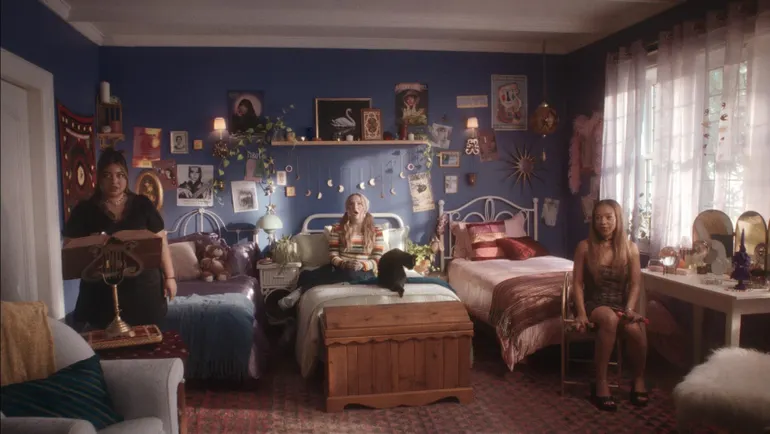
In the rapidly evolving landscape of beauty marketing, few brands have mastered the art of cultural synchronization as effectively as E.l.f. Cosmetics. As the leaves turn and the air grows crisp, the brand has tapped into the burgeoning “witchy” zeitgeist with its latest campaign, “The e.l.f.ing Magical Sisters.” By blending 90s nostalgia, supernatural aesthetics, and the sharp, self-aware humor of Gen Z, E.l.f. has once again proven that beauty products can serve as conduits for narrative-driven entertainment.
This latest endeavor, which promotes the brand’s Soft Glam Cream Blush and Bronzer Stick collection, is more than a standard product launch; it is a masterclass in community-centric storytelling. As modern consumers move away from traditional, sterile advertisements in favor of content that feels like genuine entertainment, E.l.f. is positioning itself not just as a makeup provider, but as a production house capable of capturing the cultural zeitgeist in real-time.
The Genesis of the Coven: A Cultural Convergence
The “witchy” trend has been steadily rising, reflected in a recent wave of fashion editorials, lifestyle trends, and pop culture revivals. From the dark romanticism dominating runways to the enduring fascination with “coven-core” aesthetics, the timing was ripe for a brand to claim this space. E.l.f. identified this intersection early, utilizing a “listen-learn-lean in” framework that has become the hallmark of their creative strategy.
According to Ashley Rosebrook, chief creative officer at E.l.f. Beauty, the inspiration for the campaign was born directly from the digital chatter of their core consumer base. “Our community was already saying and telling us these products are so creamy, so blendable and so amazing — they’re like magic,” Rosebrook explained. “When they heard that feedback, it was an ‘aha’ moment.”
Recognizing the potency of that word—magic—the brand began to weave a narrative. By aligning the product’s performance with the mystical tropes of iconic 90s television shows like Charmed and cult-classic films like Practical Magic, E.l.f. tapped into a vein of nostalgia that resonates deeply with Gen Z, while simultaneously hitting a sweet spot for the Millennials and Gen Xers who grew up with these cultural touchstones.
Chronology of a Campaign: From Concept to Viral Success
The execution of “The e.l.f.ing Magical Sisters” was a feat of strategic speed, facilitated by the brand’s internal entertainment arm, E.l.f. Made.
Phase 1: Conceptualization and Casting
Following the internal realization that the products’ texture felt “magical,” the creative team—led by Rosebrook and Vice President/Creative Director Desi Gallegos—sought to create a narrative that felt authentic to the brand’s irreverent voice. They tapped into the talent pool of young Hollywood, securing Priah Ferguson (Stranger Things), Keyla Monterroso Mejia (The Studio), and Bebe Wood (Mean Girls, 2024) to portray a trio of sisters discovering their supernatural beauty powers.
Phase 2: Production and Collaboration
The campaign was crafted in partnership with Saturday Night Live alum Anna Drezen and directed by the acclaimed Hannah Levy of Hungryman Productions. The collaboration ensured that the campaign struck the perfect balance between high-gloss beauty imagery and the self-deprecating, irony-laden humor that Gen Z audiences crave. The script intentionally wove in contemporary lexicon—words like “snatched” and “delulu”—to ground the supernatural premise in modern, online-native reality.
Phase 3: The Launch and Cultural Saturation
On September 30, the hero video went live across YouTube, TikTok, and Instagram. The timing was deliberate, coinciding with the approach of “spooky season” and the heightened media buzz surrounding the upcoming Practical Magic 2. By the time the campaign hit, the cultural conversation had already been primed for witchy content, allowing E.l.f. to insert itself seamlessly into the feed.
Supporting Data: Why the Magic Works
The success of “The e.l.f.ing Magical Sisters” is not merely anecdotal; the metrics provide a compelling argument for the brand’s “entertainment-first” approach.
- Engagement Dominance: The campaign’s hero video secured its place as the brand’s most engaged Instagram post for the month of September, boasting the highest engagement rate of any content released by E.l.f. in that period.
- Customer Acquisition: Internal sales data from May through September 2026 highlights a significant conversion rate, with 50% of the purchasers of the Soft Glam Cream Blush and Bronzer Sticks identified as new customers to the brand.
- Community Feedback: The sentiment analysis of social media comments suggests that consumers are not just purchasing the products; they are emotionally invested in the narrative. Many users have publicly requested that E.l.f. develop the short ad into a full-length episodic series, signaling a high level of brand affinity.
These figures underscore a critical truth in modern marketing: when a brand provides content that users genuinely want to watch, the barrier between “ad” and “media” dissolves.
Official Perspectives: The “E.l.f. Made” Philosophy
The success of this campaign rests squarely on the shoulders of E.l.f. Made, the in-house entertainment operation launched in 2024. For Rosebrook, E.l.f. Made represents a shift away from the traditional agency-client model toward a more agile, high-speed approach.
“We’re always looking for what feels really authentic to what our community really says,” Rosebrook stated. “It was the perfect intersection of all these things, and we could bring the idea to life very quickly with relevant talent in a way that we thought was really timely.”
The team’s commitment to authenticity goes as far as internal testing with younger generations. Rosebrook noted that she often consults her 16-year-old daughter to ensure that the slang and the tone resonate with the target demographic. This hyper-local, community-driven approach ensures that even when the brand dips into high-concept fantasy, it never loses its grounding in the real-world experiences of its users.
Implications: The Future of Beauty Marketing
The broader implications of this campaign are significant for the beauty industry. As traditional advertising continues to see diminishing returns among younger cohorts, brands are being forced to pivot toward the “Entertainment Marketing” model pioneered by companies like E.l.f.
1. The Death of the Traditional Ad
The success of “The e.l.f.ing Magical Sisters” suggests that consumers are no longer interested in standard “before-and-after” tutorials. Instead, they want lore, characters, and narrative arcs. Brands that can transform their products into cultural artifacts—whether through music, short-form series, or high-concept satire—will find themselves with a significant competitive advantage.
2. Agility is the New Scale
Historically, large beauty brands relied on massive, multi-month lead times for campaigns. E.l.f.’s model proves that agility—being able to move from an “aha moment” to a full-scale production in a matter of weeks—is far more valuable in an era of 24-hour social media cycles.
3. The Power of "Cultural Elasticity"
Rosebrook noted that the brand loves “stretching the elasticity” of its identity. By moving into the genre of supernatural comedy, E.l.f. has shown that a brand’s personality does not need to be static. As long as the core value proposition remains clear—in this case, the “magical” blendability of the products—the brand can inhabit any creative space it chooses.
4. Cross-Generational Appeal
Finally, the campaign highlights the power of nostalgia as a unifying force. By leveraging the specific aesthetic of the 90s/Y2K era, E.l.f. successfully bridged the gap between Gen Z, who consume the era as an aesthetic, and older Millennials and Gen Xers, who remember it as a lived experience.
Conclusion
“The e.l.f.ing Magical Sisters” is a testament to the fact that when marketing is treated with the same creative rigor as film or television, the results can be transformative. By listening to its community, reacting with speed, and embracing the absurdity of its own brand mythology, E.l.f. has successfully cast a spell on the beauty industry. As the line between consumer products and pop culture continues to blur, the brands that win will be those that, like E.l.f., realize that they are not just selling makeup—they are producing the next great episode of the viewer’s life.