In the high-stakes theater of global finance, a peculiar narrative is unfolding in the African mobile-money landscape. Airtel Money, the fintech arm of the telecommunications giant Airtel Africa, has officially arrived on the London Stock Exchange with a valuation of approximately $7 billion. On the surface, the numbers are staggering: a business generating $1.35 billion in revenue for the 2026 fiscal year with a remarkably lean corporate footprint. Yet, beneath the veneer of this massive valuation lies a business model that challenges traditional definitions of a "fintech company."
Airtel Money is not a digital bank in the traditional sense, nor is it a complex investment platform. Instead, it serves as a sophisticated, high-velocity conduit for physical cash. In a region where digital adoption is rising but cash remains king, Airtel Money has built an empire not on algorithms, but on the back of 2.3 million physical agents—small-shop owners who act as the vital bridge between digital wallets and tangible currency.
The Anatomy of the Model: Efficiency at Scale
The most striking statistic regarding Airtel Money is its lean operational structure. According to its listing prospectus, the company employs just over 300 people across 13 African nations. To put this in perspective, that equates to more than $4 million in revenue per employee. By contrast, traditional global banking institutions struggle to reach a fraction of this efficiency.
However, this "lean" headcount is misleading. The actual heavy lifting of the business is outsourced to a massive, decentralized network of 2.3 million agents. These are not corporate employees; they are the corner-store merchants, kiosk operators, and small-business owners who facilitate the cash-in and cash-out transactions that define the African mobile-money experience.
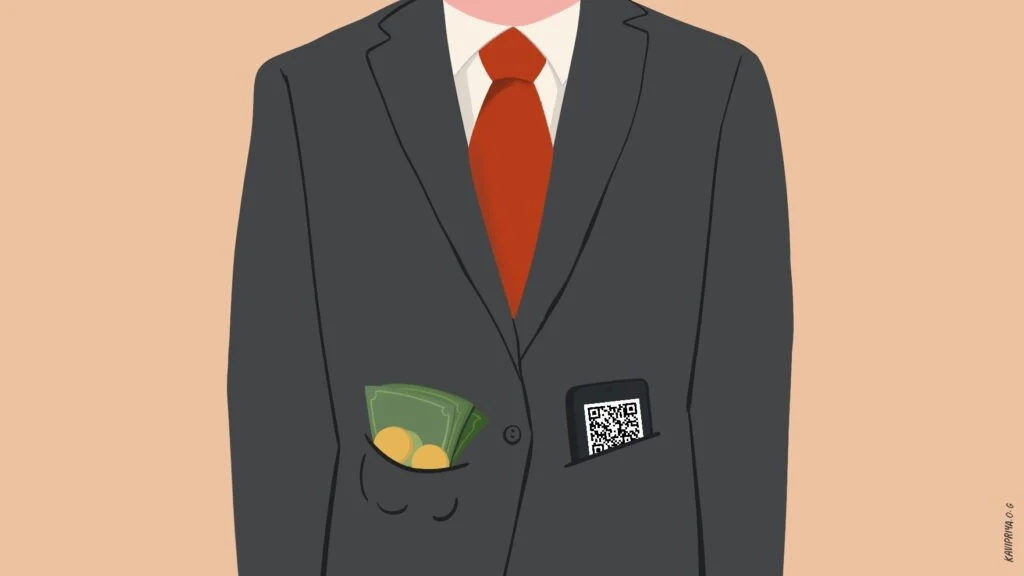
For the average user, the wallet is less of a long-term storage vault and more of a "digital envelope." A recent report by Affinity Africa on the continent’s cash dependency highlights a critical behavioral trend: more than 90% of mobile-money value is withdrawn as soon as it arrives in a user’s account. This "velocity of money" model means that the platform functions primarily as a transit layer rather than a repository for wealth.
Chronology of a Digital Revolution
The rise of Airtel Money did not occur in a vacuum; it is the culmination of over a decade of rapid telecommunications expansion in Africa.

- Early 2010s: Mobile penetration begins to skyrocket, but traditional banking infrastructure remains largely inaccessible to rural populations. Telecom operators realize that their massive subscriber bases are the perfect foundation for basic financial services.
- Mid-2010s: The "Mobile Money" (MoMo) revolution takes hold. Airtel, alongside competitors like MTN and Safaricom (via M-Pesa), begins formalizing airtime-based transfers, which eventually evolve into complex digital wallets.
- 2020-2024: The pandemic accelerates the shift away from physical banking branches. Governments and central banks across the continent begin to embrace digital payments to improve financial inclusion.
- 2026: Airtel Money separates its fintech operations to prepare for its debut on the London Stock Exchange, marking a transition from a mere value-added service to a standalone financial behemoth.
Supporting Data: The Competitive Landscape
While Airtel Money’s valuation is impressive, it is important to situate it within the broader African ecosystem. It is not the largest player in the "envelope" business. That title is contested by industry titans like MTN MoMo, which boasts over 70 million users, and the undisputed pioneer, Vodacom’s M-Pesa, which has scaled to over 103 million users.
Airtel Money’s primary competitive advantage is not necessarily its technology, but its parentage. Airtel Africa, the telecommunications giant, provides a built-in ecosystem. Access to an Airtel Money wallet is gated: only Airtel mobile subscribers can open one. This creates a powerful flywheel effect where the mobile network subsidizes the acquisition of fintech users.
The financial symbiosis between the parent company and its fintech arm is substantial. In the last fiscal year, Airtel Africa entities paid Airtel Money roughly $265 million—nearly 20% of the fintech’s total revenue—for services including airtime sales, utility bill collections, and bulk corporate payouts. This captive customer base ensures a steady revenue stream that is largely insulated from the volatility of the broader startup market.
The "UPI" Question: Why Africa is Different
Observers often compare Africa’s digital payment surge to India’s Unified Payments Interface (UPI). However, the two systems are fundamentally different. UPI is an open-loop system that allows instant, free, and bank-agnostic transfers. It has effectively digitized the economy without needing a middleman for every transaction.
In contrast, Africa’s mobile-money ecosystem remains largely "closed-loop." To move money from an Airtel wallet to an MTN wallet, or from a wallet to a bank, often involves friction and fees. The lack of a unified, interoperable infrastructure is precisely why the agent model remains so lucrative. Because users cannot easily pay a merchant directly from their phone in a seamless, instant way across all platforms, they continue to withdraw cash to complete their daily commerce.
This "cash dependency" is the lifeblood of the agent model. As long as the digital ecosystem remains fragmented, the agents will continue to be the essential pillars of the economy.

Implications for the Future
The London Stock Exchange listing of Airtel Money signifies a maturation point for African fintech. Investors are no longer just looking at early-stage startups with high burn rates; they are looking at established, cash-flow-positive infrastructure plays.
However, the path forward is not without risks.
- Regulatory Scrutiny: As mobile money becomes more central to national economies, central banks are beginning to look closer at transaction fees and data privacy. Increased regulation could force a compression of margins.
- Interoperability: Should African nations move toward a more "UPI-like" interoperable system, the reliance on the agent network—and the associated cash-out fees—could diminish. This would force companies like Airtel Money to pivot from being transaction processors to being full-service financial providers.
- Digital Literacy and Trust: While mobile adoption is high, the "digital envelope" behavior indicates a lingering distrust of keeping funds in digital accounts. Building trust to the point where users store their savings, rather than just moving their cash, is the next frontier for these companies.
Conclusion: A Platform, Not Just a Product
The $7 billion valuation of Airtel Money serves as a powerful validation of the "platform" strategy. By leveraging the vast reach of mobile telephony and the indispensability of physical agent networks, Airtel Money has successfully navigated the complexities of the African market.
For the average user in Nairobi or Lusaka, the service is a necessity for survival—a way to bridge the gap between a digital world and a cash-based reality. For investors in London, it is a bet on the continued digitization of the continent. Whether this business model can evolve from a "digital envelope" into a comprehensive financial engine will define the next decade of African economic development. For now, the company remains a testament to the fact that in Africa, the most advanced financial technology is still deeply rooted in the physical world.