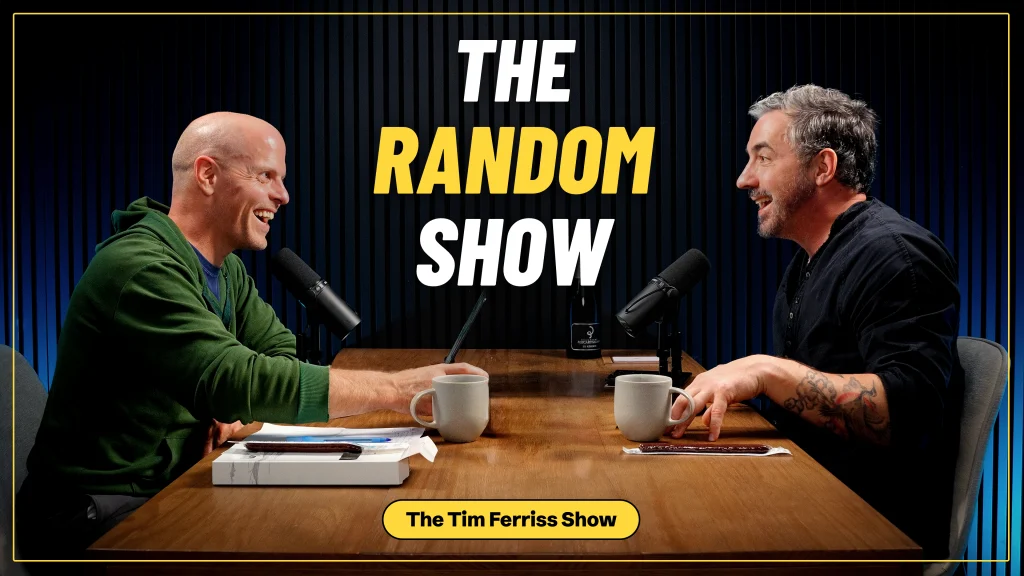
In the rapidly evolving landscape of personal development, technology, and biohacking, few conversations carry as much weight as the long-running "Random Show" podcast. Recently, Tim Ferriss—best-selling author and podcast host—reunited with entrepreneur and tech visionary Kevin Rose in Los Angeles for an expansive dialogue that spanned the gamut from the bleeding edge of artificial intelligence to the nuances of physiological longevity.
The episode, which serves as a candid window into the minds of two of the most influential figures in the modern optimization movement, offers a roadmap for navigating an increasingly complex world. Whether discussing the integration of "agentic" AI into daily routines or debating the efficacy of niche supplements for physical endurance, the conversation captures the intersection of high-tech lifestyle design and ancient biological inquiry.
Main Facts: The Intersection of Tech and Biology
At the heart of the latest installment of The Random Show is the tension between human limitations and technological acceleration. Ferriss and Rose explore a wide array of topics, anchored by a shared interest in "life-hacking"—the practice of using data, tools, and behavioral adjustments to improve one’s quality of life.
Key themes discussed in this session include:
- AI Super Assistants: The transition from passive AI chatbots to "agentic" systems—AI that can autonomously execute complex, multi-step tasks like shopping or managing schedules via text message.
- Biohacking and Supplements: An exploration into the practical application of substances such as beta-alanine for climbing endurance, as well as the impact of dietary choices like walnuts on reproductive health.
- Dream Engineering: A deep dive into the psychological and neuroscientific implications of managing dreams and the surreal experiences often associated with anesthesia-induced sleep.
- Lifestyle Optimization: A wide-ranging look at unconventional topics, including "man makeup," the aesthetics of modern masculinity, and the high-stakes world of physical wagers, such as a Jean-Claude Van Damme-inspired splits bet.
Chronology: A Trajectory of Exploration
The history of The Random Show is characterized by its organic, unscripted nature. Unlike traditional interview podcasts, this series functions as an ongoing conversation between two longtime friends who have witnessed the evolution of Silicon Valley and the health-tech industry over the last two decades.
- The Early Days: The partnership between Ferriss and Rose traces back to the early 2000s, rooted in their mutual involvement in the tech sector, specifically through platforms like Digg and the early blogosphere.
- The Evolution of the Show: Over the years, the show has shifted from informal tech gossip to a serious repository of information regarding longevity, investment strategies, and emerging technologies.
- The Current Moment: The latest episode in Los Angeles represents a maturation of these themes. The conversation has moved beyond mere "productivity" toward a focus on "agency"—how individuals can maintain control of their lives as AI takes over the mechanical processes of daily decision-making.
Supporting Data: The Science Behind the Talk
The credibility of The Random Show rests on its reliance on both anecdotal evidence and emerging scientific research. Throughout this episode, the hosts highlight several areas of interest currently being studied by the scientific community.
1. The Role of Urolithin A and Mitophagy
A major focal point of the episode’s commercial support and thematic discussion is Mitopure, a form of Urolithin A. The science focuses on "mitophagy"—the body’s ability to recycle old, inefficient mitochondria. As aging occurs, this process slows down, leading to cellular fatigue. Research cited during the discussion points to the fact that while some people produce Urolithin A naturally through gut bacteria, many do not, making supplementation a potentially vital intervention for cellular health.
2. Beta-Alanine and Climbing Endurance
The discussion of beta-alanine is particularly relevant for those involved in high-intensity, anaerobic exercise, such as rock climbing. Beta-alanine acts as a buffer against acidity in the muscles, potentially extending the time to exhaustion during intense physical exertion.
3. AI Agentic Capabilities
The hosts discuss the shift toward AI systems that do not just provide information but perform actions. This shift is supported by the rapid integration of AI tools within the corporate sector, where companies like Anthropic use AI agents to manage complex, multi-layered customer service queries that previously required significant human labor.
Official Responses and Industry Context
The rise of the technologies discussed—specifically AI agents—has prompted significant discourse within the tech industry.
- The AI Agent Paradigm: Industry leaders, including the teams at Anthropic (creators of the Claude AI model), suggest that the future of enterprise software is not a better user interface, but better agentic capabilities. The ability of an AI to "run your life" via text message is the logical conclusion of current research into large language models (LLMs).
- Health and Longevity: The supplement industry continues to face scrutiny, yet the focus on "clinical trials" and "peer-reviewed research" remains a hallmark of the Ferriss/Rose approach. By grounding their conversations in data-backed products like those from Timeline Nutrition, they bridge the gap between "fringe" biohacking and legitimate medical science.
Implications: The Future of Personal Agency
The overarching implication of this episode is the looming challenge of maintaining human autonomy in a world of automated systems. As AI agents become more sophisticated, the role of the individual shifts from "worker" or "executor" to "architect" or "director."
The "Super Assistant" Era
If an AI can handle your shopping, your scheduling, and even your customer service queries, the bottleneck for success is no longer labor—it is creativity and intent. The conversation highlights that as these tools become more powerful, the most important skill for the modern individual will be the ability to define what they want the AI to do.
The Psychology of Optimization
The inclusion of topics like "dream engineering" and "anesthesia dreams" underscores a move toward exploring the subconscious as the final frontier of self-improvement. The implication is that we are moving toward a future where our internal states—our sleep, our dreams, and our focus—are as manageable and tunable as our external work calendars.
A Call to Stewardship
Despite the focus on technological acceleration, there is an underlying current of caution. The emphasis on physical health, strength training, and genuine, in-person human connection (as evidenced by the "Random Show" format itself) serves as a counterweight to the digital trends discussed. The message is clear: while AI can optimize the mechanics of life, it cannot replace the essence of the human experience.
Conclusion: Bridging the Gap
The latest episode of The Random Show is more than just a collection of curiosities; it is a synthesis of the current zeitgeist. By pairing the rapid-fire, high-tech innovations of AI with the slow, deliberate work of biological maintenance, Ferriss and Rose provide a roadmap for the modern age.
For listeners, the takeaway is twofold: first, embrace the tools that provide leverage—whether that is an AI agent to handle the minutiae of daily tasks or a supplement to optimize cellular function. Second, maintain the discipline required to stay grounded in the physical world. As we look toward a future where "super assistants" and "dream engineering" become commonplace, the ability to remain human, intentional, and physically resilient will be the ultimate competitive advantage.
For those interested in the full breadth of the discussion, the episode is available across all major podcast platforms, including Apple Podcasts, Spotify, and YouTube.