The global movement toward hardware transparency reached a significant milestone in September 2026 as the Open Source Hardware Association (OSHWA) continued its mission to codify and validate the collaborative spirit of engineering. With the addition of 30 new projects to its certification database, the total number of verified open-source hardware designs has climbed to 3,431. This ongoing initiative serves as a cornerstone for the maker community, ensuring that when a creator affixes the OSHWA certification logo to their device, they are making a verified promise of openness, accessibility, and community-driven design.
Main Facts: Defining the Standard
The OSHWA certification program is more than a badge of honor; it is a rigorous process that requires creators to adhere to the community-vetted "Definition of Open Source Hardware." To earn certification, a project must demonstrate that its design files, schematics, and documentation are publicly available and legally unencumbered, allowing others to study, modify, distribute, and manufacture the hardware.
The 30 projects added in September represent the diversity of the modern open-source landscape. From advanced educational tools designed to democratize physics to sophisticated cybersecurity apparatuses that protect user data, the breadth of these contributions underscores the evolution of "do-it-yourself" technology. By providing a standardized mechanism to certify hardware, OSHWA effectively bridges the gap between hobbyist tinkering and professional-grade engineering, fostering an ecosystem where innovation is a cumulative, rather than proprietary, process.

A Chronology of Progress: September’s Notable Additions
The influx of 30 new certifications in September continues a trend of steady, year-over-year growth for the open-source hardware movement. Each certification represents hours of collaborative development, rigorous testing, and a commitment to public knowledge. Among the standout entries for the month, three projects exemplify the practical utility and ingenuity found within this community.
1. Photogate V2 (UID AR000006)
Education is perhaps the most vital beneficiary of the open-source movement. The Photogate V2, developed with accessibility in mind, is an essential tool for physics classrooms. By utilizing an ESP32-based controller, infrared sensors, and a user-friendly interface, it provides students with a low-cost, high-performance instrument to measure velocity and acceleration. Crucially, the design relies on 3D-printable mechanical components, allowing schools with limited budgets to assemble their own laboratory-grade equipment. This project serves as a prime example of how open-source hardware can remove financial barriers to high-quality STEM education.
2. ChamberFlux (UID US002855)
As 3D printing becomes a staple in home and workshop environments, the need for air quality control has become increasingly apparent. The ChamberFlux is an innovative, open-source solution designed to improve air circulation and filtration within enclosed 3D printers. By integrating seamlessly with existing filtration systems, it optimizes airflow to better manage ultrafine particles and fumes. This project highlights the "community-fix" ethos: when users identify a common pain point in consumer hardware, they develop a robust, open-source solution that the entire community can adopt and refine.

3. Cerebus (UID MX0000041)
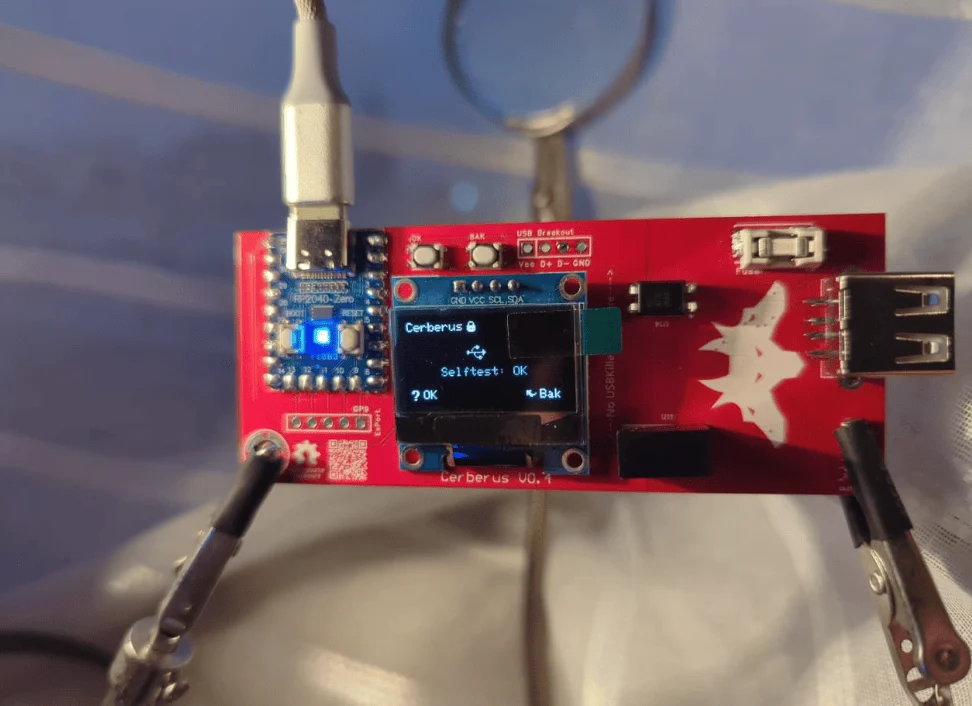
In an era of increasing digital vulnerability, the Cerebus device offers a critical layer of physical security. This pocket-sized diagnostic tool is designed for users who need to verify the safety of unknown USB devices before plugging them into a workstation. By monitoring the voltage and behavior of a storage device, the Cerebus—equipped with an OLED screen and color-coded LEDs—can warn users of potential malicious intent, such as voltage spikes or unauthorized file transfers. It transforms a high-stakes moment of digital risk into an informed, observable process.
Supporting Data: The Scale of Openness
The growth of the OSHWA database—now boasting 3,431 entries—provides more than just a list of hardware; it offers a historical record of the collective intellectual output of the global engineering community. Data analysis of these certifications reveals several trends:
- Geographic Diversity: Certifications are originating from an increasingly global base of contributors, with significant hubs in North America, Europe, and South America.
- Sector Breadth: While early open-source hardware focused heavily on microcontrollers and breakout boards, current certifications span across medical devices, industrial automation, agricultural tech, and environmental sensors.
- Cycle Speed: The consistent monthly addition of 20–40 new certifications indicates a robust pipeline of development, proving that open-source hardware is a sustainable, long-term methodology for product development.
Official Responses and Institutional Impact
The success of these certifications has not gone unnoticed by the broader technology sector. In recent statements, OSHWA officials have emphasized that the certification process is not merely a bureaucratic checkbox, but a vital component of protecting the rights of users. By clearly defining what constitutes "open," OSHWA prevents the dilution of the term and ensures that corporations cannot "open-wash" proprietary products to gain marketing leverage.

"The goal," says Sid Drmay, the Community Coordinator for OSHWA, "is to create a world where the hardware that governs our lives is something we can understand, repair, and trust." This sentiment reflects the broader institutional stance that transparency is a prerequisite for security and sustainability. As more entities join the ecosystem—ranging from individual inventors to educational institutions and startups—the OSHWA certification acts as the "gold standard" of legitimacy.
Implications for the Future of Tech
The implications of this open-source acceleration are profound. By shifting the paradigm from "black-box" consumer electronics to transparent, modifiable hardware, the community is building a more resilient technological future.
Sustainability and the Right to Repair
The most immediate implication is the shift in the product lifecycle. Devices like the ChamberFlux and Photogate V2 are designed to be repaired and modified, not discarded. In a world grappling with e-waste, this design philosophy is essential. When users possess the schematics for their tools, they gain the "Right to Repair" by default, extending the lifespan of their equipment and reducing the environmental impact of consumer technology.

Democratization of Innovation
When a device like the Cerebus is open-sourced, it is not just a product; it is a blueprint for others to learn from. Aspiring engineers can examine the circuit board layouts, read the firmware code, and understand the logic behind the device’s security protocols. This creates an "educational compounding effect" where each generation of hardware is built upon the successes and failures of the previous one. The barriers to entry for advanced engineering are effectively lowered, allowing individuals in underserved regions to access the same technological capabilities as those in major tech hubs.
A New Security Paradigm
Finally, the adoption of open-source hardware in the security space—as seen with the Cerebus—signals a fundamental shift in how we approach trust. "Security through obscurity" is increasingly viewed as a failure of design. By utilizing open-source hardware, developers invite the community to audit their code and circuits, leading to more robust, hardened designs that are less likely to contain hidden backdoors or critical vulnerabilities.
Conclusion: How to Participate
The momentum gained in September 2026 is a testament to the dedication of creators worldwide. As the OSHWA database continues to expand, it remains a beacon for those who believe that technology should be a public good.

Whether you are a seasoned engineer looking to certify your latest project or an educator hoping to bring open-source tools into your classroom, the pathway to participation is open. Creators are encouraged to visit the official OSHWA Certification website to begin the process. For those who wish to stay informed on the latest developments, the OSHWA certification bot on Mastodon provides real-time updates as new devices are verified.
In the coming months, the association expects to see even greater integration of artificial intelligence and machine learning into open-source hardware designs. As these technologies evolve, the OSHWA standards will serve as the necessary guardrails, ensuring that even the most complex future technologies remain transparent, accountable, and, above all, open. As the community continues to grow, one thing is clear: the future of hardware is not behind closed doors—it is in the hands of the makers who build, share, and verify the tools that define our modern age.