In an era defined by information overload, the siren song of "productivity hacks" has led many to believe that reading—the oldest technology for knowledge transfer—is a process that needs to be optimized for speed. From apps that flash words across a screen at 800 words per minute to audiobooks played at triple speed, the cultural obsession with "blazing through" books has reached a fever pitch.
However, a growing chorus of thinkers and scholars, led by figures like author and strategist Ryan Holiday, suggests that this pursuit of speed is not merely a vanity project—it is a fundamental misunderstanding of how the human mind absorbs wisdom. In reality, the quest to read faster is often a direct path to reading less effectively.
The Myth of the "Fast Reader"
The central premise of the speed-reading industry is that the human eye and brain are capable of processing complex, nuanced information at speeds significantly higher than the average reading pace. Proponents promise that with the right technique, one can finish a book in an hour, retaining every vital detail.
Yet, when one surveys the historical landscape of the world’s most profound thinkers—from the polymaths of the Enlightenment to the literary giants of the 20th century—the concept of a "speed reader" is conspicuously absent. There is no historical record of a great philosopher, scientist, or leader who attributed their intellectual output to a high words-per-minute rate.
Instead, history shows that great readers are characterized by their deliberation. Figures like Joan Didion and Ralph Waldo Emerson did not race through their libraries; they built them. They engaged in the practice of maintaining "commonplace books"—handwritten repositories of passages, quotes, and reflections that required them to pause, transcribe, and synthesize information. For these minds, the value was not in the completion of a volume, but in the internal transformation that occurred during the struggle to comprehend it.
Chronology of an Intellectual Discipline
To understand why modern efficiency culture has failed to improve our reading habits, we must look at the historical evolution of deep study.

The Era of Marginalia
For centuries, scholars treated books as conversational partners. Figures like Michel de Montaigne and John Adams utilized "marginalia"—the practice of filling the blank spaces around the text with questions, rebuttals, and musings. This was not a passive activity; it was a high-stakes intellectual engagement. By slowing down to write in the margins, these individuals were effectively rewriting the book for themselves, ensuring that the ideas migrated from the page into their own long-term cognitive framework.
The Struggle as a Catalyst
Some of history’s most voracious readers were those for whom reading was the most difficult. Consider Major George Patton or the celebrated science fiction author Octavia Butler. Both struggled with dyslexia, yet they became giants of literature and strategy. Their engagement with the written word was an act of intense labor, not a breezy skim. This highlights a crucial truth: the cognitive friction involved in reading is exactly what makes the experience meaningful. When we remove the friction, we often remove the retention.
The Modern "Efficiency" Trap
The contemporary obsession with speed—fueled by rapid-reading software and productivity influencers—represents a departure from this deep-work tradition. By treating information as a commodity to be processed, we lose the "slow" nature of wisdom. As Tyler Cowen, the economist and cultural critic, aptly noted, "Reading quickly is often, in a margin-relevant way, close to not reading much at all."
The Samurai and the Paradox of Haste
In his work Wisdom Takes Work, Ryan Holiday illustrates this point through the parable of the samurai warrior, Banzo. When Banzo approached his master seeking an accelerated education to impress his father, he was told that mastery would require a decade. Aghast at the timeline, Banzo begged to work harder to speed up the process. The master increased the requirement to thirty years. When Banzo offered to do "whatever it takes" to make it faster, the master replied, "In that case, it shall take seventy years. A student in a hurry learns the slowest."
This parable serves as a stinging indictment of our modern culture. We are a society of "students in a hurry," attempting to hack our way into wisdom. But wisdom, by its nature, is a slow-growing fruit. It requires time for reflection, application, and the inevitable failure that accompanies the attempt to live by new ideas.
The Professional Reader’s Mindset
If speed is not the metric for success, what is? The answer lies in the shift from being a "consumer" of books to a "professional reader."

To treat reading as a profession is not necessarily to be paid to read, but to recognize the gravity of the activity. It is the realization that reading is the primary engine of personal growth—it informs how one parents, how one leads a team, and how one navigates the ethical dilemmas of daily life. When a reader approaches a book with the seriousness of a professional, the goal is not to "finish" the book, but to exhaust its utility.
Key Pillars of Deliberate Reading:
- Active Engagement: Using tools like highlighters, notebooks, or digital annotation software to engage with the text.
- Contextualization: Asking how the author’s argument interacts with one’s own lived experience.
- Patience: Allowing oneself to get "stuck" on a difficult page or a complex chapter, knowing that the cognitive strain is where the actual learning occurs.
- Application: Following the lead of Marcus Aurelius, who viewed the cost of education as "money well-spent," and looking for ways to implement the book’s lessons immediately.
Implications for the Future of Learning
The implications of this shift are profound. If we continue to prioritize volume over depth, we risk becoming a society that is well-informed but fundamentally unwise. We may recognize a thousand titles, but we will lack the internal architecture to apply the lessons contained within them.
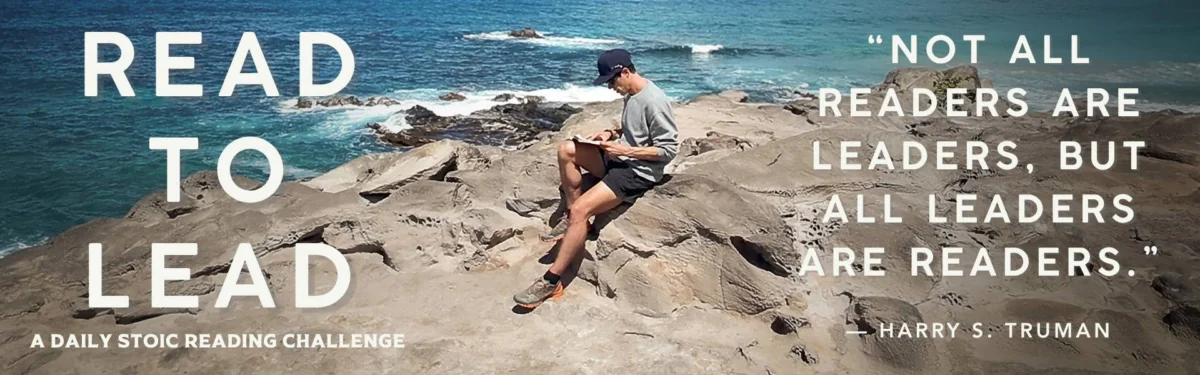
The "Read to Lead" movement, currently being championed by organizations like Daily Stoic, serves as a direct response to this crisis. The objective is not to increase speed but to increase efficacy. The curriculum emphasizes that there are no shortcuts to wisdom. By slowing down, we allow the brain to move information from the short-term working memory into the long-term conceptual network.
Conclusion: Reclaiming the Margin
The next time you find yourself tempted to increase the playback speed of an audiobook or to skim through a seminal work to save time, pause and consider the cost. You are not just saving time; you are potentially eroding the very purpose of the engagement.
Great readers do not finish more books than everyone else because they read faster; they read more because they view reading as a vital, non-negotiable part of their identity. They spend the time, they do the work, and they reap the rewards. To be a great reader is to accept that you cannot rush the process of becoming wiser. As the old adage suggests, we must be willing to walk the slow path, for it is the only one that truly leads to the summit.
In a world obsessed with velocity, the most radical act is to slow down. By reading deliberately, actively, and patiently, you are not just consuming words—you are building a life of substance.