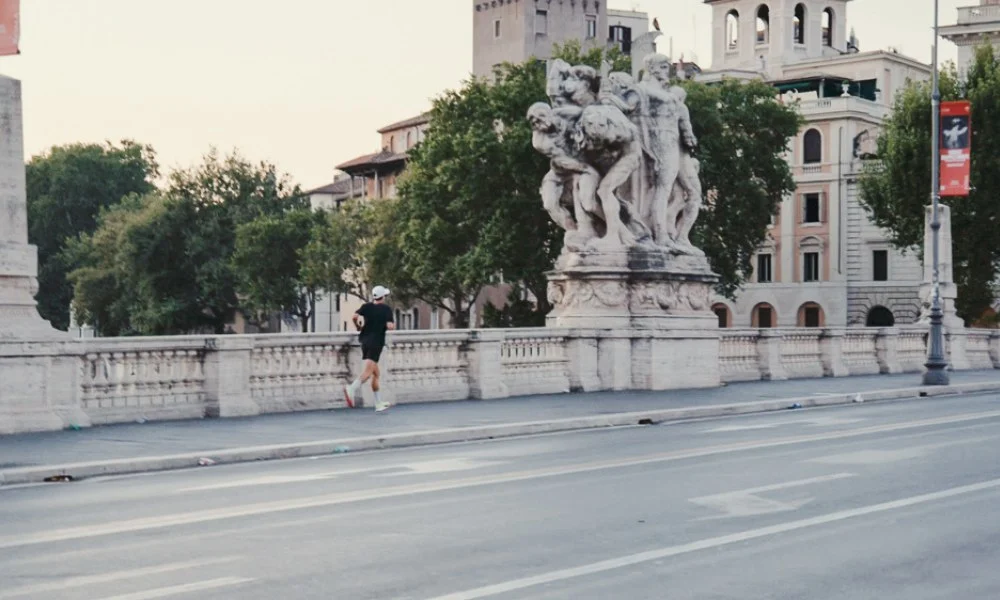
In the heart of Rome, the Column of Marcus Aurelius stands as a stark, 100-foot testament to the nature of legacy. Adorned with intricate carvings that document the Marcomannic Wars—the relentless marching of legions, the crossing of rivers, and the brutal siege of cities—the monument serves as a literal stone-carved trophy of imperial achievement. Yet, there is a biting irony inherent in its existence: Marcus Aurelius, the philosopher-emperor who guided the Roman Empire through some of its most tumultuous years, did not live to see its completion.
Centuries later, in the sixteenth century, Pope Sixtus V saw fit to "restore" the monument, capping it with a statue of Saint Paul and inscribing it with a dedication that mistakenly attributed the victories to the wrong emperor. For the modern observer, the column is a potent reminder that the pursuit of external validation—the "trophy"—is often an exercise in futility. It is a lesson that author and philosopher Ryan Holiday recently put to the ultimate test, not through academic study, but through a grueling, self-imposed 50-kilometer (31-mile) run across the Eternal City.
The Chronology of a Stoic Endurance Test
The journey began in the early, sweltering hours of a European summer, during a period of record-breaking heat. Holiday’s mission was not to compete in a sanctioned race, nor was it to secure a personal record in the traditional, sport-centric sense. It was a pilgrimage of endurance, tracing the geographic markers of Stoic history, from the Column of Marcus Aurelius to the Campidoglio, past the Colosseum, and toward the ancient Appian Way.
The run was marked by the unpredictability that defines both long-distance athletics and the human experience. Only five kilometers in, disorientation set in, leading to a navigation error that tacked an extra mile onto the journey. "When we do hard things, we have to be prepared for them to be harder than we’re anticipating," Holiday noted. This early setback served as a microcosm for the Stoic principle that the "unexpected blow lands heaviest" only when one is rigid in their expectations. By accepting the error and recalibrating, the runner moved forward.
By the 13-mile mark, the route led to what is traditionally believed to be the tomb of Seneca. The site, devoid of formal markers, provided a moment of reflection on the passage of time. Thirteen years prior, Holiday had visited the same spot; comparing his current state to his younger self highlighted the "unrelenting, ceaseless, almost merciless flow of events" that Marcus Aurelius famously articulated in his Meditations.
As the morning progressed, the intensity of the Roman heat began to challenge the original schedule. Conversations with ultramarathoner Luke Tuttle—who had previously documented a similar 53-kilometer run through Rome—offered a necessary paradigm shift. Tuttle’s advice was simple: stop rushing. By decoupling the experience from the pressure of a "race clock," the run transformed from a physical ordeal into a meditative exploration. It was no longer about efficiency, but about presence.
Supporting Data: The Anatomy of Human Limits
While the run was an exercise in philosophy, it also provided a brutal data set on human physiological limits. By the time the runner reached the 15.64-mile (25-kilometer) turnaround point, the cumulative effects of the heat and the logistical stops had pushed the timeline well past the four-hour mark.
The strategy shifted from a steady pace to a test of internal resourcefulness. At the 26-mile (marathon) mark, with five miles of grueling exertion remaining, the focus turned toward the Stoic concept of "internal resources." As Epictetus taught, one must identify the strength and willpower held within to navigate external difficulties.
The physiological toll became undeniable at mile 29.5. The body’s capacity for sustained output hit a hard ceiling. Stumbling into a restaurant along the Tiber, dehydrated and physically depleted, the runner faced the final stretch—a testament to the fact that true growth occurs only after the threshold of comfort has been thoroughly breached. The experience mirrored the creative process of writing a book: the initial struggle, the uncertainty of completion, and the final, rhythmic push toward the finish line.
Philosophical Implications: Why We Do Hard Things
The core inquiry of this endeavor is not "how fast" or "how far," but "why?" In a culture obsessed with quantifiable achievements, medals, and public recognition, the decision to engage in a solitary, unrecorded 50K run acts as a subversion of modern vanity.
The Problem with Trophies
The Column of Marcus Aurelius serves as a cautionary tale against the vanity of external markers. If an emperor can have his greatest military victories misattributed by a later Pope, what value is there in the applause of the crowd? Holiday argues that "doing things for a trophy is a terrible reason to do things." By stripping away the starting gun, the race bib, and the medal, the act becomes inherently valuable. The victory is not the finish line; the victory is the development of the character required to reach it.
The Threshold of Capability
Endurance challenges serve as a diagnostic tool for the self. By pushing past the point of exhaustion, the individual raises their own baseline of what is "hard." What previously seemed like a insurmountable distance becomes, over time, a manageable task. This expansion of one’s threshold is the true objective of Stoic practice. It is the realization that the capacity for suffering and persistence is far greater than the mind typically permits.
Closing the Loop: A Legacy Reclaimed
The conclusion of the run provided a poignant connection between the past and the present. Finishing on the Appian Way—the same road where, thirteen years prior, the runner had proposed to his wife—the journey ended not with an official ceremony, but with a spontaneous reunion with his nine-year-old son.
This moment underscored the ultimate realization of the day: the trophy is not a physical object to be displayed, but a private repository of self-knowledge. After six and a half hours of physical and mental attrition, the runner emerged with a clearer understanding of his own limitations, his own capabilities, and his own "tank."
Official Perspectives and Modern Context
While there are no "official" athletic bodies governing such a run, the resurgence of Stoic-inspired endurance challenges reflects a growing societal trend. In an era of digital distraction and "soft" living, the deliberate pursuit of discomfort—or "voluntary hardship"—is being rediscovered as a vital tool for mental health and cognitive clarity.
Experts in human performance often point to the "Stoic model" of stress management, which suggests that by voluntarily exposing oneself to physical stressors in a controlled manner, one builds "psychological armor." Whether it is a 50-kilometer run or a simpler daily discipline, the underlying principle remains the same: we do not challenge our bodies to conquer the world, but to conquer the internal limitations that prevent us from engaging with it fully.
In the final analysis, the run through Rome was a success precisely because it was not a race. It was a confrontation with the reality of time, the inevitability of decay, and the strength of the human spirit. The Column of Marcus Aurelius remains a monument to a man who, despite the errors of history, understood that the only true life is the one lived with virtue, persistence, and the recognition that the "trophy" is the person we become at the end of the road.