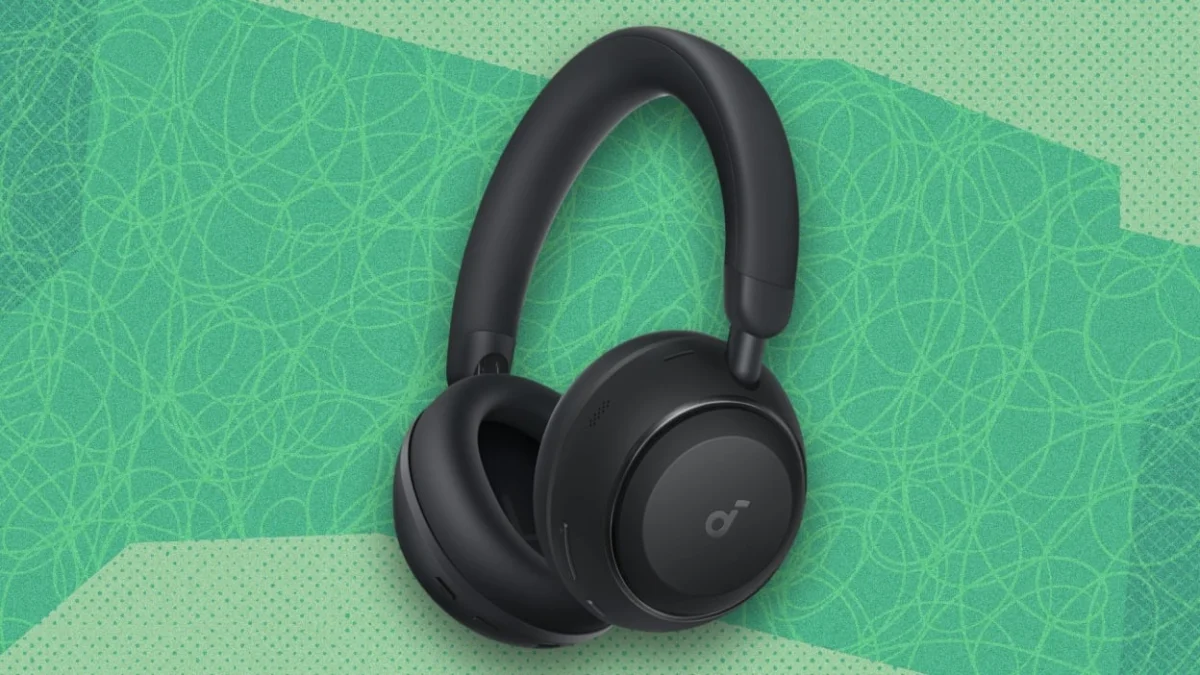
For years, the audio industry has operated on a bifurcated spectrum. On one end, premium manufacturers like Sony, Bose, and Apple dominate with high-fidelity, feature-rich headphones that often carry price tags exceeding $300. On the other, the budget segment has historically been plagued by trade-offs: flimsy build quality, mediocre noise cancellation, and frustrating software experiences.
Anker, through its Soundcore brand, has spent the last decade positioning itself as the bridge between these two worlds. With the launch of the Soundcore Space 2 headphones—and a timely promotional discount bringing them down to $106.49—the company is making its most aggressive move yet to prove that "budget" no longer has to mean "compromise."
The Main Facts: Why the Space 2 Matters
The Soundcore Space 2 arrives as a direct successor to the Space One, a device that gained popularity for its accessibility but faced valid criticism regarding its ergonomic fit and inconsistent noise-canceling performance.
The Space 2 addresses these shortcomings with a comprehensive overhaul. The most notable improvements include:
- Enhanced Ergonomics: Larger, plush memory foam earcups and a redesigned, reinforced headband.
- Superior ANC: Upgraded active noise cancellation hardware capable of suppressing a wider frequency range.
- Industry-Leading Battery Life: A staggering 50 hours of playback with ANC enabled, and up to 70 hours without.
- Tactile Controls: A shift away from sensitive touch-capacitive surfaces toward reliable physical buttons.
- Connectivity: Support for Bluetooth 6.1 and a robust wired listening mode.
At its current price point of $106.49—an 18% discount from the $129.99 MSRP—the Space 2 is positioning itself as the "Goldilocks" device for students, commuters, and casual listeners who desire a premium experience without the premium tax.
Chronology: The Evolution of Soundcore’s "Space" Line
To understand the significance of the Space 2, one must look at the trajectory of Anker’s audio engineering team over the past three years.
The Foundation: The Space One Era
When the original Space One launched, it was marketed as a lightweight, travel-ready solution. It succeeded in its portability but fell short in the "premium" feeling that users expected. The clamping force was often reported as too tight for long-haul flights, and the noise cancellation struggled with inconsistent ambient noises like office chatter or fluctuating wind speeds.
The Iterative Phase: Research and Development (2024-2025)
Between the release of the original and the current model, Anker shifted its focus toward user feedback loops. By integrating data from thousands of user reviews and internal ergonomic testing, the company identified that the "weak points" were not the drivers or the battery, but the physical interaction between the user and the headset.
The Launch: October 2026
The Soundcore Space 2 hit the market in late 2026 with a refined aesthetic. Unlike the iterative refreshes common in the budget sector, this release was treated as a top-tier product launch. The immediate introduction of a promotional price suggests that Anker is prioritizing market share and user adoption, aiming to cement the Space 2 as the default recommendation for sub-$150 headphones.
Supporting Data: Performance Metrics
In evaluating the Soundcore Space 2, the technical specifications offer a compelling argument for their value proposition.
Battery Longevity
The battery performance is arguably the standout feature. Most competitors in the $100–$150 price range hover between 30 and 40 hours of playback. By achieving 50 hours with ANC on, Anker is effectively removing "range anxiety" for long-distance travelers. The fast-charging capability—providing four hours of playback from just a five-minute charge—is a practical feature that acknowledges the realities of modern, on-the-go life.

The Noise Cancellation Experience
The ANC performance in the Space 2 has been optimized for low-frequency attenuation. While top-tier flagships from Bose still hold a slight edge in high-frequency isolation (such as human voices or clattering dishes), the Space 2 is highly effective at neutralizing the low-end drone of airplane engines and air conditioning units.
Connectivity and Software
The inclusion of Bluetooth 6.1 ensures future-proofing for lower latency and more stable multi-point connections. The Soundcore app remains one of the best in the budget category, offering a deep level of EQ customization. Users are not locked into a "house sound," allowing them to tune the output to their specific preferences, whether they favor bass-heavy EDM or mid-range-focused vocal tracks.
Official Responses and Strategic Positioning
Anker has remained relatively quiet regarding specific engineering breakthroughs, focusing its messaging on "accessibility" and "user-centric design." In recent press materials, the company emphasized its shift toward tactile hardware, noting that "the modern listener values reliability over the bells and whistles of capacitive touch controls, which often lead to accidental triggers."
Industry analysts view this as a strategic pivot. By removing the cost of advanced touch-sensor arrays, Anker has been able to allocate more budget toward higher-quality memory foam, better clamping mechanisms, and more robust internal batteries. It is a classic "less is more" approach that directly counters the feature-bloat often found in mid-range devices.
Implications: What This Means for the Audio Market
The release and subsequent discounting of the Soundcore Space 2 carries significant implications for the wider headphone market.
The "Death" of the Budget Stigma
For years, buying a $100 pair of headphones was considered a risky investment. Consumers expected the hinges to break or the padding to flake within six months. Anker’s continued success with the Space series is forcing other manufacturers to raise their baseline standards. If a $100 device can offer 50-hour battery life and decent ANC, the "premium" tier must justify its $300+ price tags with features that are genuinely transformative, not just incremental.
The Future of Wired/Wireless Hybrids
While many premium headphones have completely abandoned the 3.5mm jack in favor of USB-C audio or pure wireless, the inclusion of a wired-cable option in the Space 2 is a nod to power users and audiophiles who want a zero-latency experience. This hybrid approach caters to a broad demographic—from gamers to professionals in studio environments—who refuse to be tethered to a single connection method.
The Competitive Landscape
This price cut effectively puts pressure on legacy audio brands that have ignored the entry-to-mid-level market. When a consumer can purchase a high-performing, reliable headset for $106, the value proposition of a $300 model becomes harder to defend for the average user. We expect to see a response from competitors in the form of aggressive holiday pricing or the launch of "lite" versions of flagship models in the coming quarters.
Conclusion: Is the Soundcore Space 2 Right for You?
The Soundcore Space 2 represents the best of what modern manufacturing can achieve when it focuses on the fundamentals. It does not try to be the most stylish accessory in the room, nor does it claim to offer the audiophile-grade fidelity of a $1,000 wired planar magnetic headset.
Instead, it offers something arguably more valuable: consistency. It is comfortable enough for an eight-hour workday, long-lasting enough for a cross-continental flight, and durable enough to survive the daily commute.
For those currently sitting on the fence, the 18% discount provides a rare opportunity to enter the mid-range market without the financial burden of a flagship investment. In a world where tech prices seem to climb relentlessly, the Soundcore Space 2 is a refreshing reminder that the "sweet spot" of value, performance, and price is still attainable—if you know where to look.