By Daniel Oropeza | Shopping Editor
October 23, 2026
In the modern household, time is the ultimate currency. For those of us managing a home—whether it’s a compact urban apartment or a 1,600-square-foot suburban dwelling—the repetitive, labor-intensive cycle of vacuuming and mopping remains one of the most significant "hidden" time sinks in our daily lives. As a Shopping Editor who spends his days testing the latest in smart home technology, I have witnessed the evolution of robot vacuums from basic, bouncing pucks to sophisticated, AI-driven home maintenance systems.
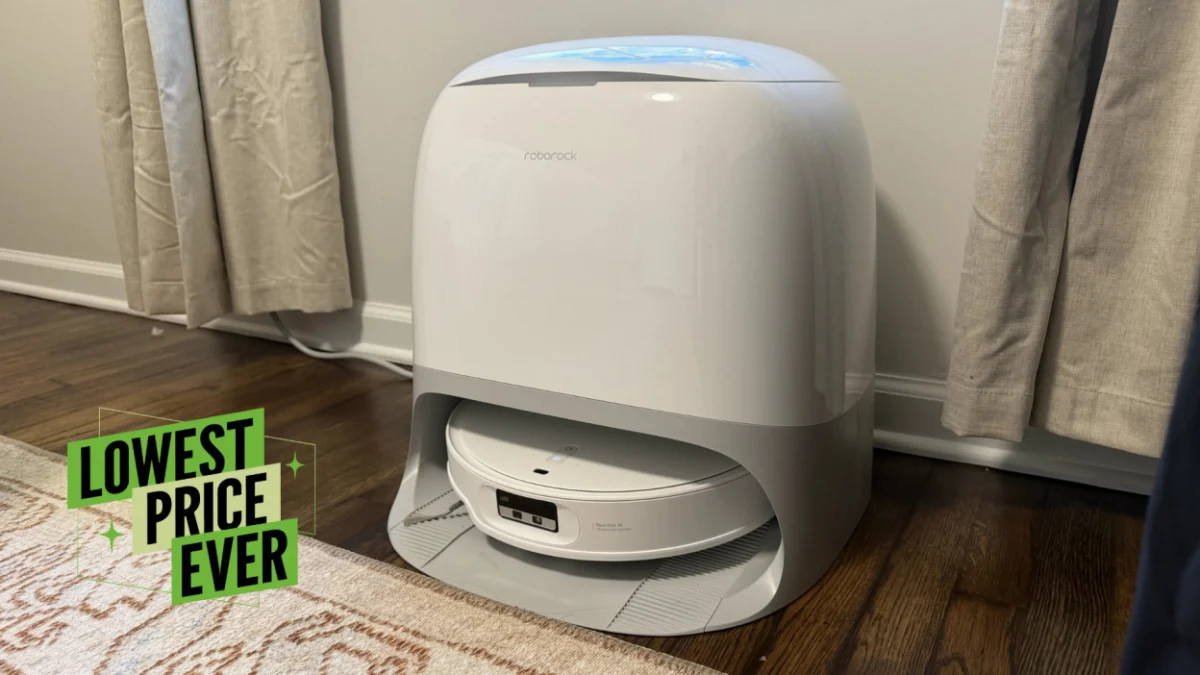
The latest iteration to hit the market, the Roborock Qrevo CurvX, represents a paradigm shift in how we approach floor care. Currently, Amazon is offering a landmark deal on the device, slashing its price by 50% to $749.99—down from its $1,499.99 MSRP. This marks the lowest price point in the product’s history, according to independent price-tracking tools, and presents a rare opportunity for consumers to enter the premium tier of home robotics at a mid-range cost.
The Core Specs: Why the Qrevo CurvX Outperforms Its Peers
When evaluating robot vacuums, the metric that separates the professional-grade from the consumer-grade is suction power, measured in Pascals (Pa). The Qrevo CurvX boasts a staggering 22,000 Pa. To put this into perspective, most standard high-end robot vacuums hover between 5,000 and 10,000 Pa. This massive increase in suction is not merely a marketing gimmick; it is a fundamental shift in utility, allowing the vacuum to lift heavy debris, embedded pet hair, and fine particulate matter that its predecessors would leave behind.
The Engineering of Obstacle Avoidance
One of the most persistent frustrations with early robot vacuum technology was the "babysitting" factor. Users would return home to find their device tangled in a charging cable or stuck atop a high-pile rug. The Qrevo CurvX addresses this through a proprietary self-lifting chassis. This mechanism allows the robot to physically elevate its body, enabling it to conquer uneven surfaces, thick workout mats, and threshold transitions that previously served as impassable barriers.
Furthermore, its slim profile—standing at a mere 3.14 inches—allows it to navigate the "blind spots" of the home. By sliding under low-clearance furniture, such as modern minimalist couches and platform beds, the CurvX ensures a thorough clean without the need to manually move heavy furniture.
Chronology of Development: From "Robot Pucks" to Smart Home Ecosystems
To understand the significance of the Qrevo CurvX, one must look at the trajectory of the industry over the last decade.
- 2015–2018 (The Era of Navigation): Early models relied on random patterns or basic IR sensors. They were prone to falling down stairs and missing significant portions of floor space.
- 2019–2022 (The Mapping Revolution): The introduction of LiDAR and SLAM (Simultaneous Localization and Mapping) allowed robots to "see" their environment. This period also saw the introduction of the first reliable app-based control systems.
- 2023–2025 (The Integration Era): Focus shifted toward self-emptying docks and multi-stage mopping. The industry moved toward "all-in-one" stations that washed mops and refilled water tanks automatically.
- 2026 (The Power and Versatility Phase): The current generation, exemplified by the CurvX, focuses on raw power and extreme mobility. We are no longer just looking for a vacuum that cleans; we are looking for a device that functions as a comprehensive floor-care assistant capable of navigating complex, multi-surface environments.
Supporting Data: The Case for Automation
The adoption of smart home technology is no longer a luxury; it is a data-driven efficiency choice. According to recent industry reports, the average homeowner spends approximately 2.5 to 4 hours per week cleaning floors. Over a year, this equates to nearly 200 hours.

By offloading this labor to a high-performance device like the Qrevo CurvX, a user effectively reclaims nearly five full work-weeks of time annually. When considering the current $750 price point, the "cost per hour" of labor saved is remarkably low, effectively paying for the device within the first few months of usage.
The Trade-offs
No technology is without its limitations. My testing has revealed that while the suction is industry-leading, the internal dust bin is relatively compact. For homes with multiple shedding pets, the bin requires manual attention after most cleaning cycles. While the docking station is designed to minimize this, the internal unit itself remains the primary bottleneck for heavy-duty cleaning sessions.
Official Perspectives and User Experience
From a software perspective, the Roborock ecosystem has matured significantly. The app interface provides granular control, allowing users to define "No-Go Zones" with precision. Whether you are cordoning off a fragile area of the house or setting a schedule that ensures the vacuum operates only while you are at work, the software handles these commands without the latency issues that plagued earlier smart home products.
The current deal, which brings the unit to $749.99, has sparked significant conversation among tech enthusiasts and smart-home integrators. Many are viewing this as the "inflection point" for the Qrevo line—a moment where the price has dropped sufficiently to make a premium, high-power unit accessible to the broader market.
Implications: The Changing Landscape of Domestic Labor
The rise of robots like the Qrevo CurvX carries broader implications for domestic life. As these devices become more capable, the definition of "home maintenance" is changing. We are moving toward a future where floor care is a background process—automated, silent, and highly efficient.
What This Means for Consumers
- Increased Expectation of Longevity: Because these devices are now priced at premium levels (even with discounts), consumers are rightfully expecting multi-year hardware durability. The CurvX’s chassis design suggests an attempt to reduce mechanical wear and tear.
- The Decline of Manual Maintenance: As suction power and navigation improve, the need for a secondary "upright" vacuum is diminishing for many households.
- Data Privacy and Home Mapping: With the increased intelligence of these devices, users must remain vigilant about the privacy of their home maps. Roborock’s adherence to standard encryption protocols remains a critical pillar of their market position.
Final Verdict: Is Now the Time to Buy?
For the homeowner with a mix of hard floors, rugs, and exercise equipment—or simply someone who values the gift of time—the Qrevo CurvX at $749.99 is a rare find. It is a synthesis of raw power, intelligent obstacle navigation, and an intuitive user interface.
While no robot is perfect, the current market dynamics suggest that we are unlikely to see a price drop of this magnitude for a unit of this caliber again before the holiday season concludes. If you have been waiting for the technology to "catch up" to your requirements for suction and mobility, that time has officially arrived.
Disclaimer: We may earn a commission from links on this page. Deal pricing and availability are subject to change after the time of publication.