In an era defined by the "hustle culture" of travel—where every trip is measured by the number of sites ticked off a checklist or the aesthetic curation of a social media feed—there exists a quiet, subversive movement in the hospitality industry. It is a shift toward the "idyllic OOO" (Out of Office), a concept that prioritizes stillness over discovery and predictability over adrenaline.
Nowhere is this shift more evident than in the secluded, river-facing estates of Goa. While the state is traditionally marketed as a frantic hub of nightlife, adventure sports, and heritage trails, a new breed of luxury property is asking its guests to do the unthinkable: stay put.
Main Facts: The Architecture of Stillness
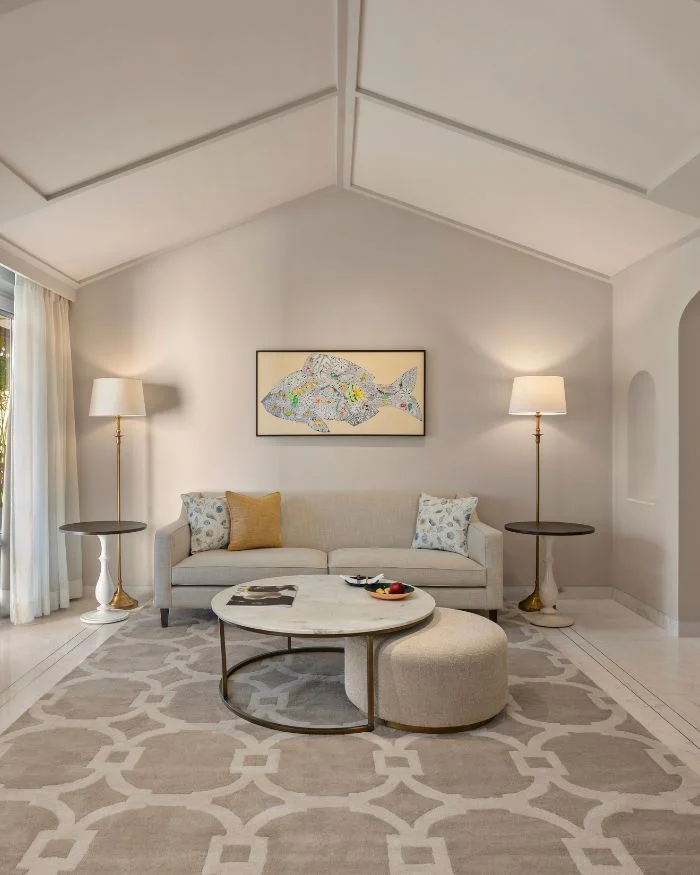
The property in question serves as a masterclass in the "inward-looking" retreat. Situated near the banks of the Mandovi, the estate is strategically positioned to offer proximity to the cultural landmarks of Old Goa, the rustic charm of Divar Island, and the urban bustle of Panjim. Yet, the architecture is designed to act as a sensory filter.
The primary amenity here is not an activity, but a void. There is a spa, of course, and the concierge is well-versed in arranging excursions to nearby cathedrals or ferry rides to local villages. However, these are peripheral offerings. The core experience is built on a cycle of fundamental, low-stakes human activities: swimming, dining, reading, and watching the river’s slow transit.
The luxury here is defined by the absence of demand. In a world where the hospitality sector is obsessed with "experiences"—cooking classes, guided tours, and immersive workshops—this property provides the rarest commodity of all: permission to be bored.
Chronology: A Rhythm of Repetition
To understand the appeal of this retreat, one must view the guest experience not as a narrative arc, but as a circular rhythm.
- Morning (The Awakening): The day begins not with the sound of an alarm or a notification ping, but with the movement of the river. The morning hours are dedicated to a slow, unhurried breakfast, followed by a swim.
- Mid-Day (The Inertia): By midday, the heat of the Goan sun settles over the property. This is the time for reading or sitting on a balcony. The predictability of the afternoon is its greatest asset; there is no anxiety about missing a "must-see" monument.
- Afternoon (The Peripheral Exploration): While the option exists to visit the historic churches of Old Goa or the quiet lanes of Divar, guests often find themselves tethered to the property’s stillness. The choice to venture out is a conscious one, not a necessity.
- Evening (The Decompression): As the light changes, the focus shifts to the river. A drink in hand, the evening is spent in contemplation. It is an exercise in mental de-cluttering, a necessary corrective to the constant connectivity of modern professional life.
Supporting Data: The Rise of the "Anti-Itinerary"
The travel industry is currently witnessing a significant pivot in consumer behavior. According to recent trends in luxury travel, there has been a 30% increase in bookings for "secluded" properties that prioritize wellness through isolation rather than activity-based wellness (such as yoga retreats or fitness boot camps).
The psychological implications are significant. A recent survey of high-functioning professionals suggests that the primary driver for booking a getaway is not "seeing the world," but "escaping the machine." The property described fits this data point perfectly. By removing the pressure to "discover something new," the hotel creates a space for mental recovery.
For the modern traveler, whose daily existence is a blur of airports, boardrooms, and digital notifications, the hotel’s refusal to curate an experience is, in itself, the peak of professional-grade hospitality. When a hotel asks very little of you, it creates a vacuum that the guest can finally fill with their own thoughts—a rare occurrence in the 21st century.
Official Perspectives and Industry Implications
Industry experts argue that this trend represents a maturing of the Indian luxury market. Historically, luxury in India was defined by opulence and service intensity—the more a hotel staff did for you, the more "luxury" it felt.
However, current hospitality analysts suggest that "negative space" is becoming the new gold standard.
"The modern guest is exhausted," says a consultant in the luxury travel sector. "They don’t want a butler hovering over them asking if they want an excursion to a spice plantation. They want to know that the infrastructure exists to support them if they need it, but they want the space to be left entirely alone. The ‘idyllic OOO’ is a response to the hyper-stimulated nature of our current lives."
The trade-off, however, is a sense of detachment. Guests often note that they feel as though they are in a "bubble," disconnected from the daily life of Goa. While this may be a criticism for the culturally curious, for the target demographic—the burnt-out professional—this detachment is a feature, not a bug. It is a deliberate fortification against the chaos of the outside world.
The Philosophy of the "Work Trip" Paradox
Perhaps the most poignant aspect of this retreat is the phenomenon of the "work trip" as a sanctuary. Many guests arrive at these properties under the guise of business, carrying laptops and tablets, only to find the environment so antithetical to work that the equipment stays packed away.
There is a profound irony in traveling to a destination for work, only to find oneself mentally swapping the laptop for a book. This transformation—from a professional tethered to an inbox to a human being tethered to a river view—is the ultimate success of the property. It suggests that the environment is powerful enough to override the ingrained habits of the modern workforce.
It also raises a question about the nature of our lives: If we can so easily replace our professional obligations with the simple act of sitting by a river, why do we not do it more often?
Implications: A Shift in How We Measure Value
The success of properties like this one has long-term implications for how we measure the value of a holiday. If a property does not provide an itinerary, does it provide value?
The answer, increasingly, is yes. We are moving away from a time-value model of travel (where we measure a trip’s success by the number of things we did per hour) to an energy-value model (where we measure a trip’s success by the amount of mental energy we recovered).
The "idyllic OOO" is a quiet revolution. It challenges the notion that every trip must be an investment in cultural capital or a photo opportunity. Instead, it argues that the most valuable thing you can do for your mind and soul is to stop moving.
As the world continues to accelerate, these pockets of stillness become more precious. Whether it is in Goa, or any other corner of the globe, the ability to create a "predictable" environment—a space where you know exactly where the sun will hit the floor and exactly when the river will lap against the bank—provides a grounding force.
In the end, the most luxurious thing you can do is not to see the world, but to give yourself the time to exist within it. By choosing a property that demands nothing, you finally give yourself the space to be everything you’ve been ignoring while you were busy checking your notifications.
The OOO is no longer just an automated email response; it is a way of living. And for those who can afford the luxury of stillness, it is the only way forward.
Further Exploration:
- For those interested in the intersection of design and tranquility, explore the works of Kirti Dodeja, whose integration of tropical palettes and antique elements often defines the aesthetic of these "inward-looking" homes.
- Read more on the architectural impact of the Goan river-front estates here: In this Goan home, Kirti Dodeja brings together arches, antiques and a tropical palette.