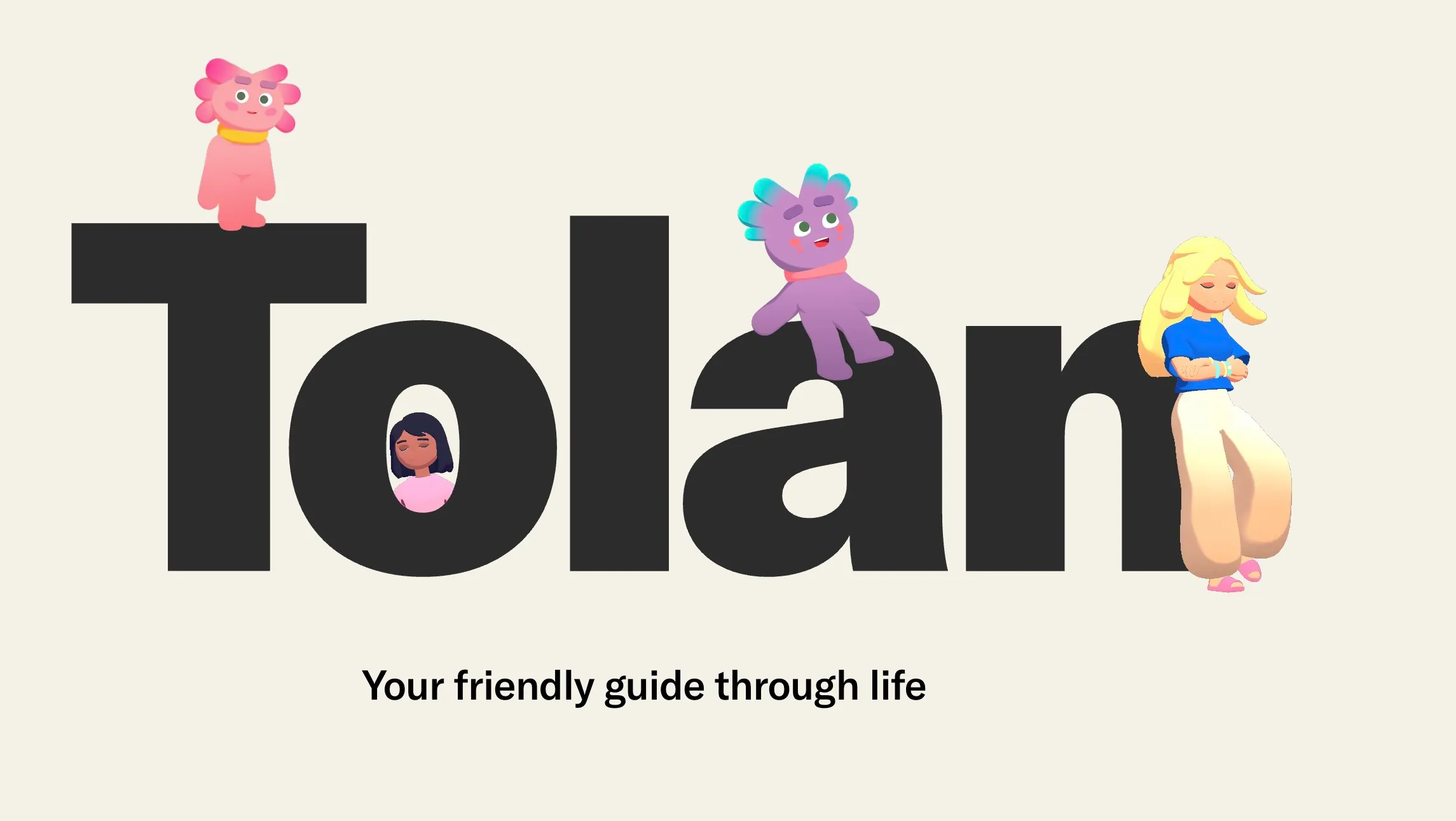
In a rapidly consolidating AI landscape, Tolan—an innovative startup specializing in personalized AI companionship—has successfully closed a $30 million funding round. The injection of capital, led by prominent venture firms including Union Square Ventures, Khosla Ventures, and Homebrew, marks a significant milestone for the company. This latest infusion of cash effectively doubles the startup’s total lifetime funding, pushing its valuation well beyond the $120 million benchmark established in previous rounds. While the company has opted to remain tight-lipped regarding its precise new valuation, market analysis from PitchBook suggests a valuation exceeding $268 million, backed by "medium confidence" assessments of the firm’s growth trajectory.
The Essence of Tolan: Beyond the Chatbot
At its core, Tolan functions as a digital life architect. Unlike generic Large Language Model (LLM) interfaces that prioritize information retrieval or creative writing, Tolan is engineered to manage the granular complexities of daily human existence. Through an approachable, cartoonish interface, the platform assists users in navigating emotional challenges, organizing interpersonal relationships, and executing long-term personal goals.
The application’s design philosophy hinges on the concept of "low-friction support." By embedding itself into the user’s daily routine—ranging from task management to emotional regulation—Tolan has carved out a niche that distinguishes it from the clinical or purely productivity-focused AI tools currently flooding the market.
A Chronology of Growth and Market Positioning
The trajectory of Tolan’s development reflects the broader evolution of the generative AI market over the past few years.
- Early Development: Founded with a vision to bridge the gap between utility and companionship, the startup focused on building a proprietary model that felt less like a cold database and more like an intuitive partner.
- The Scaling Phase: By prioritizing user retention over rapid, unvetted acquisition, Tolan cultivated a loyal base. The company reports over 250,000 active users who have engaged in a staggering 70 million conversations over the last 12 months.
- Monetization Milestone: Unlike competitors relying solely on ad-supported models, Tolan implemented a tiered subscription structure early on. This strategy has proven effective, with the company confirming that its annual recurring revenue (ARR) has reached "double-digit millions," a rare feat for early-stage AI companion startups.
- Recent Funding: The current $30 million round represents a vote of confidence from Tier-1 venture capital firms during a period where investors are increasingly skeptical of "AI-everything" startups that lack clear utility or sustainable business models.
Supporting Data: Understanding the User Base
The demographics of Tolan’s user base reveal a clear pattern of adoption. The platform has found its strongest foothold among women (70% of the user base) and parents (40%). These cohorts often manage high-context, high-stress domestic and professional environments, suggesting that Tolan’s value proposition is rooted in cognitive offloading.
Furthermore, an emergent subculture of neurodivergent users has gravitated toward the platform. On forums such as Reddit, users have cited Tolan’s structured approach to task management and its consistent, non-judgmental emotional presence as vital tools for managing executive dysfunction. This organic adoption among neurodivergent individuals provides a distinct competitive advantage, as the app serves not just as a toy, but as an accessibility tool.
The "Soul" Factor: Navigating the Uncanny Valley
The success of Tolan stands in stark contrast to the turbulent performance of other high-profile AI companions. In 2025 and 2026, the industry witnessed the rise and fall of various "AI wearables." The "Friend" pendant, for instance, became a cautionary tale of design failure. Marketed as a wearable AI companion, the device was met with widespread public derision; critics labeled it "cringe," and major publications like The New York Times and Wired questioned its utility and lack of emotional depth.
Tolan has successfully navigated the "uncanny valley"—the psychological space where AI attempts to mimic humanity but falls into an unsettling, unnatural state—by leaning into its stylized, cartoonish identity. By avoiding the attempt to be "human," the platform has managed to avoid the skepticism often directed at ultra-realistic avatars.

Meanwhile, the collapse of Character.AI, once considered the gold standard for interactive personality chatbots, serves as a sobering reminder of the volatility of the sector. Following the departure of its founder, Noam Shazeer, back to Google, Character.AI filed for bankruptcy, signaling that even the most popular platforms are vulnerable to talent attrition and changing ownership structures.
Implications for the Future
The Rise of Agentic AI
Despite its recent success, Tolan is not without challenges. The market is shifting from "chat-based" AI to "agentic" AI—systems that do not just talk, but act. Meta’s introduction of "Muse," an AI agent that combines a cute, approachable interface with the ability to actively plan and execute tasks, presents a direct challenge. As tech giants move toward hardware-integrated agents, pure software players like Tolan must decide whether to remain a companion-first entity or evolve into an integrated operating system for the user’s life.
The Shadow of Liability
Perhaps the most significant challenge facing Tolan and its peers is the growing legal and ethical scrutiny regarding AI-driven emotional support. The industry has been shaken by a series of high-profile lawsuits involving general-purpose AI makers, where families have alleged that chatbot interactions contributed to the suicides of young users.
These incidents have placed a massive burden of responsibility on developers. If an AI is designed to manage "relationships and emotions," it must navigate the fine line between helpful support and dangerous psychological manipulation. Tolan’s leadership must now invest heavily in safety guardrails, ethical oversight, and transparent data usage policies to ensure that its role in users’ lives remains constructive rather than hazardous.
A New Standard for Venture Investment
The $30 million funding for Tolan marks a maturation in the AI investment thesis. Investors are no longer throwing money at any startup that incorporates a language model. Instead, they are prioritizing companies with:
- Clear Revenue Streams: The transition from venture-funded growth to revenue-generating sustainability is now a requirement for survival.
- Product-Market Fit: Tolan’s success among specific demographics—parents and neurodivergent individuals—shows that the most successful AI products of the next decade will likely be verticalized, addressing specific human needs rather than attempting to be a general-purpose oracle.
- Defensible Branding: By creating a brand that is viewed as "trustworthy" and "helpful" rather than "creepy," Tolan has built a moat that is harder to bridge than mere code.
Conclusion
Tolan’s recent funding round is more than just a financial victory; it is a validation of the "AI Companion" category at a time when the market is rife with instability. By focusing on practical utility, maintaining a clear and safe brand identity, and fostering a specific, loyal user base, the startup has positioned itself as a survivor.
However, the road ahead is fraught with systemic risks. As the platform scales, the tension between being a supportive companion and a responsible digital actor will only intensify. Whether Tolan can continue to scale its user base while maintaining the safety standards required of a digital life partner remains the primary question for its next phase of growth. For now, the company remains a primary example of how AI can, when designed with intention, become an essential component of the modern human experience.