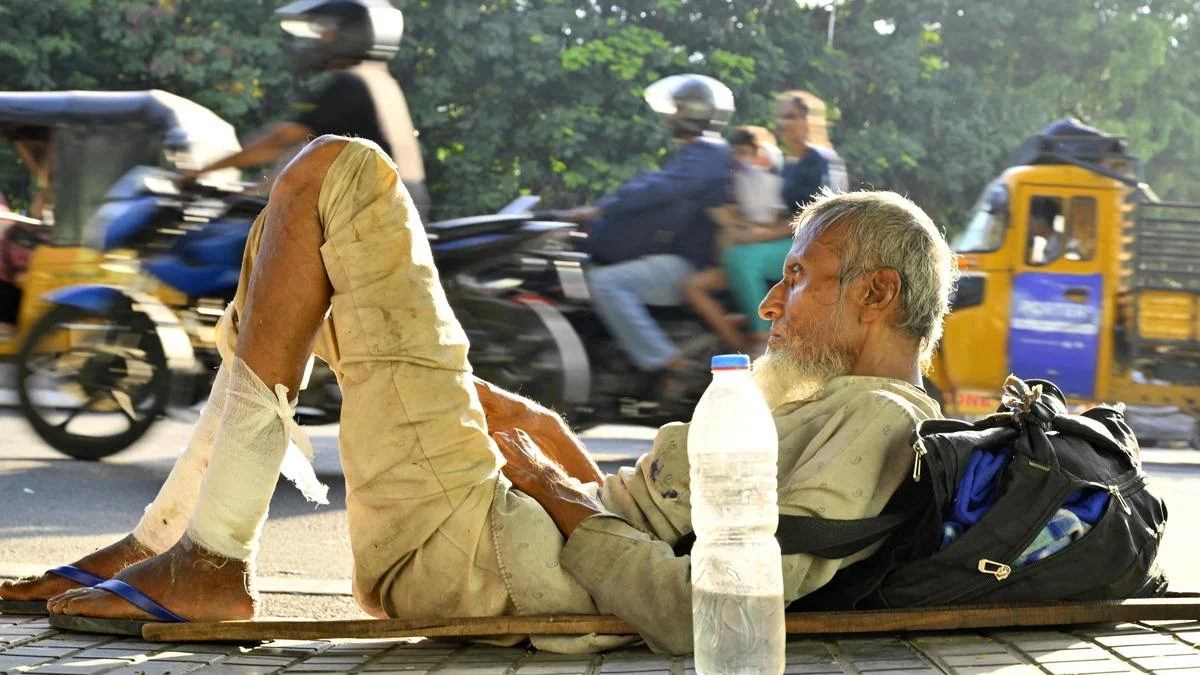
For 60-year-old "Girija," the decision to shutter her roadside vegetable stall was not merely a business choice—it was a forced surrender. After years of working as a domestic helper, she had pivoted to small-scale vending to maintain her independence. However, the onset of urinary incontinence transformed her daily routine into a logistical nightmare. In a setting without ready access to private sanitation, the condition became an insurmountable barrier to her livelihood.
"She learned that she was suffering from urinary incontinence. Taking frequent loo breaks while managing the stall was not practical, and she eventually decided to shut shop, losing her source of income in the process," explains Gurajada Sobha Pernidevi, founder-president of the Telangana Stree Seva Samstha.
Girija’s story is not an outlier; it is a microcosm of the hidden struggles faced by millions of elderly citizens. While the discourse on ageing often focuses on high-profile surgeries or cardiac care, a vast, silent cohort is grappling with chronic, "invisible" ailments that strip them of their dignity, social standing, and economic agency. As Telangana stands on the precipice of a significant demographic shift, the state’s healthcare infrastructure and social support systems face a critical test.

The Demographic Tide: A State in Transition
The urgency of this issue is backed by cold, hard data. According to the Reserve Bank of India’s report, State Finances — A Study of Budgets of 2025-26: Demographic Transition in India, Telangana is rapidly transitioning into an "ageing state." The proportion of the population aged 60 and above is projected to surge from 12.5% in 2026 to 17.1% by 2036.
A society is classified as "ageing" when senior citizens account for at least 15% of the total population. As Telangana reaches this milestone, the current model of care—which relies heavily on the traditional family unit—is proving inadequate. With younger generations increasingly migrating for employment and nuclear families becoming the norm, the "safety net" provided by kinship is fraying, leaving the elderly vulnerable to isolation, neglect, and systemic abandonment.
The Chronology of Neglect: From Symptom to Isolation
The path from independent living to total dependence is often paved with missed opportunities for early intervention.

- Phase 1: The Onset of Minor Ailments: Conditions like urinary incontinence, mild tremors, or chronic pain begin to affect mobility. Because these are often stigmatized or deemed "natural parts of ageing," seniors endure them in silence.
- Phase 2: The Social Withdrawal: As mobility decreases, the elderly stop venturing out. Public infrastructure, such as multi-storey buildings without elevators or streets without adequate lighting, serves as a de facto prison.
- Phase 3: The Healthcare Barrier: Routine medical check-ups become "expeditions." An elderly person must often wait for a working family member to accompany them. If that support is unavailable, the senior skips appointments, leading to the exacerbation of manageable conditions.
- Phase 4: The Crisis Point: A fall, an acute flare-up of a chronic disease, or the development of mental health conditions like dementia leads to a sudden need for professional care, which many families are financially or emotionally unprepared to provide.
The "Pace Mismatch" in Healthcare Delivery
Healthcare in urban centers like Hyderabad is currently designed for those who can navigate a system that demands time, mobility, and digital literacy. For an elderly person, a simple hospital visit is an ordeal involving long walks between departments, diagnostic queues, and complex paperwork.
P. Shyam Kumar, State project coordinator at HelpAge India, advocates for a paradigm shift: "Without adequate support, their condition may deteriorate, leading to more hospital visits, additional expenses, and greater dependence on family members." He suggests that the state leverage existing frameworks, such as Accredited Social Health Activists (ASHAs), to deliver medicines and nutritional supplements directly to the doorstep.
However, the problem extends beyond the logistics of medicine delivery. Many elderly citizens find themselves trapped in homes where they cannot access medical professionals. "This is a crucial requirement for those who are unable to step out of their house," says Sobha. Currently, the lack of a standardized home-visit medical service forces families to either ignore symptoms or rely on expensive, unverified private help.

The Mental Health Blind Spot
Physical health is only half the battle. Mental health conditions—specifically depression and dementia—are frequently misidentified as "normal ageing." K. Chandra Sekhar, founder-director of ASHA Hospitals, highlights that families often seek professional help only when symptoms reach a breaking point, such as extreme aggression or total loss of memory.
"Early diagnosis can improve quality of life and help caregivers prepare for the support that may be required as a condition progresses," Dr. Chandra Sekhar notes. He points out that while physical health camps are common, mental health screening for the elderly is virtually non-existent. Symptoms such as a loss of interest in hobbies, reduced appetite, and social withdrawal are often overlooked, yet these are the very indicators that, if addressed, could delay the onset of severe cognitive decline.
The Search for Dependable Care: A Costly Burden
The demand for professional caregivers is skyrocketing, yet the supply is neither standardized nor always affordable. Families that can afford it pay upwards of ₹25,000 per month for a caregiver—a price point that excludes the vast majority of the population.

For those from financially disadvantaged backgrounds, the reality is starker. S. Bhooma Reddy, editor of Voice of Senior Citizens, notes that even in middle-class families where children live in the same building, the pressure of modern work-life balance leaves little room for caregiving.
This environment has created a precarious market. Stories of elderly citizens fearing their own caregivers are not uncommon. "There is a palpable fear that weighs on many older people who live with hired help," Sobha remarks. Her organization, Telangana Stree Seva Samstha, attempts to fill this gap by distributing essential medical aids like commode converter seats and adult diapers, but they acknowledge that these are merely stop-gap measures for a systemic failure.
Implications: Designing for an Ageing Future
To address these challenges, experts propose several structural interventions:

1. Community-Level Infrastructure
Shanti, a trustee at the Roshni Trust, suggests establishing government-run, Basti-level centers modeled after Anganwadis. These centers would not only provide basic medical check-ups and nutrition but also serve as social hubs to combat the "loneliness epidemic."
2. Diversified Care Models
Ambati Rampapa Rao of PACCS Healthcare outlines a tripartite model for future infrastructure:
- Transitional Care: Post-hospital support for recovery.
- Assisted Living: Monitored environments for those with chronic health history.
- Elderly Living Facilities: Independent living spaces with minimal medical oversight.
3. Government-Led Social Integration
The Telangana government has taken a positive step by sanctioning 37 multi-service daycare centers for senior citizens. While 32 are currently operational, the focus must now shift to ensuring their long-term sustainability and accessibility. As one senior noted, the fear that a minor illness will lead to a loss of access to these centers is a constant source of anxiety.

Conclusion: The Moral Imperative
As Telangana marches toward a future where nearly one in five residents will be a senior citizen, the current approach of "family-centric care" is no longer sufficient. The state must move toward a policy framework that views elderly care not as a private burden to be borne by children, but as a public health priority.
The goal must be to ensure that citizens like Girija are not forced to trade their dignity for survival. By integrating geriatric mental health into public clinics, expanding doorstep medical services, and creating safe, inclusive community spaces, the state can transform the experience of ageing from a period of decline into a phase of sustained participation. The measure of a society, after all, is not just how it treats its youth, but how it protects the autonomy of those who have spent their lives building the foundation upon which the current generation stands.