New Delhi: Policyholders in India are facing a new reality in health insurance renewals, with a growing concern that a long-prohibited practice – claims-based loading – might be making a covert return. While the Insurance Regulatory and Development Authority of India (IRDAI) explicitly forbids insurers from increasing premiums solely because a policyholder has made a claim, a closer examination of recent renewal documents suggests that insurers are employing a sophisticated workaround. This practice, disguised as "Favourable Claims Experience Discounts," is effectively penalizing those who utilize their health insurance, thereby undermining the spirit, if not the letter, of regulatory directives.
The Regulatory Stance: A Clear Prohibition
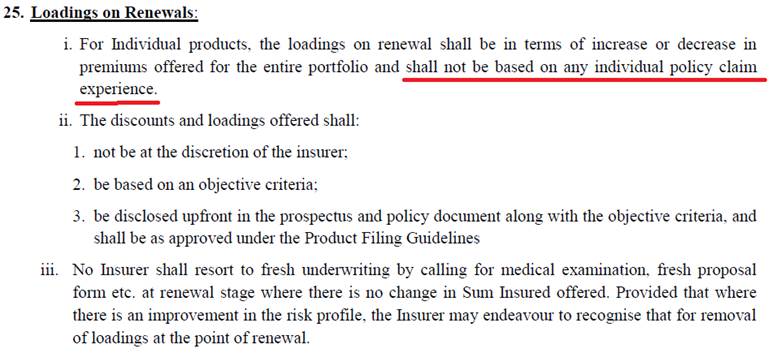
The cornerstone of current health insurance regulations in India is the IRDAI Health Insurance Regulations, 2016. These regulations unequivocally state that insurers are not permitted to implement "claims-based loading." This means an insurance company cannot hike an individual’s premium simply because they filed a claim in the preceding policy year. Such an increase would be discriminatory and would disincentivize policyholders from seeking necessary medical care.
The regulations are explicit on this point. Insurers can, of course, adjust premiums based on factors like the policyholder’s age or through general revisions in their underwriting policies. However, any such adjustments must be applied uniformly across all policyholders holding the same plan. They cannot selectively target individuals who have made claims.
The Loopholes: Rewarding Non-Claimants, Not Penalizing Claimants?
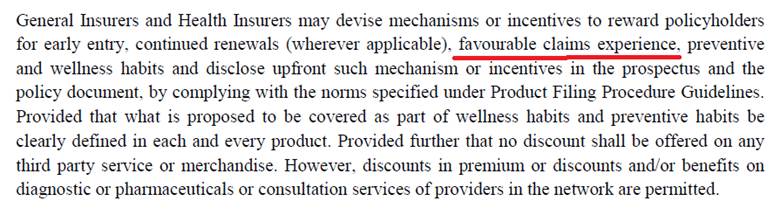
While IRDAI’s stance against direct claims-based loading is clear, the regulations inadvertently created a loophole that insurers are now adeptly exploiting. The core principle here is a subtle but significant shift in framing: instead of directly penalizing claims, insurers are opting to "reward" those who don’t claim.
This distinction, though seemingly semantic, allows insurers to achieve a similar financial outcome. By offering substantial discounts for a "favourable claims experience," they effectively increase the net premium for those who have had to utilize their insurance.
A Policyholder’s Discovery: The "Favourable Claims Experience Discount"
The unsettling reality of this emerging practice came to light through the experience of a policyholder who noticed a significant and new line item on their health insurance renewal premium receipt: "Favourable Claims Experience Discount = ~16,000." This discount, representing nearly 50% of the final premium, indicated that without it, the premium would have been substantially higher.
The policyholder observed that this specific discount category was absent in the previous year’s renewal. While the overall change in the final premium was marginal, partly due to a Goods and Services Tax (GST) cut, the introduction of this discount suggested a deliberate adjustment. The substantial discount amount was effectively being used to offset what would have otherwise been a higher premium, implicitly linked to past claims.

How Insurers Calculate and Apply These Discounts
Further investigation revealed that while the term "Favourable Claims Experience Discount" might not be explicitly detailed in every policy document, insurers are referencing it in their promotional materials and website excerpts for other plans. A common methodology appears to be based on a tiered discount structure linked to the absence of claims.
For instance, one insurer’s policy indicates a tiered discount system:
- Year 1 (No claims): 30% discount.
- Year 2 (Claim made): Discount reduces to 21%.
- Year 3 (No claims): Discount increases to 24%.
- Year 4 (No claims): Discount increases to 27%.
- Year 5 (No claims): Discount returns to 30%.
This structure illustrates how a single claim can lead to a significant reduction in the discount percentage for the subsequent year. While the discount may increase again if no further claims are made, the immediate impact of a claim is a higher out-of-pocket expense for the policyholder.
The Potential for Misuse: A "Devious" Strategy
The "favourable claims experience discount" mechanism presents a considerable opportunity for insurers to indirectly implement claims-based loading. While insurers maintain that these discounts are not arbitrary and are disclosed in policy wordings, the potential for manipulation is significant.
Here’s how this system could be misused:
- Aggressive Discount Reductions: Insurers could implement drastic reductions in the discount percentage following even minor claims. This would disproportionately impact policyholders who are already facing medical expenses.
- Unfavorable Discount Matrices: The discount matrix itself could be designed with steep drops in percentages, making it difficult for policyholders to recover their previous discount levels.
- Hike Base Premiums: Insurers could simultaneously increase their base premiums, making the discount seem more substantial than it actually is, while still ensuring a net increase for claimants.
- Complex and Opaque Calculations: The methodology for calculating the discount could be made intentionally complex and difficult for the average policyholder to understand, further obscuring the actual impact on their premium.
- Selective Application: While regulations mandate uniform application, there’s a risk of subtle, discriminatory application based on claim types or amounts, even if not explicitly stated.
The Insurer’s Perspective: A Business Imperative
From an insurer’s perspective, the drive behind these practices is rooted in business imperatives. Insurance companies are for-profit entities that must maintain profitability to remain viable. When a health insurance plan experiences a higher-than-anticipated volume of claims, it directly impacts the insurer’s financial health.
In such scenarios, insurers face pressure to:
- Maintain Profitability: If claims exceed the premium collected, the insurer incurs losses.
- Manage Risk: A high claims ratio indicates potential underwriting issues or a need to re-evaluate pricing strategies.
- Sustain Operations: Sufficient profits are crucial for operational efficiency, claims processing, and investing in product development and customer service.
Therefore, while direct claims-based loading is prohibited, insurers may view the "favourable claims experience discount" as a necessary tool to balance their books. They can argue that rewarding non-claimants is a way to offset the costs incurred by those who do claim, thereby ensuring the long-term sustainability of the health insurance pool.
The argument from the insurer’s side is that the reduction in discount is not a penalty for claiming, but rather a reflection of the policyholder’s contribution to the collective risk pool. If a policyholder utilizes the pool more frequently, their "contribution" to maintaining the pool’s stability is diminished, and consequently, the discount they receive is reduced.
Furthermore, insurers often emphasize that the structure for discount reduction and restoration is disclosed in policy wordings. They maintain that it’s not an arbitrary decision, even though they reserve the right to modify these structures over time. Crucially, they highlight that the "loading" (reduction in discount) is not permanent. A policyholder who reduces their claims or stops claiming altogether can see their discount percentage increase again in subsequent years.
The Policyholder’s Dilemma: A "Double Whammy" Awaits?
The return of claims-based loading, however subtly executed, presents a significant concern for policyholders. The perception is that insurers are adhering to the letter of the law while circumventing its intended spirit.
The author’s sentiment, "If it walks like a duck and quacks like a duck, it is a duck," encapsulates the widespread feeling that this practice, regardless of its nomenclature, effectively functions as claims-based loading.
The fear is that this current practice is merely a testing phase. Once the industry and policyholders become accustomed to these "favourable claims experience discounts," insurers might escalate their strategies. This could involve:
- Further Adverse Changes to Discount Matrices: Making it even harder to earn back discounts.
- Increased Base Premium Hikes: Combining the reduced discount with higher base premiums would create a "double whammy" for policyholders who have had to claim.
- Reduced Transparency: Making the discount calculation even more opaque, further eroding trust.
This creates a scenario where policyholders are implicitly penalized for seeking the very benefits they paid for, potentially leading to a reluctance to utilize their health insurance for legitimate medical needs.
A Plea to IRDAI: Clarity and Intervention Needed
Given the escalating concerns, there is a clear and urgent need for IRDAI to intervene and provide definitive clarity on the "favourable claims experience discount." The regulatory body must scrutinize the intent and application of these discounts to ensure they do not become a backdoor for claims-based loading.
IRDAI should consider the following actions:
- Issue a Clear Circular: Explicitly define what constitutes a "favourable claims experience" and provide strict guidelines on how these discounts can be structured and applied. The circular should clarify that the intent is to reward good health and lower premiums for those who consistently do not claim, not to penalize those who need to claim.
- Mandate Transparency: Insurers should be required to clearly and prominently display the methodology for calculating these discounts in their policy documents and renewal notices. The impact of a claim on the discount percentage for the next year should be explicitly stated.
- Cap Discount Reductions: IRDAI could consider capping the maximum percentage reduction in discount that an insurer can impose following a claim, to prevent excessive penalties.
- Review and Revise Regulations: If the current regulations are found to have loopholes that are being exploited, IRDAI should proactively revise them to prevent any form of indirect claims-based loading.
The current situation highlights a growing distrust between policyholders and insurers. While insurers are business entities that need to be profitable, this must not come at the expense of policyholder confidence and access to essential healthcare. IRDAI’s role is crucial in ensuring a fair and transparent health insurance ecosystem where policyholders are protected from predatory practices.
The regulatory body must step in to ensure that the spirit of the health insurance regulations, which aims to provide financial security during medical emergencies, is upheld. Allowing insurers to subtly reintroduce claims-based loading would be a significant disservice to millions of Indian policyholders who rely on health insurance for peace of mind and financial stability.
Chronology of Developments:
- 2016: IRDAI Health Insurance Regulations are introduced, explicitly prohibiting claims-based loading.
- Present: Policyholders begin observing "Favourable Claims Experience Discounts" on their renewal premiums, indicating a potential indirect implementation of claims-based loading.
- Ongoing: Concerns are raised about the transparency and fairness of these discount structures, with fears of potential misuse by insurers.
- Urgent Need: Calls for IRDAI intervention to clarify regulations and prevent the circumvention of the claims-based loading prohibition.
Supporting Data and Examples:
- The "Favourable Claims Experience Discount": A policyholder’s observation of a discount representing approximately 50% of their premium, which was absent in previous years.
- Tiered Discount Matrix Example: A hypothetical structure showing a drop in discount percentage from 30% to 21% after a claim, and a gradual increase back to 30% over subsequent claim-free years. This demonstrates the financial impact of claiming.
- Insurer Website Excerpts: Evidence of insurers detailing discount structures for "favourable claims experience" on their public platforms, suggesting a widespread practice.
Official Responses (or Lack Thereof):
As of the current reporting, a direct official response from IRDAI specifically addressing the "favourable claims experience discount" as a mechanism for claims-based loading has not been prominently documented. However, the existence of the IRDAI Health Insurance Regulations, 2016, serves as the official stance against direct claims-based loading. The concern lies in how these new discount structures interact with these existing regulations.
Implications for Policyholders:
The primary implication for policyholders is the potential for increased out-of-pocket expenses if they need to utilize their health insurance. The subtle return of claims-based loading can lead to:
- Higher Net Premiums: For those who claim, the effective cost of their insurance rises, even if the base premium remains static.
- Deterrent to Seeking Care: Fear of future premium increases or reduced discounts might make policyholders hesitant to undergo necessary medical treatments.
- Erosion of Trust: The perception of unfair practices can damage the trust between policyholders and the insurance industry.
- Financial Strain: For individuals already facing medical costs, an increase in insurance premiums can exacerbate financial burdens.
The continued vigilance of policyholders and a proactive stance from IRDAI are essential to ensure that the principles of fair play and accessibility in health insurance are maintained.