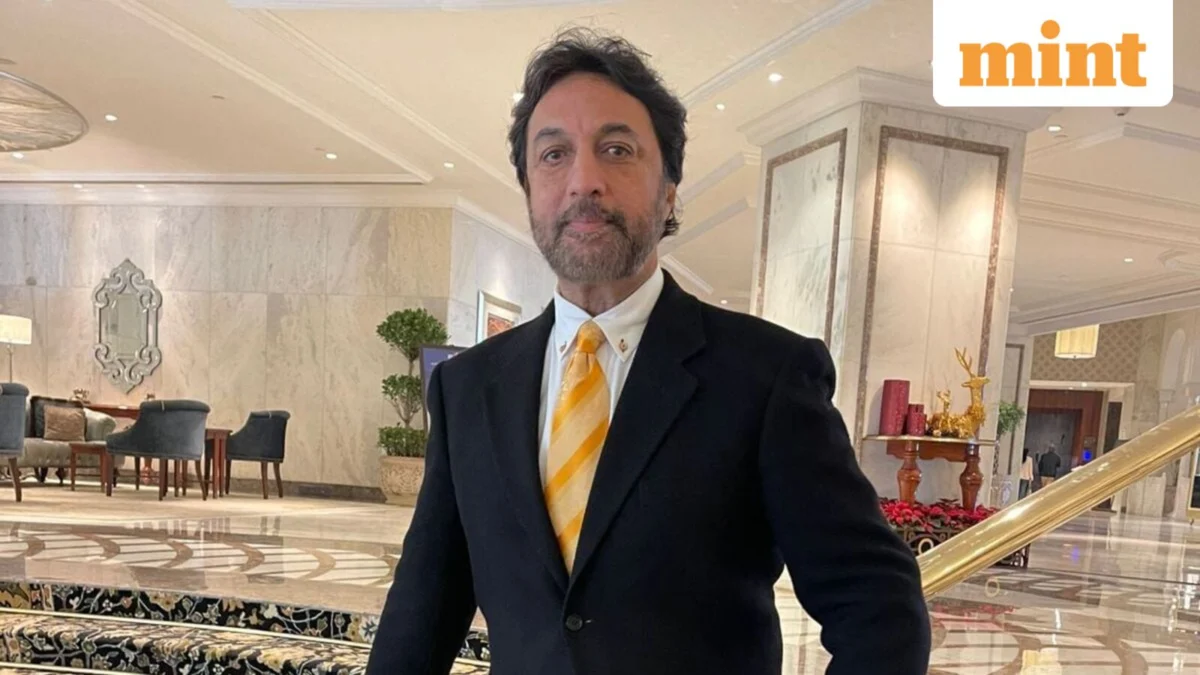
Mumbai, India – As India grapples with escalating inflation, a weakening rupee, and a stagnant equity market, households face unprecedented pressure on their financial well-being. In a candid and sharply contrarian interview with Mint, market veteran Shankar Sharma, founder of GQuant Investech, has issued a stark warning, challenging conventional investment wisdom and critiquing the Reserve Bank of India’s (RBI) currency defence strategy. Sharma’s views paint a sobering picture of India’s macroeconomic trajectory, predicting poor returns from Systematic Investment Plans (SIPs) and advocating a decisive shift towards fixed income, gold, and real estate. His assertions highlight deep-seated vulnerabilities within the Indian economy, calling for a fundamental reassessment of both policy priorities and individual investment strategies.
Main Facts: A Dire Outlook and Radical Solutions
Shankar Sharma’s interview delivers a series of provocative claims that directly contradict prevailing market optimism and official narratives:
- Inflation’s Inevitable Rise: Sharma argues that a prolonged period of high inflation is not just likely but "expected, even inevitable." He attributes this to the persistent weakness of the Indian rupee, which predates the West Asia conflict, and the dramatic surge in global energy prices. This wholesale inflation, he warns, will soon translate into higher consumer prices, eroding household purchasing power.
- Weak External Resilience: Despite 35 years of economic reforms since 1991, India’s external resilience remains akin to a "classic emerging market." Sharma points to the country’s continued vulnerability to imported inflation, heavy reliance on oil, and what he describes as "rented" and "low-quality" foreign exchange reserves. This profile, he asserts, manifests as a falling currency, rising inflation and interest rates, and depleting reserves.
- Futile Rupee Defence: The RBI’s efforts to defend the rupee are deemed "futile" and akin to "spitting against the wind." Sharma contends that the central bank possesses limited control over globalized equity and foreign exchange markets, and its valuable, yet "high-cost, low-quality" reserves should be preserved for more critical needs like import funding.
- Sacrifice Equities to Save the Economy: In his most radical proposal, Sharma suggests the government must "sacrifice the equity market" to safeguard the currency and bond market. He advocates for zero taxes on foreign investors and increased taxes on domestic mutual fund investors to disincentivize SIPs and attract crucial foreign capital. A stock market crash, he argues, is preferable to a currency collapse, evaporating reserves, and skyrocketing interest rates, which historically have proven far more destructive to nations.
- SIPs as a Macroeconomic Threat: Sharma views heavy retail flows into equity markets via SIPs as a significant threat to macroeconomic stability, potentially causing a "macroeconomic disaster." He likens their impact on foreign exchange reserves to that of gold imports, describing India’s FX reserves not as a "war chest" but a "powder keg." He expects SIPs to deliver "poor returns" and ultimately disappoint investors.
- Rising Interest Rates: He anticipates higher interest rates, noting the unsustainably narrow spread between Indian and US 10-year government bond yields. With US yields unlikely to collapse, Indian yields are poised to rise substantially, translating into higher borrowing costs across the economy.
- Equities Not for the Masses: Sharma dismisses the notion that equity markets are designed to enrich average households. He calls it a "brutal zero-sum game" where wealth is stripped from the many to enrich a few, primarily the "sellers of equity-market services." He challenges the narrative of consistent high returns, arguing that genuine bull markets are rare and fleeting.
- Alternative Investment Strategy: For households seeking financial security, Sharma strongly recommends prioritizing fixed income, gold, and selective real estate investments, asserting that those who followed this path have historically been "happier than equity investors."
Chronology: Unpacking the Economic Pressures
The current economic pressures, as outlined by Shankar Sharma, are not isolated incidents but rather a confluence of unfolding events and persistent structural vulnerabilities.
Inflation’s Inevitable Surge: The Dual Blow
Sharma pinpoints two primary drivers for the current and anticipated surge in inflation: the persistent weakness of the Indian rupee and the dramatic rise in global energy prices. The rupee’s depreciation, he asserts, is not a recent phenomenon solely attributable to geopolitical events. Its "extremely weak" stance relative to other emerging-market currencies predates the West Asia war that commenced in March. This pre-existing vulnerability meant that India was already importing inflation through higher-priced goods and services denominated in stronger foreign currencies.
The subsequent near-doubling of energy prices since March, a direct consequence of global geopolitical tensions, delivered a second, crippling blow. As a major net importer of crude oil, India’s economy is acutely sensitive to global energy price fluctuations. While the nation had managed to keep inflation "low before the war," Sharma argues that with oil prices soaring by 70-80%, containing inflationary pressures has become "virtually impossible."
The transmission mechanism from wholesale to consumer prices is now playing out. In the preceding quarter, companies largely absorbed the increased input costs stemming from the weaker rupee and higher energy prices. This absorption, while temporarily shielding consumers, created an anomaly: higher cost-push inflation paradoxically led to a higher manufacturing Gross Value Added (GVA), which "optically boosted" the latest GDP figures. However, this absorption capacity is finite. Sharma warns that higher wholesale inflation will "eventually feed through to consumer prices," unleashing a new round of price increases for households already struggling with stagnant incomes.
The Persistent Rupee Predicament: A Legacy of Vulnerability
Sharma’s critique extends to India’s fundamental external resilience. Reflecting on the 35 years since the landmark 1991 economic reforms, he notes a negligible improvement in India’s global percentile rank for external resilience – moving only from 42nd to 45th. This marginal gain, he contends, reveals a critical truth: "whatever progress we have made elsewhere, our external resilience still resembles that of a classic emerging market."
This enduring vulnerability means India remains heavily susceptible to imported inflation and critically dependent on global oil prices. Sharma further challenges the perception of India’s foreign exchange reserves, asserting they are "largely rented rather than earned" and of "extremely low quality." This implies that a significant portion of these reserves might be composed of volatile short-term capital inflows ("hot money") rather than sustainable current account surpluses, making them less robust in times of crisis.
The current situation, according to Sharma, perfectly aligns with the "classic emerging-market pattern": a falling currency, rising inflation, increasing interest rates, and eroding foreign exchange reserves. This profile, unfortunately, persists decades after liberalization, underscoring systemic challenges that continue to plague the Indian economy.
The RBI’s "Unholy Trinity" Dilemma: A Futile Battle
Sharma is unequivocal in his criticism of the RBI’s strategy to defend the rupee. He points out that the central bank can effectively control only one of India’s three major markets – equity, foreign exchange, and bonds – namely, the local bond market, due to its less globalized nature. The highly interconnected and globally influenced equity and FX markets, he argues, "cannot be controlled by anyone beyond a point."
Therefore, the RBI’s attempts to manage the USD-INR exchange rate are deemed "futile," likened to "spitting against the wind." Such interventions, he believes, are a misallocation of resources, especially given the "very high-cost, low-quality reserves" India possesses. These precious reserves, he argues, should be conserved for more pressing national needs, such as funding essential imports, rather than engaging in a losing battle against market forces.
Sharma articulates the RBI’s predicament as trying to manage an "unholy trinity of capital flows, foreign exchange and yields," a task he deems "nearly impossible for an emerging market." This triangular dilemma often forces central banks to choose between conflicting policy objectives, and Sharma’s strong recommendation is for the government to prioritize currency and bond market stability over the equity market.
Supporting Data: Deconstructing the Claims
Sharma’s arguments, while controversial, are rooted in specific observations about market dynamics and historical trends.
External Resilience: A Stalled Trajectory
The claim of India’s stalled external resilience is particularly striking. While the 1991 reforms ushered in an era of economic liberalization, the marginal improvement in global percentile rankings for external resilience suggests that deep-seated structural issues persist. Key indicators of external resilience typically include the current account balance, foreign exchange reserves adequacy (import cover, short-term debt cover), external debt levels, and the stability of capital flows. A "classic emerging market" profile often implies a persistent current account deficit, reliance on volatile foreign portfolio investment, and susceptibility to sudden stops or reversals of capital flows, which can quickly deplete reserves and trigger currency crises. Sharma’s assertion about "rented" reserves implies a reliance on such short-term, potentially flighty, capital rather than robust export earnings or stable foreign direct investment. This makes the economy highly sensitive to global risk aversion or domestic policy missteps.
The Interest Rate Disconnect
The observation regarding the narrow spread between Indian and US 10-year government bond yields is a critical point. Historically, emerging markets like India offer higher yields to compensate investors for perceived higher risks (e.g., currency depreciation, inflation, political instability) compared to developed economies like the US. A narrow spread suggests that Indian bonds are not adequately compensating for these risks, or that Indian yields are artificially suppressed.
Sharma posits that the RBI has "kept Indian bond yields artificially low for a long time." This is evident, he notes, in the fact that despite the rupee falling "almost 20% in two years," bond yields have "barely risen." This divergence is unsustainable in the long run. If the US Federal Reserve maintains a hawkish stance or continues quantitative tightening, US yields are unlikely to collapse. Consequently, for the spread to widen to more "sensible market levels" – reflecting India’s risk profile – Indian 10-year yields will "have to rise substantially," inevitably translating into higher interest rates across the broader market for consumers and businesses alike.
The Illusion of Equity Returns
Perhaps the most significant challenge from Sharma concerns the widely propagated narrative of Indian equity markets delivering 12-15% compound annual returns over decades. He argues that this headline figure is misleading because it "does not account for taxes or risk." Once adjusted for these crucial factors, he estimates the actual annual return to be a far more modest "roughly 7-8%," and even this is "not guaranteed."

Sharma further dissects the historical performance of Indian equities, asserting that these headline returns "rest heavily on one exceptional period: the roughly 55% compound annual growth rate during UPA-I, between 2004 and 2007." He labels this as "the only truly convincing bull market we had seen until recently." In contrast, earlier booms like the "Harshad Mehta and dotcom booms were narrow and lacked earnings support," meaning they were speculative bubbles rather than fundamentally driven growth.
The post-pandemic bull market (2020 to mid-2024) is acknowledged as the "second," but Sharma points out it "delivered returns about 40% lower." His analysis of the Sensex’s 41-year history reveals a sobering truth: "genuine bull markets have occupied only around 15% of the period," or roughly seven years of "strong, defensible bull markets." The rest, he contends, were "fleeting, often over before investors could participate."
This time, the problem is compounded by the "scale of the marketing" – from YouTube influencers to the "Mutual Funds Sahi Hai" (Mutual Funds are Right) campaign by AMFI (Association of Mutual Funds in India). Sharma labels this campaign "one of the most misleading campaigns ever," questioning its premise and the credibility of financial advice from celebrities like Sachin Tendulkar and Rohit Sharma. He reiterates his "Lake of Returns" theory, which predicted "roughly five years of near-zero returns for mainstream indices starting in mid-2024," a scenario he believes is currently unfolding.
SIPs: A Product Misplaced?
Sharma’s unequivocal stance that mutual fund SIPs are "fundamentally the wrong product for India" and work well "only in one market – the US" is a direct assault on a cornerstone of India’s retail investment strategy. While he defers a detailed explanation, his critique implies that the underlying market conditions, regulatory frameworks, or investor behavior in India do not align with the successful functioning of SIPs as seen in more mature markets. He clearly states his expectation that "SIPs will disappoint investors," suggesting widespread disillusionment among the millions of Indian households channeling their savings into equities via this route.
Official Responses: Contrasting Narratives and Policy Positions
Shankar Sharma’s views stand in stark contrast to the official positions often articulated by India’s financial authorities and industry bodies.
RBI’s Stance on Rupee Management
The Reserve Bank of India (RBI) typically maintains that its interventions in the foreign exchange market are aimed at curbing excessive volatility and ensuring orderly market conditions, rather than targeting a specific exchange rate level. The RBI often emphasizes its commitment to maintaining adequate foreign exchange reserves to manage external shocks and facilitate imports. While Sharma criticizes the "quality" of these reserves, the RBI’s stated objective is to ensure their "adequacy" and "prudent management." The central bank frequently communicates that its actions are guided by macroeconomic stability considerations, including inflation control and supporting growth, acknowledging the interconnectedness of currency, capital flows, and domestic financial markets. Its defence of the rupee, when it occurs, is usually framed as a measure to prevent sharp, speculative movements that could disrupt economic planning and increase imported inflation, which ironically is a concern Sharma shares, albeit with a different solution.
Government and Regulator Views on Retail Participation
The Indian government and financial regulators, including SEBI (Securities and Exchange Board of India) and AMFI, have actively promoted retail participation in capital markets, with SIPs being a central pillar of this strategy. The "Mutual Funds Sahi Hai" campaign, in particular, has been highly successful in onboarding millions of new retail investors, especially from smaller towns and cities. The official narrative champions SIPs as a disciplined, long-term approach to wealth creation, offering benefits like rupee cost averaging and diversification, thereby democratizing access to capital markets. This push is often framed within the broader context of financial inclusion, encouraging households to shift from traditional physical assets like gold and real estate to financial assets, which is seen as crucial for deepening capital markets and funding economic growth. Sharma’s warning of SIPs as a "macroeconomic disaster" directly challenges this foundational policy objective, suggesting that what is perceived as financial empowerment could, in fact, be a systemic risk.
Divergent Economic Perspectives
While Sharma presents a highly bearish and contrarian outlook, it’s important to note that a spectrum of economic opinions exists regarding India’s growth trajectory and market prospects. Many economists and market analysts maintain a more optimistic view, pointing to India’s strong demographic dividend, ongoing structural reforms, increasing formalization of the economy, and robust domestic consumption as drivers for sustained long-term growth. They often argue that temporary global headwinds or currency fluctuations are part of the normal economic cycle and that India’s fundamentals remain strong enough to navigate these challenges. The narrative of India as a bright spot in a challenging global economy is prevalent in many official and institutional analyses, contrasting sharply with Sharma’s assessment of deep-seated vulnerabilities.
Implications: Navigating a Precarious Future
Shankar Sharma’s stark assessment carries profound implications for various stakeholders, from individual households to policymakers and the broader financial industry.
For Households: A Call to Re-evaluate Investment Paradigms
For the average Indian household, the implications of Sharma’s predictions are particularly dire. If his "Lake of Returns" theory holds true, millions of investors currently channeling savings into SIPs could face years of "near-zero returns," leading to significant disillusionment and potential wealth erosion. This would challenge the very premise of disciplined, long-term equity investing that has been widely promoted. The anticipated rise in inflation and interest rates would further compound financial pressure, increasing the cost of living, borrowing, and reducing the real value of savings.
Sharma’s advice to pivot towards "fixed income, gold, and selective investments in real estate" represents a radical departure from the prevailing emphasis on financial assets. This suggests a return to more traditional, tangible asset classes historically favored by Indian households, perceived as safer havens during times of economic uncertainty and currency depreciation. For many, this would necessitate a complete overhaul of their financial planning, prioritizing capital preservation and inflation hedging over growth-oriented equity exposure.
For Policymakers: A Stark Choice and Policy Rethink
Sharma’s most provocative recommendation – to "sacrifice the equity market" to save the currency and bond market – presents policymakers with an agonizing trade-off. Historically, governments strive to maintain stability across all markets. However, Sharma’s argument posits that a collapsing currency and skyrocketing interest rates are far more destructive to a nation’s long-term health than a stock market correction. This implies a need to re-evaluate the hierarchy of policy objectives, potentially prioritizing external stability and fiscal prudence over market sentiment.
His proposals to "reduce taxes on foreign investors to zero and raise taxes on domestic mutual fund investors" are politically sensitive but underscore a fundamental belief in the necessity of attracting stable foreign capital while curbing what he sees as inflationary and reserve-draining domestic retail flows. Such measures, if implemented, would mark a significant shift in India’s capital market policy, potentially facing strong opposition from domestic investor lobbies. The notion of SIPs being a "macroeconomic disaster" and India’s FX reserves a "powder keg" demands a serious reassessment of capital flow management and reserve adequacy strategies.
For the Financial Industry: Challenging the Status Quo
The financial services industry, particularly mutual funds and wealth managers, stands to face significant challenges if Sharma’s views gain traction. The "Mutual Funds Sahi Hai" narrative, a cornerstone of their marketing and growth strategy, would be directly undermined. This could lead to a crisis of confidence among retail investors, potentially triggering a slowdown in SIP inflows or even redemptions, impacting asset under management (AUM) and fee revenues.
Sharma’s blunt critique that "sellers of equity-market services, like asset managers, wealth managers and mutual fund distributors" have grown rich while investors have not, raises ethical questions about the alignment of interests within the industry. It calls for greater transparency, more realistic communication about risks and returns, and potentially a shift towards offering a broader, more balanced range of investment solutions that truly prioritize investor outcomes over product sales.
Broader Economic Stability: A Train Wreck Ahead?
Ultimately, Sharma’s warnings paint a picture of an economy teetering on the brink of significant instability. The interconnectedness of a weakening currency, rising inflation, increasing interest rates, and vulnerable capital flows creates a feedback loop that could lead to broader economic distress. His "train wreck ahead" analogy, if unaddressed, suggests a period of severe economic adjustment, potentially characterized by slower growth, higher unemployment, and reduced foreign investment. The challenge for India’s policymakers will be to carefully navigate these complex dynamics, potentially recalibrating their strategies to safeguard macroeconomic stability and ensure sustainable, inclusive growth for all citizens.