MUMBAI – In a landmark development that signals a seismic shift in the global automotive landscape, Hyundai Motor Group (HMG) has unveiled an ambitious $15.5 billion investment blueprint for India. Spanning the period from 2026 to 2032, this seven-year capital infusion is designed not merely to bolster vehicle production, but to architect a comprehensive mobility ecosystem that integrates advanced research, supply chain resilience, and future-ready technology.
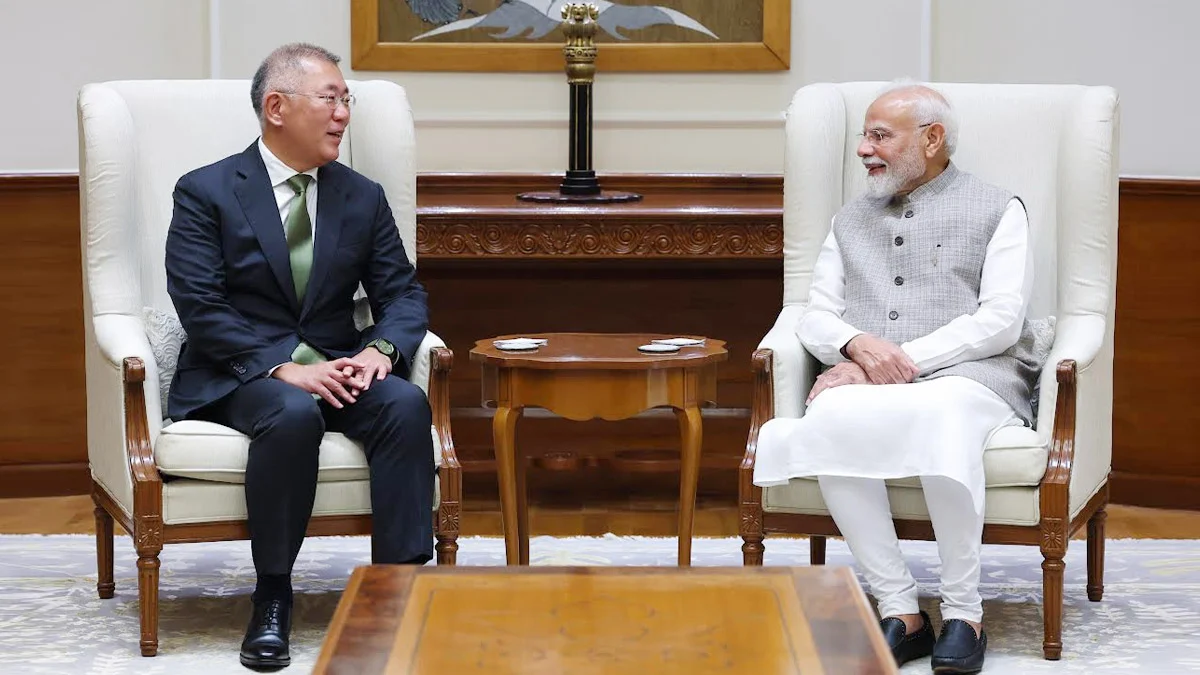
The announcement, which emerged following a high-level meeting between Prime Minister Narendra Modi and Hyundai Motor Group Executive Chair Euisun Chung in New Delhi on October 13, 2026, marks one of the most significant foreign direct investments in India’s industrial history. By positioning India as a pivotal node in its global operations, Hyundai is betting heavily on the country’s demographic dividend, engineering talent, and burgeoning consumer market.
The Strategic Core: A Multi-Pillar Investment
The $15.5 billion commitment is structured to move beyond traditional assembly line manufacturing. Hyundai’s vision is to evolve from a vehicle manufacturer into a “Smart Mobility Solutions Provider” within the Indian theater.
Manufacturing Scalability and Export Ambitions
At the heart of the investment is the expansion of manufacturing capacities for Hyundai Motor India Limited (HMIL) and Kia India Pvt. Limited. Currently, the group operates three formidable facilities:
- Chennai (HMIL): 824,000 units annually.
- Anantapur (Kia India): 431,000 units annually.
- Pune (HMIL): 170,000 units annually.
The group plans to aggressively scale the Pune facility in phased increments, aiming to significantly exceed the current 1.4 million-unit combined capacity. This expansion is designed with a dual purpose: meeting the skyrocketing domestic demand for SUVs and EVs, and elevating India as a premier export hub for Hyundai’s global markets, effectively utilizing the country’s competitive cost structures and logistics capabilities.
R&D and the Innovation Hub
Hyundai is earmarking approximately $700 million exclusively for its Indian R&D centers. This includes the development of a cutting-edge vehicle testing track. This move is calculated to shift the "center of gravity" for engineering innovation toward India. By fostering local engineering talent, the group aims to accelerate the development of next-generation software-defined vehicles (SDVs), localized battery technology, and bespoke features tailored for the unique road and climate conditions of the Indian subcontinent.
Chronology: A Legacy of Growth and Future Intent
Hyundai’s presence in India is not a new phenomenon, but the 2026 announcement represents a qualitative jump in its corporate strategy.
- 1996: Hyundai Motor India is established, marking the beginning of its long-term commitment to the Indian market.
- 2016–2025: The group solidifies its market share, becoming a dominant player in the SUV segment and a key contributor to India’s automotive export earnings. During this period, affiliates like Hyundai Mobis and Hyundai Glovis integrate deeply into the local fabric.
- October 13, 2026: Prime Minister Narendra Modi meets with Executive Chair Euisun Chung. The $15.5 billion investment plan is finalized, setting the trajectory for the next three decades.
- 2026–2032 (The Investment Phase): The implementation period, focusing on the establishment of a dedicated investment entity, supply chain localization, and infrastructure for future mobility.
Supporting Data: Economic Impact and Employment
The economic ripple effects of a $15.5 billion injection are substantial. Hyundai Motor Group currently provides direct employment to over 24,000 individuals in India. The new investment is projected to catalyze a massive surge in indirect employment across the manufacturing, R&D, and service sectors.
The Ecosystem Approach
Hyundai intends to establish a dedicated investment entity to act as a venture and coordination arm. This entity will:
- Identify and Scale Local Partners: By providing capital and technical guidance to domestic suppliers, Hyundai aims to achieve higher levels of parts localization.
- Foster Start-up Synergy: The group will actively invest in Indian start-ups focusing on EV charging infrastructure, vehicle financing, and the circular economy (specifically end-of-life vehicle recycling).
- Supply Chain Resilience: By shortening the value chain and partnering with regional suppliers, the group intends to insulate its operations from global supply chain shocks.
Official Responses and Corporate Vision
During the discussions at the Prime Minister’s Office, Executive Chair Euisun Chung emphasized that the investment is a long-term strategic play rather than a short-term market grab.
"This investment reaffirms our commitment to India for the next 30 years and beyond," Chung stated. "We are not just here to build cars; we are here to support India’s industrial development and create a sustainable, tech-driven future for the Indian workforce."
The Indian government has welcomed the move, viewing it as a validation of the "Make in India" initiative. Officials noted that Hyundai’s commitment to localized R&D and social welfare programs aligns perfectly with the national goal of becoming a global manufacturing hub.
Implications: A New Era for the Indian Automotive Industry
1. Shift Toward High-Tech Manufacturing
The move signals an end to the era of India being viewed merely as a low-cost production destination. With $700 million going into R&D and testing, India is being integrated into the global brain trust of Hyundai’s future mobility strategy. This will likely result in a surge of patent filings and intellectual property generation within the country.
2. Strengthening the Ancillary Sector
By focusing on "parts localization," Hyundai is creating a robust tier-two and tier-three supplier base. This will help smaller Indian manufacturers upgrade their technical standards to meet the global requirements of a multinational conglomerate, thereby enhancing their competitiveness globally.
3. Social and Sustainable Development
Hyundai’s commitment extends beyond profit margins. The group has historically been active in social welfare, having contributed over $110 million since 2016 toward education and vocational training. The expansion of the Hyundai Academy for Technical Skills (HATS) in Chennai is a direct effort to address the "skills gap" in the automotive industry, ensuring that the next generation of Indian engineers is prepared for the transition to electric and autonomous vehicles.
4. Future Mobility and Circular Economy
By exploring "end-of-life vehicle recycling," Hyundai is positioning itself at the forefront of the green transition. As India’s vehicle population ages, the ability to recycle batteries and materials will be a massive economic and environmental advantage. This proactive stance on sustainability sets a benchmark for other global automotive players operating in the country.
Conclusion
The $15.5 billion investment by Hyundai Motor Group is a testament to the maturation of the Indian automotive sector. It represents a shift from a consumer market defined by volume to a strategic partner defined by innovation.
As the group transitions from 2026 toward 2032, its success will depend on its ability to integrate the vast, fragmented Indian supply chain into its global standards. However, with a clear focus on R&D, local manufacturing, and sustainable mobility, Hyundai is well-positioned to cement its role as a cornerstone of the Indian economy. The next seven years will be defined by the transformation of the "Indian car" into a global symbol of high-tech engineering, marking a new chapter in the nation’s industrial story.