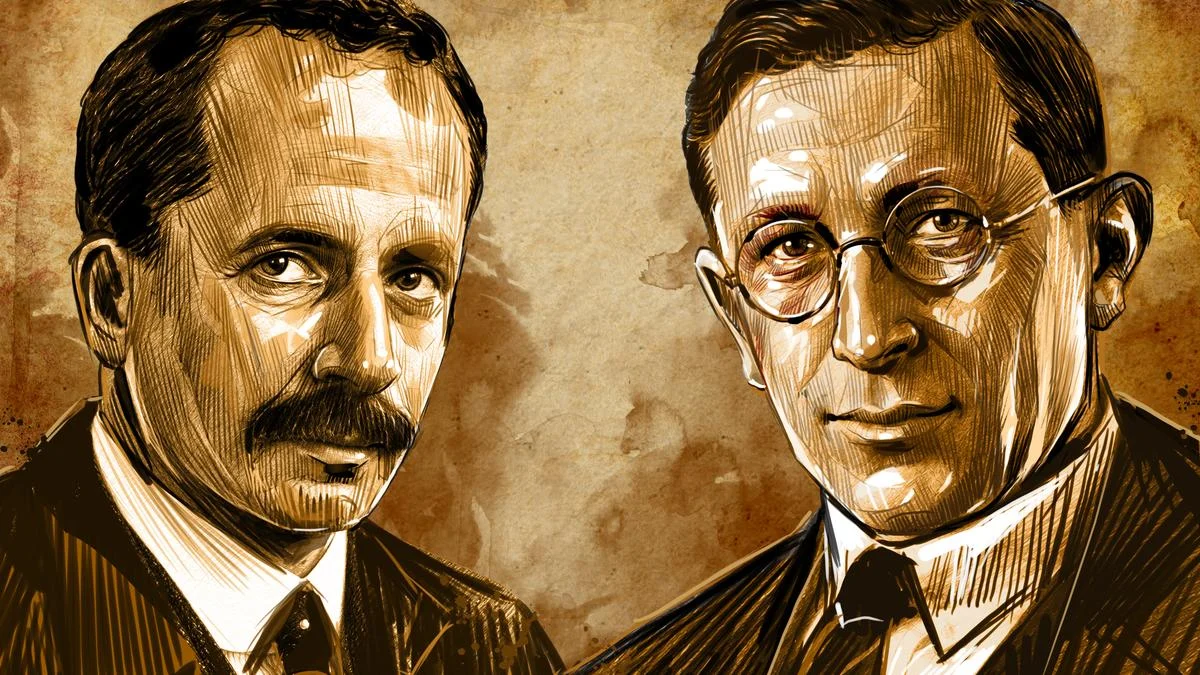
In the early 20th century, a diagnosis of Type 1 diabetes was, for all practical purposes, a death sentence. Patients, often children, were subjected to harrowing "starvation diets" that only managed to prolong their suffering by a few months. It was in this grim medical landscape that a small, determined team at the University of Toronto achieved a breakthrough that would redefine modern medicine. The 1923 Nobel Prize in Physiology or Medicine, awarded to Frederick G. Banting and John J.R. Macleod, stands as a testament to this transformative discovery—the isolation of insulin.
While the Nobel committee recognized Banting and Macleod, the story of insulin is one of collaborative genius, encompassing the dedicated efforts of Charles Best and James Collip. Their collective work not only saved millions of lives but also pioneered the field of hormone replacement therapy, forever altering the prognosis of endocrine disorders.
The Scientific Context: Decades of Seeking the "Internal Secretion"
Long before the 1920s, the medical community suspected that the pancreas held the key to blood sugar regulation. In 1889, German researchers Oskar Minkowski and Joseph von Mering conducted a landmark study showing that when a dog’s pancreas was surgically removed, the animal developed severe diabetes. This proved that the pancreas produced an "internal secretion" necessary for metabolic health.
Later, pathologists identified the "islets of Langerhans"—clusters of specialized cells within the pancreas—as the likely source of this elusive substance. However, for thirty years, the challenge remained: how to isolate this substance without it being destroyed by the pancreas’s own digestive enzymes. Countless researchers attempted to create pancreatic extracts, but their preparations were either toxic, ineffective, or too crude for human use.

Chronology of a Medical Revolution
The path to the 1923 Nobel Prize was marked by intense laboratory labor, intellectual friction, and high-stakes clinical testing.
- 1920: John J.R. Macleod, a seasoned Scottish-born physiologist at the University of Toronto, is already an expert in carbohydrate metabolism.
- 1921: Frederick G. Banting, a Canadian surgeon, approaches Macleod with a hypothesis: by tying off the pancreatic ducts of a dog, the digestive tissue would degenerate, leaving only the healthy islets of Langerhans from which the anti-diabetic substance could be extracted.
- Summer 1921: Working in Macleod’s laboratory, Banting and his assistant, medical student Charles Best, begin their experiments. They succeed in creating an extract that lowers blood sugar in pancreatectomized dogs.
- Late 1921: The early extracts prove successful in animals but are too impure for human application. Biochemist James Collip joins the team to refine the purification process.
- January 1922: Fourteen-year-old Leonard Thompson becomes the first human to receive the insulin extract. While the first injection fails due to impurities, a second, purified dose leads to a dramatic recovery, signaling the start of a new era.
- 1923: The Nobel Committee recognizes the discovery, awarding the prize to Banting and Macleod.
- 1925: Banting and Macleod deliver their official Nobel lectures, cementing the discovery in the annals of science.
The Unsung Architects: Best and Collip
The Nobel Prize has historically been criticized for its inability to recognize more than three contributors per category. In the case of insulin, the exclusion of Charles Best and James Collip from the award remains a point of historical contention.
Charles Best, a young medical student at the time, was the primary hands-on collaborator during the grueling summer of 1921. His partnership with Banting was the engine of the early experimental phase. James Collip, a master biochemist, was the "missing piece" of the puzzle. Without his sophisticated techniques for purifying the pancreatic extract, the clinical success in Leonard Thompson would likely not have been possible.
The internal dynamics of the team were complex. Recognizing the gravity of their contributions, Banting, in an act of profound professional generosity, shared half of his Nobel prize money with Best. Similarly, Macleod shared half of his portion with Collip. These actions underscored the reality that the discovery was not the work of two men, but the result of a concerted, multifaceted team effort.

The Physiological Mechanism: How Insulin Works
To understand why insulin was such a monumental breakthrough, one must understand its function. Insulin is a polypeptide hormone produced by the beta cells of the pancreas. Its primary role is to act as a "key," allowing glucose (sugar) from the bloodstream to enter the body’s cells, where it is converted into energy or stored for later use.
In individuals with Type 1 diabetes, the immune system erroneously attacks these beta cells, leading to an absolute deficiency of insulin. Without it, glucose remains trapped in the blood, causing toxic hyperglycemia, while the cells starve for energy, forcing the body to break down fat and protein in a way that leads to life-threatening ketoacidosis.
The introduction of external insulin replaced this missing hormone. It did not "cure" the underlying autoimmune condition, but it effectively turned a fatal metabolic breakdown into a chronic, manageable health state.
Global Implications and Modern Diabetes Care
The ripple effects of the Toronto discovery are immeasurable. Insulin therapy paved the way for the entire field of endocrinology, establishing the paradigm of hormone replacement. It proved that if the body fails to produce a vital substance, it can be supplemented.

Modern Advancements
Since the 1920s, the treatment has evolved from crude animal-derived extracts to highly refined, bio-engineered human insulin. Today, patients use:
- Rapid-acting analogs: Designed to mimic the natural surge of insulin following a meal.
- Long-acting analogs: Providing a steady "basal" level of insulin throughout the day.
- Insulin pumps and CGMs: Modern technology now allows for "closed-loop" systems, or artificial pancreases, which monitor glucose levels in real-time and deliver insulin automatically.
The Societal Burden
Despite the discovery being over a century old, the global fight against diabetes continues. World Diabetes Day is observed on November 14th—the birthday of Frederick Banting—a day that serves as a reminder of the fragility of health and the power of medical innovation. However, as the global prevalence of Type 2 diabetes rises, the challenge has shifted from simply "discovering" the treatment to ensuring equitable access to it.
The Nobel Legacy: A Final Reflection
The 1923 Nobel Prize in Physiology or Medicine is more than just a trophy on a shelf; it represents the precise moment humanity gained the upper hand over a disease that had terrorized families for generations.
Banting’s Nobel lecture, "Diabetes and Insulin," and Macleod’s "The Physiology of Insulin and Its Source in the Animal Body," remain foundational texts for medical students. Yet, the true legacy of the discovery is not found in the lecture halls of Stockholm, but in the homes of millions of people who wake up every morning, administer a dose of insulin, and go about their lives.

The story of the University of Toronto team remains a cautionary tale about the complexities of scientific recognition, but more importantly, it stands as an enduring beacon of what can be achieved when clinical observation, physiological research, and biochemical refinement align. As we look toward the future of diabetes care—including gene therapy and islet transplantation—we stand firmly on the shoulders of the giants who, in the early 1920s, dared to believe they could save the world from the shadow of diabetes.