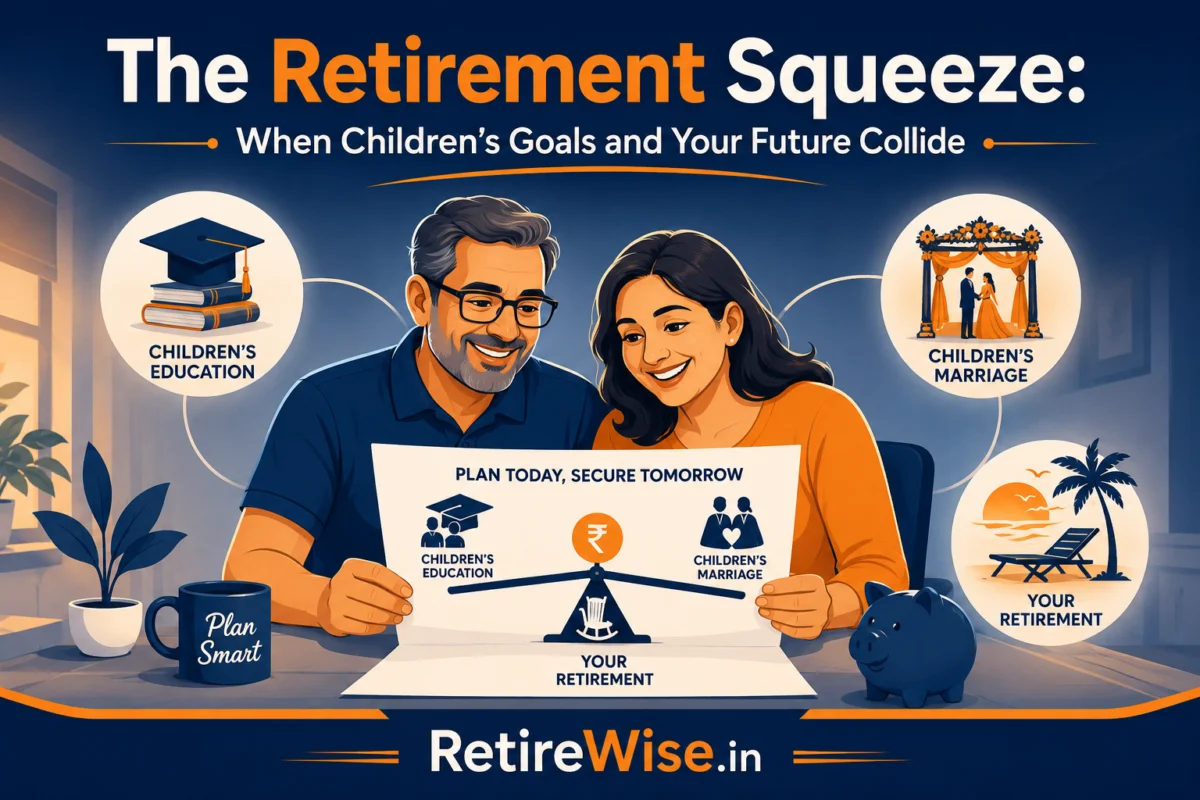
In the landscape of modern Indian personal finance, a quiet but profound shift is altering the trajectory of millions of households. For decades, the "Indian Dream" followed a predictable, linear path: education, employment, marriage, parenthood, and eventually, a peaceful retirement funded by a decade or more of focused savings once children were settled. Today, that linear progression has collapsed into what financial experts are calling the "Retirement Squeeze."
The catalyst for this discussion is a poignant reflection from a middle-aged professional named Amit. His concerns, shared with financial advisor Hemant Beniwal, highlight a growing anxiety: the fear that the rising costs of a child’s higher education and marriage will inevitably cannibalize one’s retirement corpus, forcing a "downgrade" from a premium lifestyle to a humble one.
This report explores the mechanics of this financial squeeze, the generational shifts driving it, and the strategic imperatives required to navigate a future where retirement is no longer the final goal, but a concurrent one.
Main Facts: Defining the Modern Financial Collision
The "Retirement Squeeze" refers to the overlapping of major life-stage expenses that were historically sequential. In previous generations, the financial obligations of parenthood—specifically funding a child’s higher education and wedding—were typically concluded by the time a parent reached their early 50s. This left a "golden window" of 10 to 15 years to maximize retirement savings before the cessation of active income.
In the current era, several factors have converged to eliminate this window:
- Delayed Life Milestones: Marriages and childbirth are occurring significantly later in life.
- Hyper-Inflation in Education: The cost of professional degrees, particularly in STEM and management, is outstripping general inflation.
- The Longevity Paradox: Increased life expectancy requires a retirement corpus that can sustain an individual for 25 to 30 years post-retirement, rather than the 10 to 15 years planned for by previous generations.
- The "Premium" Lifestyle Expectation: A rise in discretionary spending has set a high bar for what constitutes a "comfortable" life, making the prospect of a lifestyle downgrade psychologically taxing.
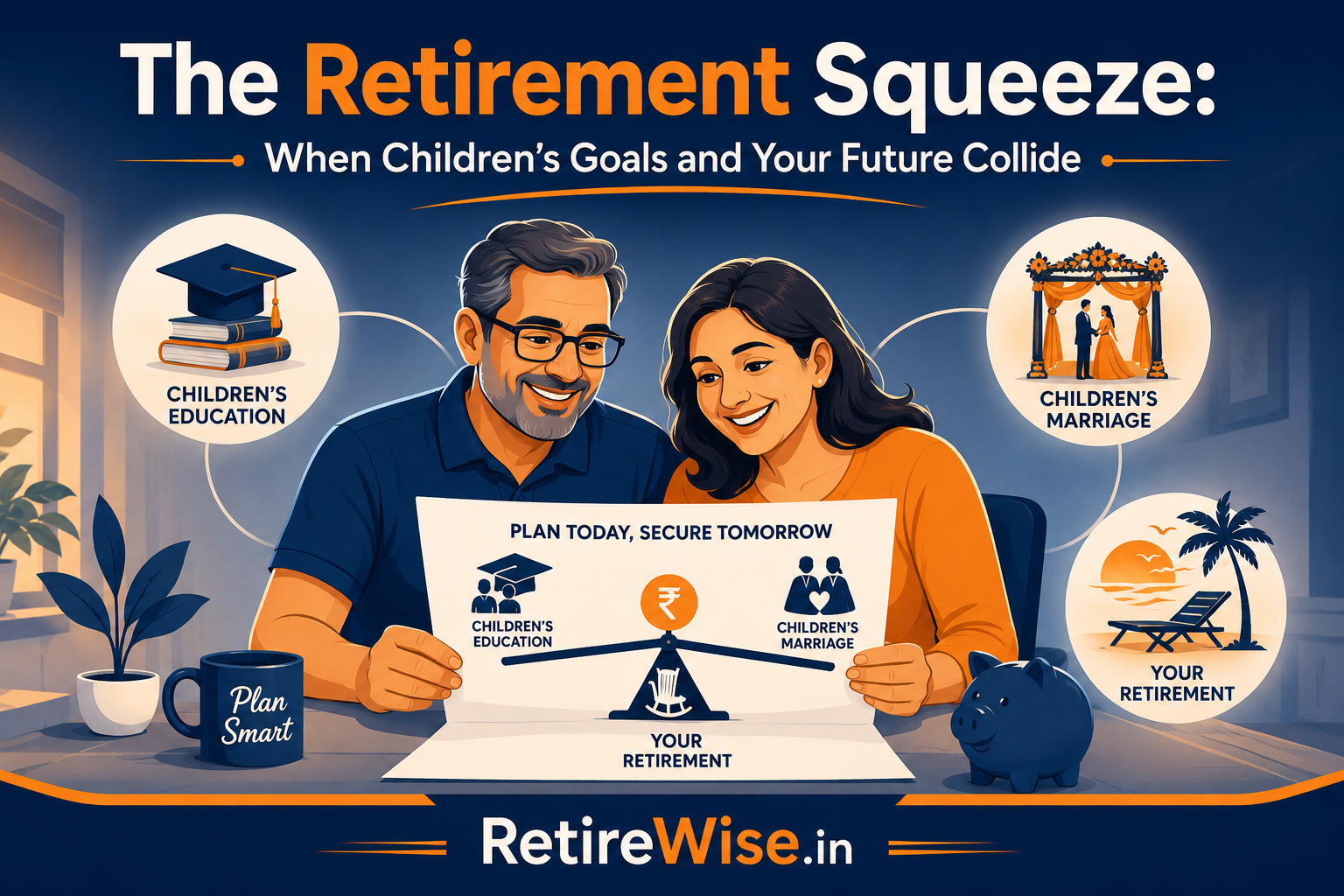
As Amit noted in his correspondence, the realization that "life is much more than comforts and luxuries" is a necessary philosophical shift, but the mathematical reality remains: when three massive expenses (Education, Wedding, Retirement) collide, the traditional "savings-first" approach is often insufficient.
Chronology: The Collapse of the Sequential Life Path
To understand the current crisis, one must look at the evolution of the Indian family timeline over the last forty years.
The 1980s-1990s: The Sequential Model
In this era, the average age of marriage for the urban middle class was approximately 23–26. Children were typically born by the time the parents were 28. By the time the parent reached age 50, the child was 22—graduated and often entering the workforce. The "wedding expense" usually followed shortly after. Consequently, from age 52 to 60, the parent had zero dependents and peak earning capacity, allowing for an aggressive "catch-up" phase for retirement.
The 2000s-2010s: The Transition Phase
As the economy opened up, career specialization became the norm. Marriage ages pushed to 28–30. Children were born when parents were in their early 30s. The "golden window" for retirement savings shrank to approximately five years (ages 55 to 60), as children were still in post-graduate programs or just beginning their careers as the parents approached retirement age.
The 2020s and Beyond: The Overlap Model
Today, it is common for professionals to marry in their early-to-mid 30s and have children in their late 30s or even early 40s. For a parent who has a child at age 38, that child will enter university when the parent is 56. The most expensive years of parenthood—undergraduate and postgraduate tuition—now coincide exactly with the final five years of the parent’s career and the first five years of their retirement. There is no "window" left; the goals have collided.
Supporting Data: The Cost of Delay and the Price of Education
The financial pressure of this collision is exacerbated by the specific inflation rates of the goals involved.
Education Inflation
While the Consumer Price Index (CPI) in India often hovers between 5% and 7%, education inflation is estimated to be significantly higher, often ranging between 10% and 12% annually. A premier MBA program that costs ₹25 lakhs today could easily cost ₹65 lakhs in 15 years. For parents in the "squeeze," this means their savings must grow at a rate that exceeds not just general inflation, but the specific, aggressive inflation of the education sector.
The Longevity Risk
According to data from the World Bank and various actuarial studies, life expectancy in India has seen a steady climb. For an urban professional retiring today at 60, there is a high statistical probability of living until 85 or 90.
- The 30-Year Rule: A retirement corpus must now last 30 years.
- The Corpus Math: If a family’s monthly expenses are ₹1 lakh today, they will need a corpus of approximately ₹3.5 to ₹4 crore to maintain that lifestyle for 30 years, assuming a conservative withdrawal rate and accounting for post-retirement inflation.
Wedding Costs
Despite a growing trend toward "minimalist" weddings among certain demographics, the wedding industry in India remains a cultural juggernaut. Estimates suggest that the average Indian family spends between 15% and 25% of their total accumulated wealth on a child’s wedding. When this expense occurs at age 62 or 65, it represents a direct withdrawal from the retirement "pot" that can no longer be replenished by a monthly salary.
Expert Perspectives: The Strategic Hierarchy of Goals
Financial planners and wealth managers emphasize that the "Retirement Squeeze" requires a cold, analytical prioritization of goals. The consensus among experts like Hemant Beniwal revolves around a singular, uncomfortable truth: Retirement is the only goal for which there is no institutional lending.
The "No-Loan" Principle
"You can get a loan for a child’s education. You can even get a personal loan for a wedding. But no bank in the world will give you a ‘Retirement Loan’ to fund your groceries and healthcare in your 80s," says Beniwal. This principle dictates that the retirement corpus must be treated as "sacrosanct."
The Strategic Use of Education Loans
Experts suggest a counter-intuitive strategy even for wealthy clients: opting for an education loan.
- Preservation of Capital: It keeps the parent’s retirement corpus intact, allowing it to continue compounding during the critical final years of employment.
- Tax Benefits: Under Section 80E of the Income Tax Act, the interest paid on an education loan is deductible from taxable income for up to eight years.
- Instilling Discipline: Shifting the repayment responsibility to the child once they begin working fosters financial maturity and prevents the "entitlement trap."
Asset Allocation in the Squeeze
For those facing the squeeze, traditional "safe" investments like Fixed Deposits (FDs) may be insufficient. Advisors recommend a more prolonged exposure to equities. If a parent is 55 but their child’s education is still 5 years away and retirement is 30 years long, they cannot afford to move entirely to debt. A portion of the portfolio must remain in growth assets to combat the 30-year inflation cycle.
Implications: Social and Psychological Consequences
The "Retirement Squeeze" is not merely a balance-sheet problem; it has profound implications for the social fabric of the Indian middle class.
The "Sandwich Generation" Stress
The generation currently in their 40s and 50s finds themselves "sandwiched" between the needs of their aging parents (who may not have adequate healthcare portfolios) and the needs of their late-born children. This dual pressure often leads to "burnout" and a neglect of their own health and retirement needs.
Redefining the "Successful" Life
Amit’s reflection on moving to a "humble lifestyle" suggests a looming cultural shift. As the cost of maintaining a "premium" lifestyle becomes unsustainable, families may be forced to redefine success. This involves:
- Moving from "Big Fat Weddings" to meaningful, smaller ceremonies.
- Prioritizing quality of education over the "brand name" of the institution if the latter requires depleting retirement funds.
- Downsizing real estate in the early years of retirement rather than waiting for a financial crisis.
The Risk of Intergenerational Dependency
The greatest risk of the squeeze is the "Postponed Burden." When parents sacrifice their retirement to pay for a child’s Ivy League degree or a lavish wedding, they often end up financially dependent on that same child 20 years later. This creates a cycle of financial instability. Experts argue that the most "loving" act a parent can perform is to ensure their own financial independence, thereby freeing their children from the emotional and financial weight of supporting them in old age.
Conclusion: Planning for the Choice, Not the Force
The "Retirement Squeeze" is an inevitable byproduct of changing societal norms and economic realities. However, as the case of Amit demonstrates, it is a challenge that can be met with both strategic planning and philosophical grace.
The transition from a premium lifestyle to a humble one is a journey of dignity when it is a conscious choice made to ensure long-term security. It becomes a tragedy only when it is forced upon a family by the exhaustion of funds.
The mandate for the modern Indian professional is clear:
- Acknowledge the overlap: Stop planning for goals in a sequence that no longer exists.
- Prioritize the "Un-loanable": Secure the retirement corpus first.
- Utilize financial tools: Use education loans and insurance to hedge against the collision of expenses.
In the end, the goal of financial planning is not just to accumulate wealth, but to buy the freedom to choose how one lives. By addressing the squeeze head-on today, families can ensure that their "humble" or "premium" future remains a matter of preference, not a matter of necessity.