
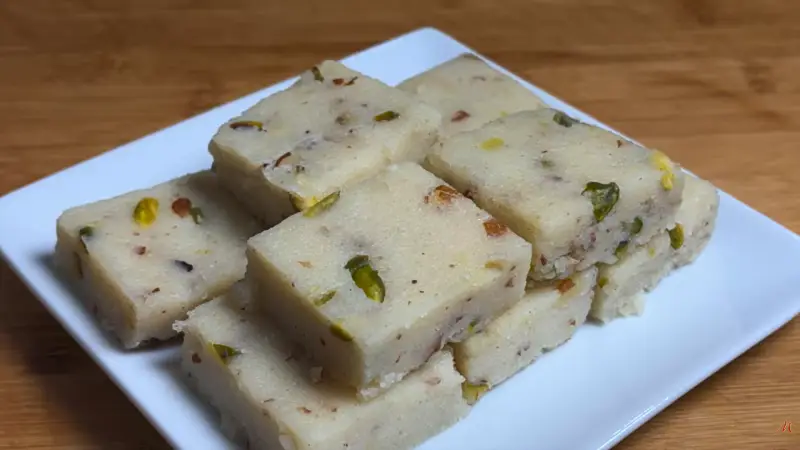
In the fast-paced landscape of modern culinary arts, the bridge between convenience and tradition is often difficult to cross. For many home cooks, the allure of authentic Indian sweets—specifically the rich, melt-in-the-mouth texture of Milk Burfi—is frequently dampened by the time-intensive processes traditionally associated with their preparation. However, a recent shift in home-kitchen methodology, championed by culinary experts like Manjula’s Kitchen, has introduced a breakthrough: the 15-minute Instant Milk Burfi. This development represents more than just a shortcut; it is a sophisticated recalibration of classic techniques designed for the contemporary lifestyle.
Main Facts: The Evolution of a Classic Sweet
Traditionally, Milk Burfi is a labor of love. It requires hours of slow-boiling milk—often over a low flame—to reduce it into khoya (milk solids), a process that demands constant vigilance to prevent burning or uneven consistency. The "Instant" version, however, pivots away from this laborious reduction method.
The core premise of the Instant Milk Burfi lies in the strategic use of dehydrated or condensed dairy products, which achieve the required richness without the hours of evaporation. By utilizing high-quality milk powder and balancing it with healthy fats like ghee (clarified butter) and a touch of heavy cream, the recipe bypasses the lengthy reduction stage entirely. The resulting confection maintains the traditional, opulent mouthfeel and aromatic profile of the original, all while reducing the total labor time to approximately 20 minutes (5 minutes of preparation and 15 minutes of active cooking).
Chronology: From Stove-Top Labor to Modern Efficiency
To understand the significance of this culinary innovation, one must look at the historical trajectory of the dish:
- The Traditional Era (Pre-20th Century): Burfi making was a generational skill. Milk was sourced fresh and simmered for three to six hours in heavy-bottomed iron vessels. The success of the dish was measured by the cook’s ability to gauge the exact moment the proteins coagulated into a firm, spreadable fudge.
- The Industrial/Condensed Era (Mid-20th Century): The advent of commercially available sweetened condensed milk and milk powders allowed home cooks to shave significant time off the process. These ingredients provided a stable base, reducing the need for long-term evaporation.
- The "Instant" Revolution (Current Day): Modern recipes have refined these ratios to a science. By carefully balancing the moisture content of heavy cream against the dry volume of milk solids, chefs have created a "set-and-forget" methodology. The modern workflow now involves a simple one-pot process: heating the fat, incorporating the dairy, and tempering the mixture until it achieves a specific elasticity before transferring it to a tray for cooling.
Supporting Data: The Science of the Set
The success of a 15-minute Burfi is not merely a matter of speed; it is an exercise in food chemistry. When preparing this dish, several key variables determine the structural integrity of the final product:
- The Emulsion Factor: The incorporation of heavy cream into the milk powder base is crucial. Cream acts as an emulsifier, preventing the milk powder from forming dry, grainy clumps.
- Thermal Thresholds: The mixture must reach a precise temperature—typically between 110°C and 115°C—to ensure that the sugars in the milk powder and cream crystallize correctly as they cool. This is what gives the Burfi its signature "fudge" texture.
- The Role of Ghee: Beyond flavor, ghee serves as a lubricating agent that prevents the mixture from sticking to the pan. In industrial food science terms, it acts as a release agent that ensures the Burfi can be sliced into clean, professional-looking squares once cooled.
Official Guidance and Troubleshooting
Culinary experts note that while the recipe is simplified, it is not "forgiving" of errors in technique. To achieve professional results, home cooks should adhere to the following established best practices:
Understanding Ingredient Ratios
- Fine Sooji (Semolina): While some recipes utilize a fine grain of sooji to provide a slight structural "bite," it is essential that the sooji is fine. Coarse grains can result in a gritty mouthfeel that ruins the elegance of the milk solids.
- Butter vs. Ghee: While butter can serve as a substitute, the moisture content in butter is higher than that of ghee. Consequently, if butter is used, the cook must account for the additional evaporation time required, or the Burfi will fail to set.
Addressing Common Failures
- The "Soft" Set: If the Burfi remains too soft, it is almost exclusively due to an incomplete reduction of moisture. The mixture must reach a point where it visibly pulls away from the sides of the pan, forming a cohesive ball.
- The "Hard" Set: Conversely, if the mixture is cooked beyond the point of cohesion, the fats begin to separate and the sugars over-caramelize. This results in a chewy, crystalline texture that lacks the creaminess expected of a high-quality Burfi.
Implications for the Culinary Landscape
The emergence of the 15-minute Instant Milk Burfi has profound implications for the preservation of Indian culinary culture. As younger generations become increasingly busy, there is a risk that traditional, time-consuming recipes might be abandoned in favor of store-bought, mass-produced alternatives.
By streamlining these processes without sacrificing the "desi" soul of the dish, home cooks are encouraged to continue the practice of homemade confectionery. This democratization of the kitchen—making complex-tasting sweets accessible to novices—serves to keep cultural traditions vibrant and active. It transforms a special-occasion labor into a manageable, everyday indulgence.
Furthermore, this efficiency reflects a broader trend in global gastronomy: the "high-quality convenience" movement. Consumers are no longer willing to choose between quality and time. Instead, they are demanding—and receiving—methods that allow for gourmet results within the constraints of a 24-hour day.
Conclusion: A New Standard for Home Sweets
The 15-minute Milk Burfi is a testament to the fact that complexity in flavor does not necessitate complexity in labor. Through precise ratios and a mastery of the stove-top, home cooks can achieve a result that rivals the offerings of traditional mithai shops. Whether for a festival, a sudden guest arrival, or a personal craving, this recipe stands as a cornerstone of modern, efficient Indian cooking. As we continue to refine these methods, the boundaries of the home kitchen expand, proving that even the most cherished traditions can evolve to meet the demands of the modern world.