
In the modern digital economy, content is no longer just a marketing tactic; it is the fundamental currency of business growth. Whether you are a solopreneur looking to build a personal brand, a startup founder aiming to capture organic market share, or a marketing professional seeking to climb the corporate ladder, the ability to create content that converts is an essential skill set.
However, the educational landscape for marketers is saturated. A cursory search for "content marketing courses" yields hundreds of results, from free certification programs to high-ticket masterminds. On the surface, they often appear identical: slick video modules, downloadable PDFs, and promises of "exponential growth." Yet, as any seasoned professional knows, there is a chasm between theoretical knowledge and the ability to generate revenue.
This report evaluates the current landscape of content marketing education, identifying which programs offer genuine ROI and which are merely rehashing outdated strategies.
The Evolution of Content Marketing Education: A Chronological Shift
To understand why some courses are failing while others are thriving, one must look at the timeline of content marketing evolution.

- The SEO Era (2010–2016): During this period, the industry focused on keyword stuffing, backlink building, and volume. Courses from this era taught the "more is better" philosophy.
- The Authority Era (2017–2022): As Google’s algorithms matured, the focus shifted to E-E-A-T (Experience, Expertise, Authoritativeness, and Trust). Education pivoted toward high-quality, long-form content and brand building.
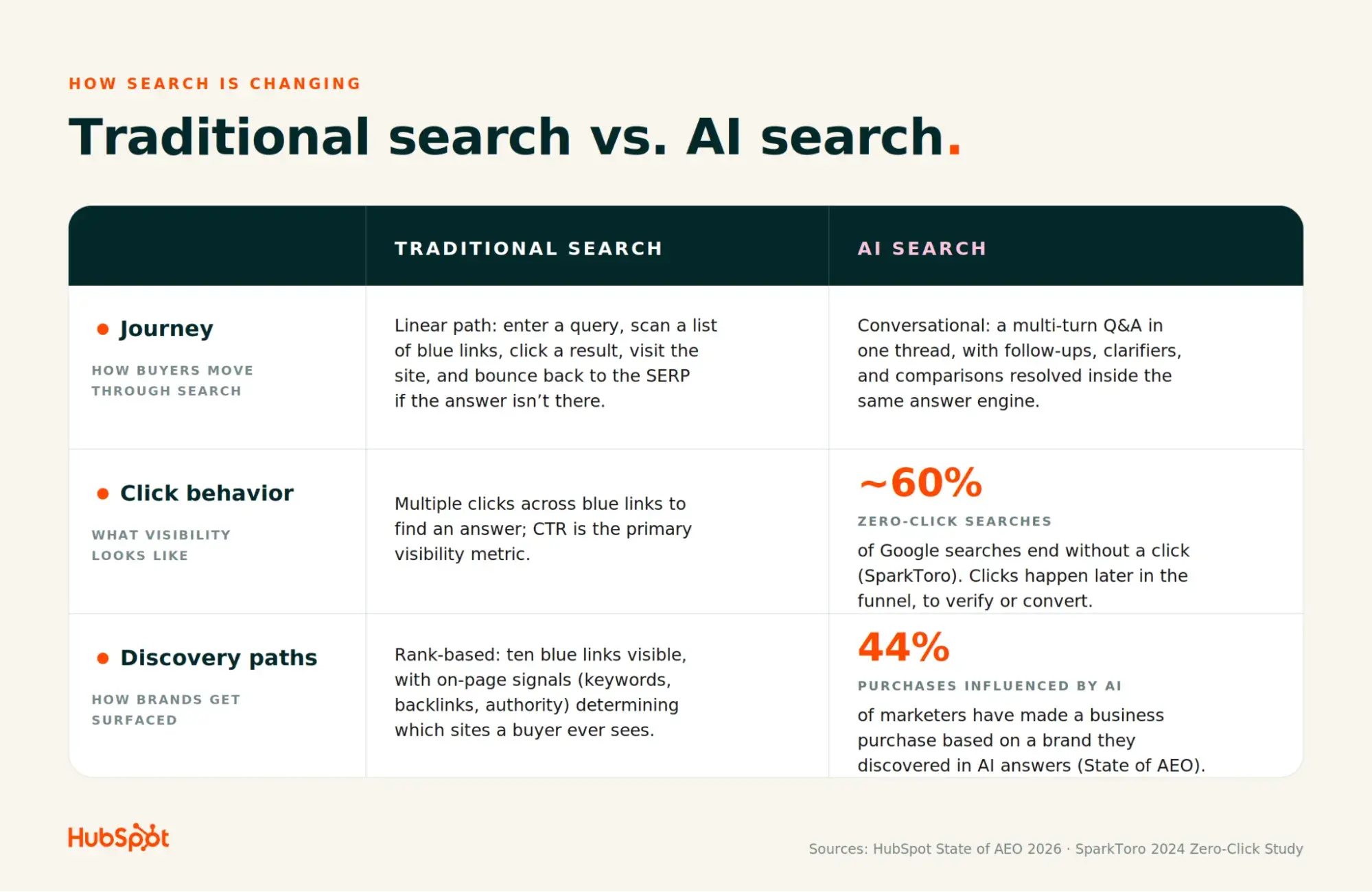
- The AI and Human-Centric Era (2023–Present): The integration of Large Language Models (LLMs) has fundamentally disrupted the industry. Today, anyone can generate "average" content in seconds. Consequently, the value of generic content has plummeted, while the value of original insights, personal narrative, and community-driven distribution has skyrocketed.
Modern learners must prioritize courses that address this transition. If a curriculum does not account for how AI has changed search intent and audience trust, it is likely teaching an obsolete methodology.
Critical Evaluation Criteria
Not all courses are created equal. To help you filter through the noise, we have established a framework based on six core pillars of effectiveness:
- Instructor Credibility: Does the instructor currently operate a business using the tactics they teach? Past success is a guide, but active, current success is proof.
- Breadth of Formats: Blogging is no longer enough. A comprehensive course must address social media, email, and distribution strategy.
- Advice Recency: Is the content updated to reflect post-AI search behaviors?
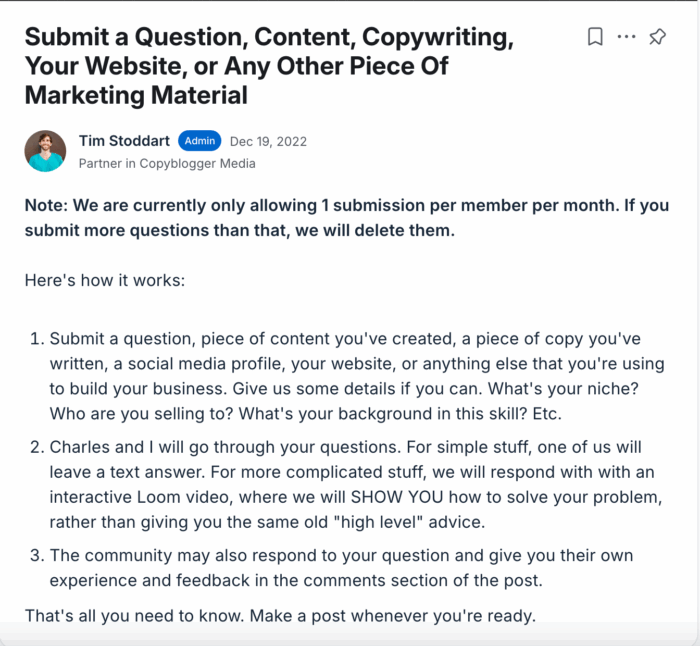
- Feedback Loops: Does the course provide access to expert critique?
- Community Engagement: Can you collaborate with peers?
- Pricing Models: Does the cost align with the value and depth of the support provided?
Top-Tier Programs: A Comparative Analysis
1. Copyblogger Academy
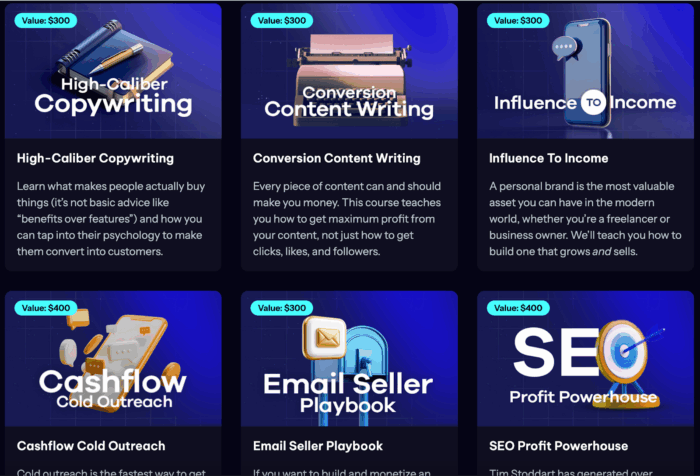
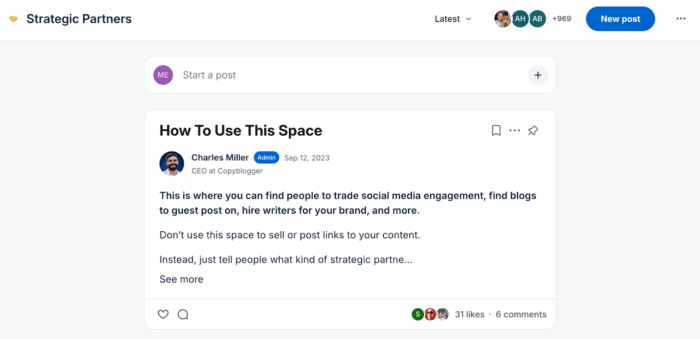
Copyblogger Academy stands out by blending a structured course library with a high-touch community. Operated by Tim Stoddart and Charles Miller, the platform is built on the premise that content must function as a business asset.
- Why it matters: The instructors are currently managing seven-figure businesses, meaning the feedback provided in the community is battle-tested in today’s market.
- Unique Selling Point: The focus on "ecosystem building"—connecting SEO, social media, and email into a unified revenue machine.
2. Grow and Convert’s "Customers from Content"
This program is designed for those who view content marketing as a direct revenue driver rather than a vanity project. Benji Hyam and Devesh Khanal prioritize the "pain-point SEO" methodology, which focuses on bottom-of-funnel conversion.
- Evidence of Impact: The course is based on their agency’s work with clients like Patreon and Leadfeeder.
- The "Agency Apprentice" Feel: Because the course is hosted within a private forum, it fosters an environment where students can dissect real-world failures and successes in real-time.
3. Superpath
Superpath is less a traditional "course" and more an elite professional network. While it offers "mini-courses" and teardowns, its true value lies in the community of hundreds of veteran content marketers.
- Who it’s for: Senior marketers and those looking to advance into management roles at B2B/SaaS companies.
- The Verdict: If you need networking, peer feedback, and high-level strategy discussions, this is the gold standard.
4. HubSpot Content Marketing Certification
HubSpot remains the industry leader for foundational knowledge. It is a free, comprehensive, and well-produced resource.
- The Limitation: It lacks a focus on the "modern" landscape. It provides excellent theoretical foundations but falls short on the tactical execution required to navigate the current AI-saturated search environment. It is an ideal starting point, but not a finish line.
5. Ahrefs: Blogging for Business
Tim Soulo’s course is arguably the best tactical guide for SEO-driven blogging. It remains a masterclass in how to build a blog that earns backlinks and organic traffic.
- The Constraint: It is strictly focused on SEO and blogging. It ignores the power of personal branding and multi-channel distribution, which are vital for modern creators. Furthermore, the 2020 recording date means it lacks updates regarding the AI search revolution.
6. Semrush Academy (Advanced Courses)
Brian Dean’s contributions to Semrush Academy remain some of the most concise and actionable guides available.
- Strengths: The templates and worksheets provided are high-quality.
- Weaknesses: Like many free corporate resources, there is no mechanism for one-on-one feedback or community interaction, making it difficult to troubleshoot when your specific strategy hits a wall.
7. CXL Content Marketing Research
CXL is renowned for its technical rigor. The content provided by Derek Gleason (Shopify) is data-backed and strategic.
- Implications: This is for the marketer who wants to move away from "gut-feeling" marketing and toward scientific, research-driven strategy. It is, however, a "pure" strategy course that lacks the creative "how-to" of writing or social media execution.
8. Content Marketing Masterclass (Udemy)
Brad Merrill’s course is a broad survey of the landscape. It is excellent for total beginners who need a bird’s-eye view of everything from web design to AIDA copywriting.
- The Trade-off: Because it covers so much, it lacks the "deep-dive" specificity that experienced professionals need to solve complex growth problems.
Supporting Data: Why "Feedback Loops" are the Deciding Factor
Statistical trends in online education indicate that "self-paced" courses—those without human intervention—have a completion rate of less than 10%. In contrast, programs that incorporate community feedback and expert support, such as Copyblogger Academy or Grow and Convert, boast significantly higher engagement and implementation rates.
The data suggests that the "information" is a commodity, but the "implementation" is the product. When you pay for a course, you are paying for the ability to ask, "Why did this specific post fail?" and receive a high-level answer.
Official Responses and Industry Outlook
Industry leaders are increasingly warning that the "content bubble" is bursting. With the rise of AI-generated content, the market is facing a glut of mediocre information. Marketing experts across the board—from the team at Superpath to the instructors at Copyblogger—agree on one thing: The future of content is personality.
Platforms that teach you how to infuse your unique voice and professional experience into your content are the ones that will survive the AI shift. Strategies that rely on churning out generic, SEO-optimized articles are increasingly being penalized by search engines and ignored by human readers.
Implications for Your Career
Choosing a course is a decision about how you intend to spend your most valuable resource: time.
- If you are a beginner: Start with a free, structured program like HubSpot to understand the terminology and the landscape.
- If you are a professional seeking growth: Invest in a community-driven model like Superpath or Copyblogger Academy. The ability to network with peers and get direct feedback from established practitioners will accelerate your career trajectory far faster than any pre-recorded video series.
- If you are an entrepreneur: Focus on programs that prioritize conversion over vanity metrics. You do not need 100,000 views; you need 100 customers. Programs like Grow and Convert, which focus on the ROI of content, are better suited to your needs.
In conclusion, the best content marketing course is the one that forces you to leave the "learning" phase and enter the "doing" phase as quickly as possible. Look for instructors who are currently "in the arena," seek communities that challenge your assumptions, and prioritize platforms that treat content as a tool for revenue, not just a way to fill a blog feed.