For the past eighteen months, the narrative surrounding Artificial Intelligence has been dominated by a singular, monolithic vision: a future defined by total automation, the radical dismantling of legacy software, and the pursuit of "token-maxxing" as the ultimate corporate north star. From Silicon Valley venture capital firms to the labs developing Large Language Models (LLMs), the prevailing sentiment has been that AI is a disruptive force destined to replace human labor and reinvent the enterprise from the ground up.
However, a profound shift is occurring. As the initial euphoria of the "AI Gold Rush" gives way to the pragmatic realities of implementation, a widening gap has emerged between what the tech industry promises and what business leaders actually require. While the media and AI evangelists focus on theoretical capabilities, those responsible for the bottom line are asking fundamental, grounding questions: How do I make my existing teams more productive? Which systems are actually trustworthy? And, most importantly, how do I measure the tangible Return on Investment (ROI) of this massive expenditure?
After three and a half years of active development and deployment, HubSpot has crystallized a new set of principles—a manifesto for the "Future 5000"—that challenges the status quo of the AI industry.
The Six Pillars of Pragmatic AI
HubSpot’s shift in perspective is rooted in the observation that the industry has spent too long confusing "motion for progress." To bridge the gap between hype and utility, the company has identified six core tenets that define the future of sustainable AI adoption.
1. AI Activity is Not AI Outcomes
The industry has fallen into the trap of equating "activity" with "value." Tasks like drafting emails, summarizing meetings, and conducting research are undeniably easier thanks to generative AI. However, these are inputs, not results. Engaging in "AI theater"—using tools simply for the sake of using them—does not translate to growth.
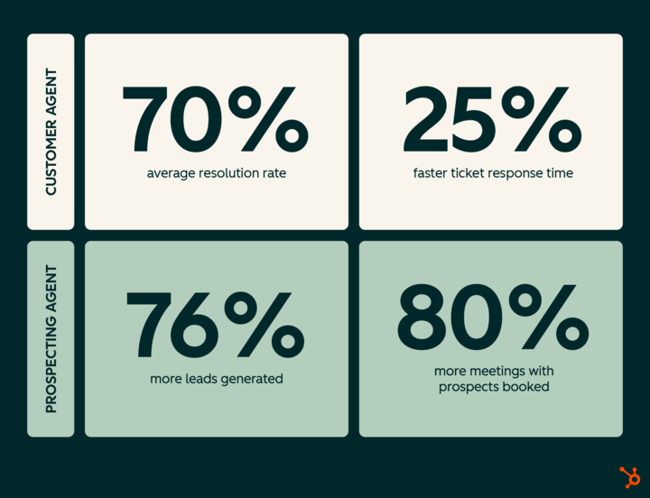
Winning companies are those that reverse-engineer their AI strategy from a specific business problem rather than a model demo. For instance, data from HubSpot’s own deployments shows that businesses utilizing their "Customer Agent" are seeing a 25% increase in ticket response speeds, while those using the "Prospecting Agent" report a 76% surge in lead generation. These are measurable, bottom-line outcomes, which is precisely why HubSpot transitioned to outcome-based pricing in April.
2. AI is Necessary, But Not Sufficient
There is a dangerous misconception that lowering the barrier to code generation increases the ceiling for business value. While it is easier than ever to build a prototype over a weekend, such tools often prove "brittle" when subjected to the rigors of real-world operations.
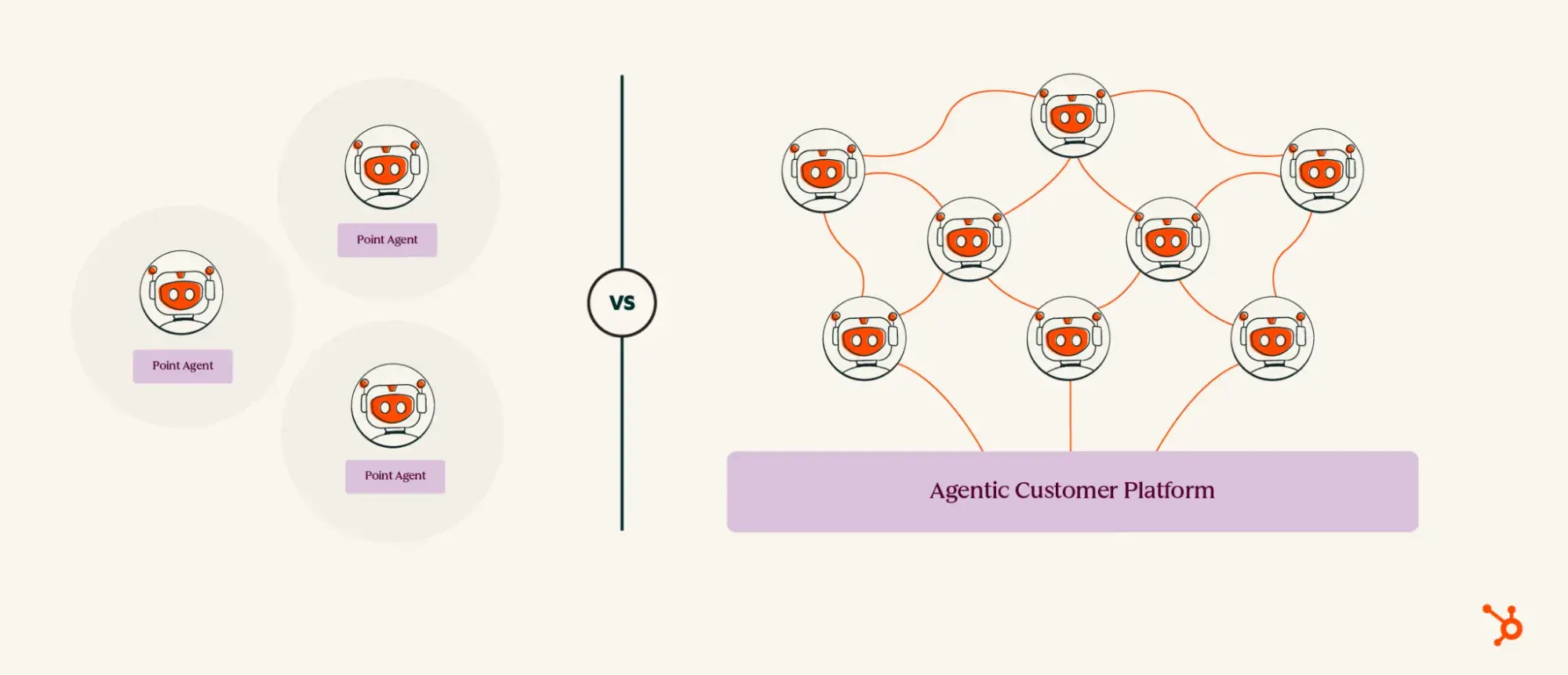
A growing business requires more than just a clever model; it requires clean data, seamless integrations, and a holistic customer view. Most AI vendors offer "single-purpose agents" that exist in isolation. This creates a fragmented landscape where the burden of data hygiene and workflow design falls entirely on the customer. The future belongs to integrated platforms—not disconnected point-solutions—where AI acts as a sophisticated layer atop a stable, well-maintained foundation.
3. Democratizing for the "Future 5000"
Current AI roadmaps are largely written for the Fortune 500. Major AI labs currently spend billions of dollars on "forward-deployed engineers" to manually implement and maintain systems within massive, resource-rich corporations.
This model is inherently exclusionary. It fails the millions of small and midsize businesses (SMBs) that do not have the budget for an army of developers or the infrastructure to rebuild their entire data pipeline. True democratization is not just giving everyone access to a model; it is providing a system that works for those without a massive technical support staff.
4. Optimizing for Outcomes per Token
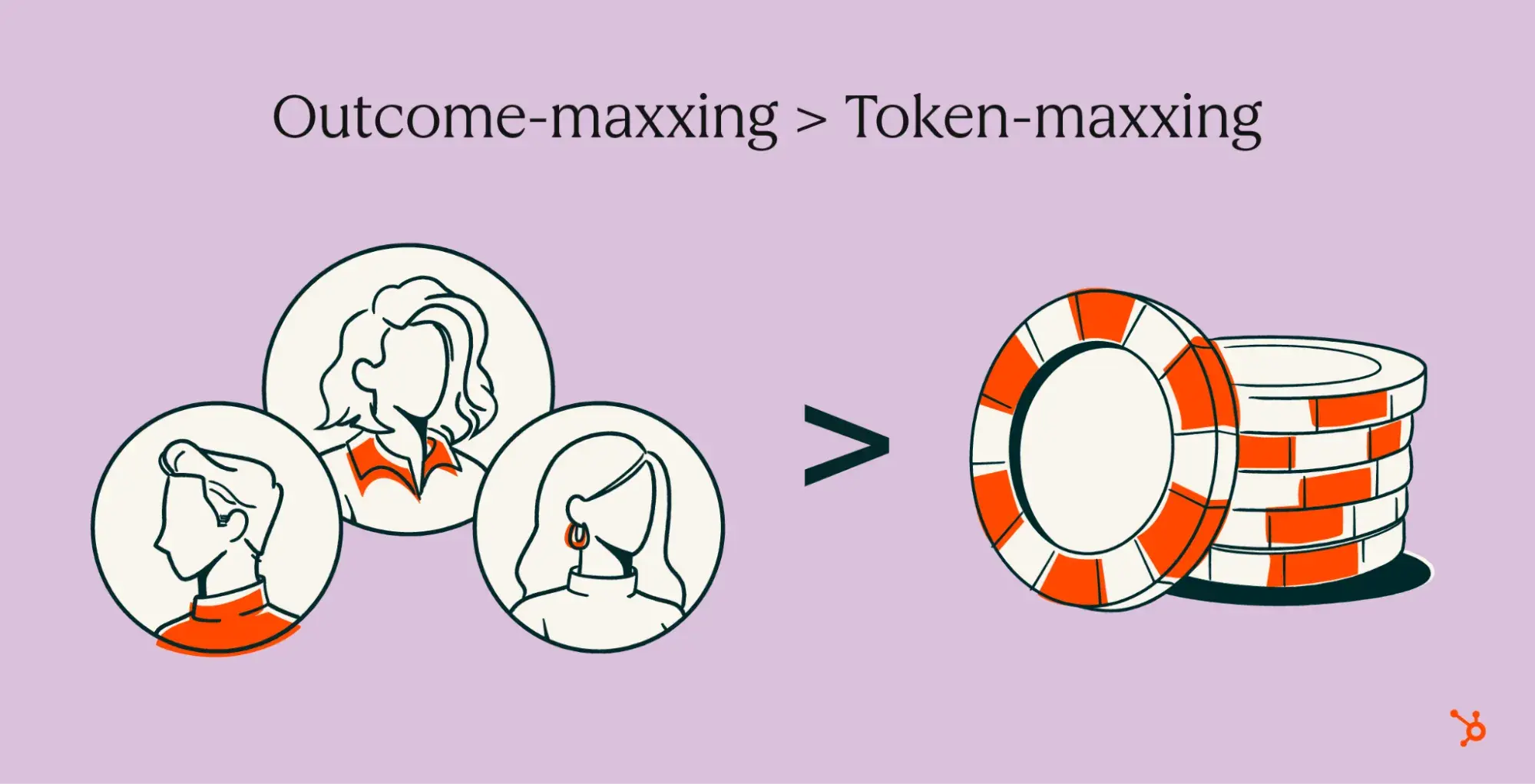
There is a fundamental, often overlooked conflict of interest in the current AI economy: the "token-maxxing" business model. Many vendors are incentivized to keep the "meter running"—the more tokens a customer consumes, the more the vendor earns, regardless of whether that consumption leads to an actual business breakthrough.
The honest economic model, according to the new paradigm, is "outcome-maxxing." Vendors should be incentivized to find the lowest-cost path to a specific business goal. If a vendor’s financial success is tied to the volume of activity rather than the quality of the result, the customer is not buying transformation—they are paying for the vendor’s profit margin.
5. Empowering, Not Replacing, the Human
Perhaps the most contentious point in the current debate is the role of the human worker. The loudest narrative in the industry is one of "autonomy"—the idea that AI exists to slash headcount and remove the human from the loop.
HubSpot rejects this, arguing that such a narrative is tailored for Wall Street, not the realities of running a sustainable business. The goal should be to make the individual worker more powerful: the marketer who ships more effective campaigns, the salesperson who closes more deals, and the service professional who solves more complex problems. Human judgment, taste, and the ability to build trust remain the most valuable assets in any organization. In a world where AI output becomes ubiquitous, these "human-only" traits will only increase in market value.
6. Redefining Trust Beyond Privacy
Every AI vendor claims to be "trustworthy," but most define this narrowly as a security posture—SOC 2 compliance, privacy policies, or SSO capabilities. While these are essential "table stakes," they are not a definition of trust.
Real trust is a comprehensive business posture. It involves transparency regarding model choice, cost predictability, reliability, and governance. A customer needs to know they can trust the system, not just the security protocol. Privacy is about what a company won’t do; trust is about what a company will do to ensure the customer’s long-term success.
Chronology of a Market Correction
- Early 2023: The "AI Explosion." The focus is on LLM capabilities, chatbots, and the sheer novelty of generating text and code. Massive hype drives investment toward "model-first" companies.
- Late 2023: The "Integration Phase." Businesses begin experimenting with AI in their workflows. The first cracks appear in the "replace humans" narrative as companies realize AI is prone to hallucination and lacks deep contextual understanding.
- Q1 2024: The "ROI Reckoning." CFOs begin to scrutinize AI budgets. The realization sets in that paying per-token for "AI activity" is not delivering the expected impact on margins.
- April 2024: HubSpot shifts to outcome-based pricing, signaling a market-wide pivot toward performance-driven AI.
- Current Date: The industry moves into the "Pragmatic Era." The conversation shifts from "how powerful is the model?" to "how integrated is the platform?"
Supporting Data: The Case for Outcomes
The data indicates that the "shotgun approach" to AI—deploying tools for the sake of modernization—is yielding diminishing returns. In contrast, businesses that integrate agents into a centralized data platform report significant operational gains:
| Metric | Impact of Targeted AI Agents |
|---|---|
| Ticket Resolution Speed | 25% Faster |
| Lead Generation | 76% Increase |
| Meeting Bookings | 80% Increase |
| Average Resolution Rate | 70% |
These metrics demonstrate that when AI is used to handle specific, high-frequency, low-variance tasks, the human operator is freed to handle high-value, complex interactions.
Official Perspective: The Human-in-the-Loop Imperative
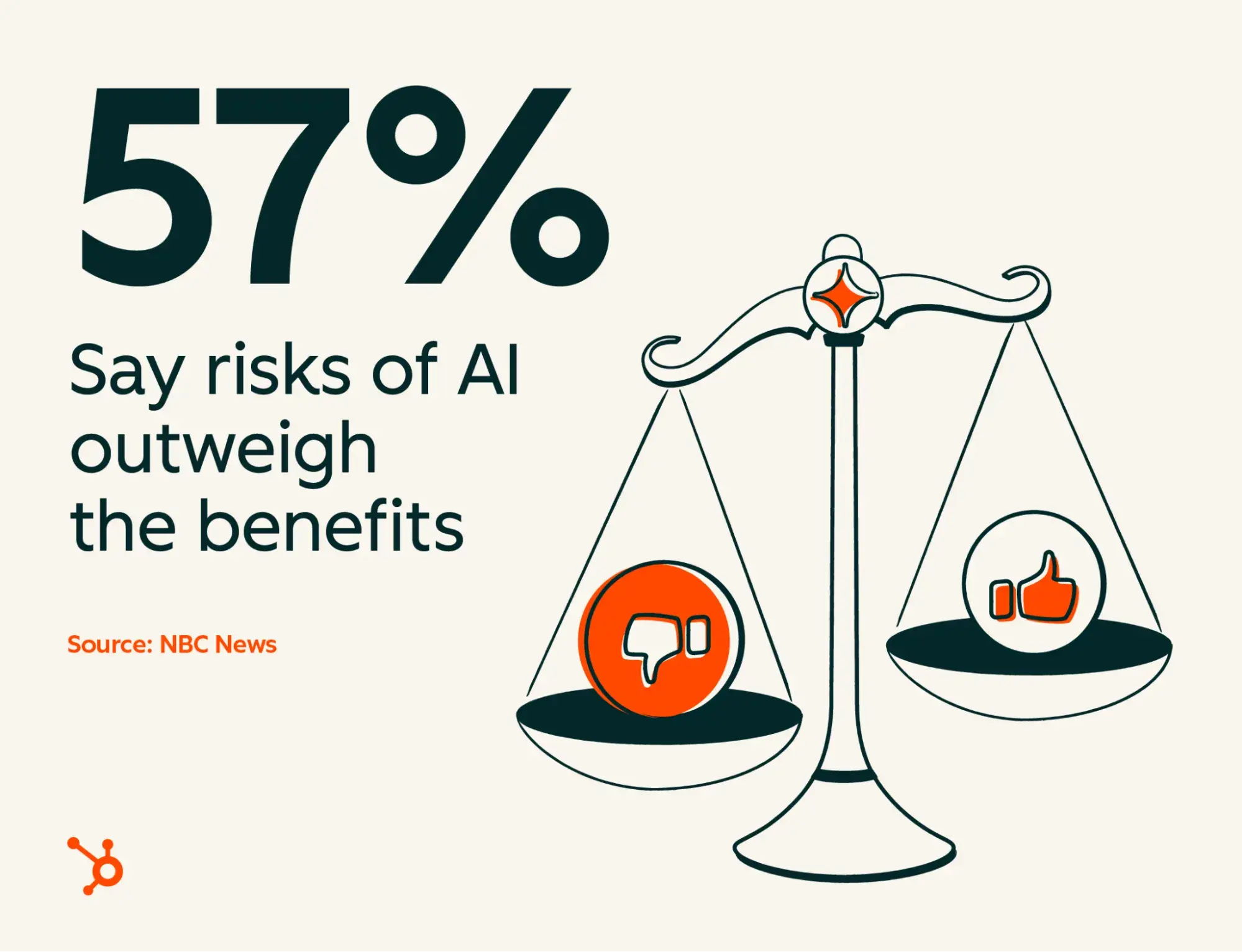
The pushback against the "automation-at-all-costs" narrative is growing. A recent NBC News poll highlighted that 57% of voters believe the risks of AI currently outweigh the benefits. This public skepticism is a direct response to the industry’s heavy-handed focus on replacement rather than augmentation.
"We build for the person doing the work, not the person being subtracted from the budget," says a spokesperson from HubSpot. "The companies that bet against the human are going to lose the customer, the employee, and eventually, the trust of the public."
Implications for the Future of Business
The implications of this shift are profound. We are moving toward a bifurcated market:
- The Vendor-Aligned Model: Vendors who prioritize "token-maxxing" will likely face churn as customers realize they are paying for activity that does not scale. These companies will struggle to justify their ROI as the novelty of AI wears off.
- The Customer-Aligned Model: Vendors who prioritize "outcome-maxxing" and deep integration will capture the "Future 5000." By focusing on data hygiene, workflow design, and human empowerment, these companies provide a sustainable foundation for growth.
For the modern business leader, the path forward is clear. It is time to move past the "AI theater" of the last year and focus on the hard work of system integration. The goal is no longer to see how much AI you can fit into your business, but how effectively you can use it to amplify the strengths of the people who already make your business successful.
The era of blind AI enthusiasm is ending. The era of the "Agentic Customer Platform"—one where data, workflow, and human judgment are synchronized—is just beginning.