On October 7, 2026, the Reserve Bank of India (RBI) signaled a firm stance on monetary policy by announcing a 25-basis-point (bps) hike in the repo rate. This move, aimed squarely at tempering inflationary pressures that have begun to threaten the stability of the domestic economy, marks a pivotal moment for borrowers, savers, and the broader financial ecosystem. As the central bank recalibrates its liquidity stance, households across the nation are left to navigate the immediate consequences of costlier credit and shifting interest rate environments.
This comprehensive guide dissects the mechanics of this decision, the reasoning behind the central bank’s policy shift, and how it fundamentally alters the landscape for your personal and corporate finances.
The Core Mandate: Why Did the RBI Raise Rates?
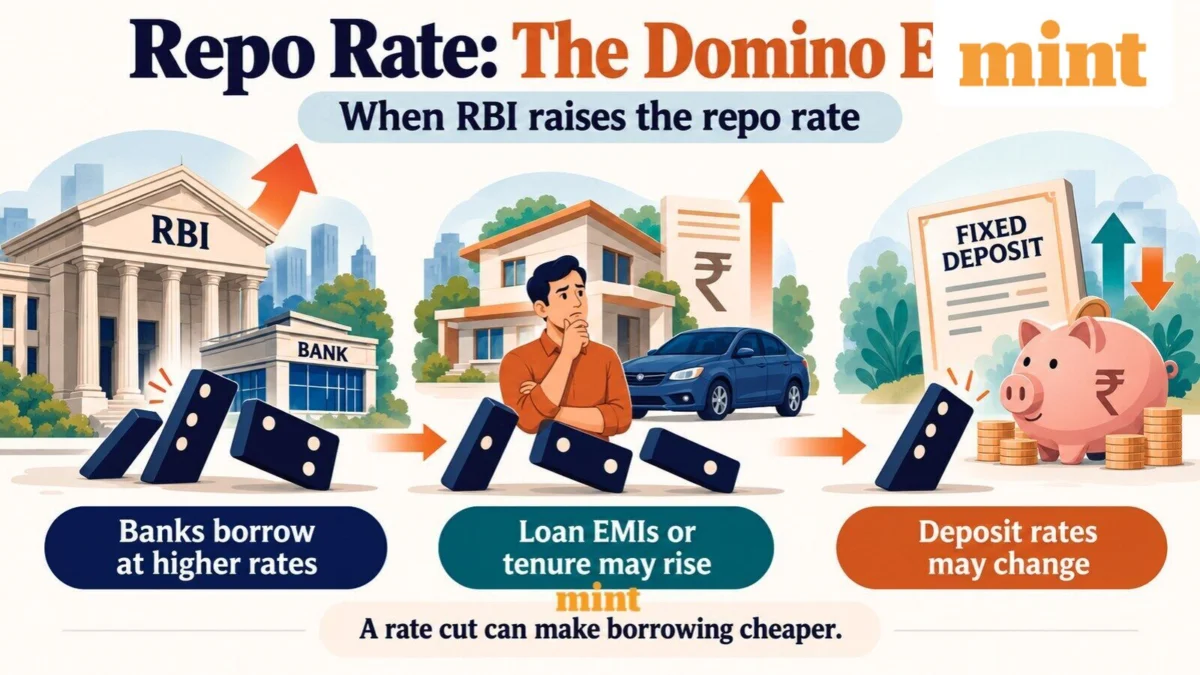
To understand the current economic climate, one must first grasp the role of the "repo rate." In essence, the repo rate is the interest rate at which the RBI lends money to commercial banks. When banks face a liquidity crunch or need to meet regulatory requirements, they borrow from the central bank. By increasing this rate by 25 basis points—effectively a 0.25 percentage point increase—the RBI has made it more expensive for banks to access capital.
The primary motivation behind this hike is inflation management. When inflation trends above the RBI’s comfort zone, the purchasing power of the rupee erodes, and the cost of essential goods and services climbs. By raising the repo rate, the central bank induces a "contractionary" effect:
- Borrowing Becomes Expensive: Higher repo rates force banks to raise their Marginal Cost of Funds-based Lending Rate (MCLR) or external benchmark lending rates.
- Demand Compression: As loans for homes, cars, and businesses become pricier, consumer and corporate spending cools down.
- Supply-Demand Equilibrium: Reduced spending leads to a drop in demand, which, in theory, exerts downward pressure on rising prices.
A Chronology of the Decision
The October 7 announcement did not occur in a vacuum. Throughout the preceding quarters, the Monetary Policy Committee (MPC) had been observing various macroeconomic indicators:
- Early 2026: Initial signs of food inflation and supply chain volatility suggested that the economy was heating up.
- Mid-2026: The RBI maintained a "neutral" stance, closely monitoring geopolitical tensions and global oil prices.
- September 2026: Data releases indicated that core inflation remained stickier than anticipated, prompting the MPC to prepare for a hawkish pivot.
- October 7, 2026: The formal announcement of the 25-bps hike was delivered, signaling that the central bank is prioritizing price stability over immediate growth stimulus.
Implications for Borrowers: The EMI Conundrum
For the average Indian household, the most immediate impact of this hike is the potential increase in Equated Monthly Instalments (EMIs).
Home Loans and Floating Interest Rates
Most modern home loans are linked to an External Benchmark Lending Rate (EBLR), often tied directly to the repo rate. If your loan agreement specifies that your interest rate is "repo-linked," you should expect your bank to adjust your interest rate upward within the next billing cycle.
- The Math: A 25-bps increase does not mean your EMI will spike by 25%. Instead, it means the interest component of your EMI will increase by 0.25%. While this may seem marginal, over a 20-year loan tenure, it can result in a significant increase in the total interest paid or an extension of the loan tenure to keep EMIs stable.
- Proactive Management: Borrowers are encouraged to contact their lenders to understand if their EMI amount will increase or if the tenure of the loan will be extended to accommodate the higher interest cost.
Car and Personal Loans
Similar to home loans, personal and car loans—especially those taken with floating interest rates—will become costlier. However, fixed-rate loans remain insulated from this hike. If you have secured a fixed-rate personal loan, your repayment schedule will remain unchanged.
The Silver Lining: What About Savers?
While borrowers feel the pinch, the environment for savers is expected to improve. As banks face higher borrowing costs from the RBI, they are incentivized to attract more deposits from the public to bolster their liquidity.
Fixed Deposits (FDs)
Following the repo rate hike, banks typically revise their deposit interest rates upward. If you are looking to park your savings in a low-risk instrument, this may be an opportune time to monitor FD rates. Financial experts suggest a "staggered" investment approach, where you invest in deposits of varying tenures to take advantage of potentially higher rates in the coming months.

Savings Accounts
While savings account interest rates are less sensitive to repo rate changes compared to FDs, some banks may increase rates on high-balance savings accounts to remain competitive in the market.
Macroeconomic Impact: Businesses and the Labor Market
The RBI’s decision is a delicate balancing act. While curbing inflation is essential, there is always a risk that high interest rates may stifle economic growth.
- Corporate Expansion: Businesses rely on debt to fund capital expenditure. When the cost of capital rises, many firms may delay expansion plans, which can slow down job creation in the short term.
- Market Sentiment: Investors often react to rate hikes with caution. However, a decisive move by the RBI to control inflation is often viewed as a sign of institutional strength, which can provide long-term stability to the markets.
- The Growth-Inflation Trade-off: The RBI must ensure that the rate hike is not so aggressive that it triggers a recession. The 25-bps increment is considered a moderate, "calibrated" step, intended to nudge the economy toward stability without causing a shock.
Frequently Asked Questions (FAQs)
1. Does this hike affect all loans immediately?
No. Depending on the bank’s internal policy and the type of benchmark (MCLR vs. EBLR), the transmission of the rate hike can take a few weeks or even a month to reflect in your loan account.
2. Can I switch from a floating rate to a fixed rate?
While some banks offer this option, it often comes with processing fees and higher base interest rates. It is advisable to consult with a financial advisor before making a switch, as fixed rates are often priced higher to compensate the bank for the risk of interest rate fluctuations.
3. Should I prepay my loan?
If you have surplus funds, prepaying a portion of your principal can significantly reduce the impact of the interest rate hike. This reduces the total interest burden over the life of the loan.
4. Is this the end of rate hikes?
That remains to be seen. The RBI will continue to monitor global economic conditions and domestic inflation data. If inflation persists, further hikes cannot be ruled out. Conversely, if inflation cools, the RBI may eventually pause or even cut rates.
Expert Commentary and Future Outlook
Financial analysts suggest that this 25-bps hike is a "pre-emptive strike" against persistent inflationary pressures. The RBI is signaling that it will not allow inflation to de-anchor from its target range.
"The move is consistent with the central bank’s commitment to price stability," says an industry economist. "By acting now, the RBI is attempting to anchor inflation expectations, which is crucial for sustained long-term growth. While the immediate effect is higher EMIs, the long-term benefit is a more stable economic environment, which is vital for both individual wealth and corporate health."
Conclusion: How to Navigate the New Normal
The RBI’s decision to hike the repo rate by 25 basis points is a reminder of the dynamic nature of the financial world. For the average individual, the key takeaway is preparedness.
- Review your budget: Factor in a potential increase in your monthly EMI payments.
- Optimize your debt: If you have high-interest debt (like credit card balances), prioritize paying those off first, as they are not linked to the repo rate but remain the most expensive form of borrowing.
- Stay Informed: Keep an eye on your bank’s official communication regarding interest rate changes.
- Seek Opportunity: Explore high-yield savings instruments like Fixed Deposits or government-backed schemes that may offer better returns in a rising interest rate environment.
By staying informed and proactive, you can effectively manage the impact of the RBI’s policy shift and ensure your financial plan remains resilient in the face of changing economic tides. The path ahead requires a cautious approach to debt, a keen eye on savings, and a long-term view of your financial goals.