In March 2025, two ten-week-old puppies were discovered abandoned on a rural roadside. Emaciated, flea-ridden, and trembling in the face of an approaching thunderstorm, their fate seemed grim. Today, one of those dogs—a black-coated pup named "Oreo"—has become the catalyst for a profound exploration into the intersection of physical movement and cognitive health. Through the lens of this rescue, we examine the ancient, time-honored practice of walking not merely as exercise, but as a vital instrument for philosophical inquiry and mental clarity.
Chronology of a Rescue
The story began in the quiet isolation of the countryside. When the two puppies were found, they presented a stark visual contrast: one white with spots, and the other predominantly black with white accents on her chest and paws.
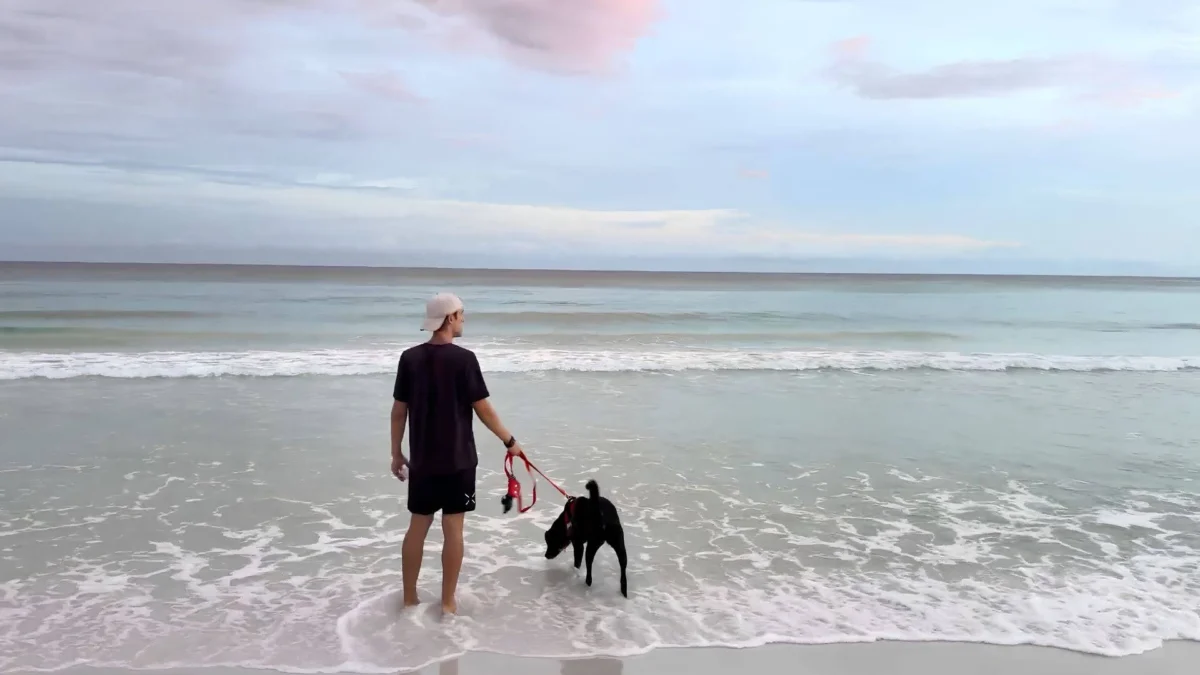
The rescue mission was personal. Upon bringing the pair home, the author’s children were immediately enamored. However, a conscious decision was made to address the "black dog bias"—a documented phenomenon in animal shelters where darker-coated animals are statistically less likely to be adopted due to perceived aggression or superstitions. The family kept Oreo, the black puppy, and successfully facilitated a quick adoption for her sibling.
What followed was the classic domestic transition: children pledged their commitment to the daily labor of pet ownership, promises that inevitably faded. This left the burden—and the gift—of the daily walk squarely on the author’s shoulders. What began as a chore became a transformative ritual.
The Science and Philosophy of the Walk
While modern fitness culture focuses on the caloric expenditure and vitamin D synthesis associated with walking, the historical and psychological implications of the practice run much deeper. Walking has served as the intellectual foundation for some of history’s greatest minds.
The Peripatetic Tradition
The term "Peripatetic" finds its roots in the Greek peripatein, meaning "to walk about." Aristotle, one of history’s most influential thinkers, conducted his lectures while pacing, believing that the rhythm of physical movement was inextricably linked to the rhythm of thought. This was not a quirk of the ancient world; it was a pedagogical strategy.
Nietzsche, a staunch advocate for the physical-intellectual link, famously remarked, "It is only ideas gained from walking that have any worth." For Nietzsche, a desk-bound intellect was a stagnant one. Similarly, the choreographer Twyla Tharp incorporates "mindless mental wanderings" into her daily regimen to stimulate creativity.
Historical Precedents of Movement
The list of history’s great walkers is as diverse as it is impressive:
- Charles Darwin: Rigorously scheduled daily walks to untangle complex scientific theories.
- Ernest Hemingway: Utilized the quais of Paris as a sanctuary for mental blocks, allowing the physical environment to inform his prose.
- William Wordsworth: Recorded an estimated 180,000 miles of walking in his lifetime—an average of six and a half miles per day since the age of five.
- Dorothy Day: Found spiritual awakening while strolling the beaches of Staten Island, suggesting that divine clarity often arrives in the cadence of a footfall.
Supporting Data: The Psychological Reset
The modern environment is characterized by an relentless influx of information. From emails to constant digital notifications, the human mind is rarely given the space to process or "defragment."
Walking offers a unique form of "walking meditation"—a concept known in Buddhist traditions as kinhin. By shifting the body through space, particularly in natural or aesthetically pleasing environments, the mind is relieved of the burden of input. This creates the "mental wandering" necessary for connection-making.
Søren Kierkegaard, in a poignant letter to his depressed sister-in-law, articulated the therapeutic potential of the walk: "Every day I walk myself into a state of well-being and walk away from every illness; I have walked myself into my best thoughts, and I know of no thought so burdensome that one cannot walk away from it."

The "Oreo Effect"
For the author, the presence of the dog acts as an external enforcement mechanism for this internal practice. Whether brainstorming for The Stoic Virtue Series or navigating complex business crises, the walk has become a laboratory for problem-solving.
The process is consistent:
- The Departure: Entering the walk in a state of stress or creative stagnation.
- The Wandering: Removing the tether to digital distractions.
- The Synthesis: The subconscious mind begins to connect disparate ideas.
- The Return: Arriving home with a sharpened perspective, often leading directly to a notebook to record new insights.
The Implications of a Sedentary Existence
The implications of ignoring this biological necessity are significant. A sedentary life, tethered to the computer, often results in "intellectual atrophy." The inability to solve problems or find peace is often a symptom of failing to change one’s physical state.
As Kierkegaard observed, frustration and despair are often "illnesses" that can be physically walked off. When one is confronted with the noise of the world, the solution is rarely to sit still and try to think harder. The solution, quite literally, is to move.
The Resilience of the Habit
The author notes that while not every walk results in a profound epiphany, the mood-altering effects are almost universal. Even on days when the walk does not yield a "best thought," it serves as a reset button. It breaks the cycle of anxiety.
The story of the gentleman who interrupted Kierkegaard’s walk—only to lead the philosopher to walk even further—serves as a metaphor for the modern struggle. The world will always provide interruptions, frustrations, and demands. Our response must be to prioritize the movement. If we are blocked, we walk. If we are at peace, we walk to maintain it.
Conclusion: Putting One Foot in Front of the Other
The rescue of Oreo was intended as an act of kindness toward a vulnerable creature, but it evolved into an intervention for the human spirit. The dog, by demanding her two walks a day, has forced a return to a fundamental human practice.
In a world that increasingly demands our presence in front of screens, the act of walking has become a radical, necessary form of resistance. It is a commitment to health, to philosophy, and to the quiet, unfolding reality of the world around us.
As the author prepares for his next excursion with Oreo, the lesson remains clear: The burdens we carry are rarely as heavy as they seem, provided we keep moving. Whether it is a pilgrimage to a holy site or a simple loop around the neighborhood, the objective remains the same.
Walk. Then walk some more. It is, perhaps, the most important thing we can do today.