By Beth Skwarecki, Senior Health Editor
October 9, 2026
For millions of Americans, the annual ritual of flu vaccination has long been synonymous with the inconvenience of pharmacy scheduling, waiting rooms, and the dreaded needle. However, a significant shift in public health delivery has arrived. Since the FDA approved the self-administration of the FluMist nasal spray vaccine in 2024, a new paradigm of convenience has taken hold. For the second consecutive year, many families are bypassing the traditional clinic visit entirely, opting instead for a direct-to-door delivery system that is revolutionizing how we approach seasonal influenza.
Main Facts: The Shift to Direct-to-Patient Vaccination
The core of this medical advancement is the FluMist nasal spray, which has been a staple in clinical settings for years but was previously restricted to administration by healthcare professionals. The regulatory approval granted by the FDA in 2024 changed the landscape, allowing for self-administration or administration by a caregiver.
The mechanism remains unchanged: FluMist uses a live, attenuated (weakened) influenza virus to stimulate an immune response. Because the virus is weakened, it cannot cause the flu. The delivery method—a simple nasal spray—removes the physical barrier of needles, which is a major advantage for pediatric patients or those with trypanophobia (fear of needles).
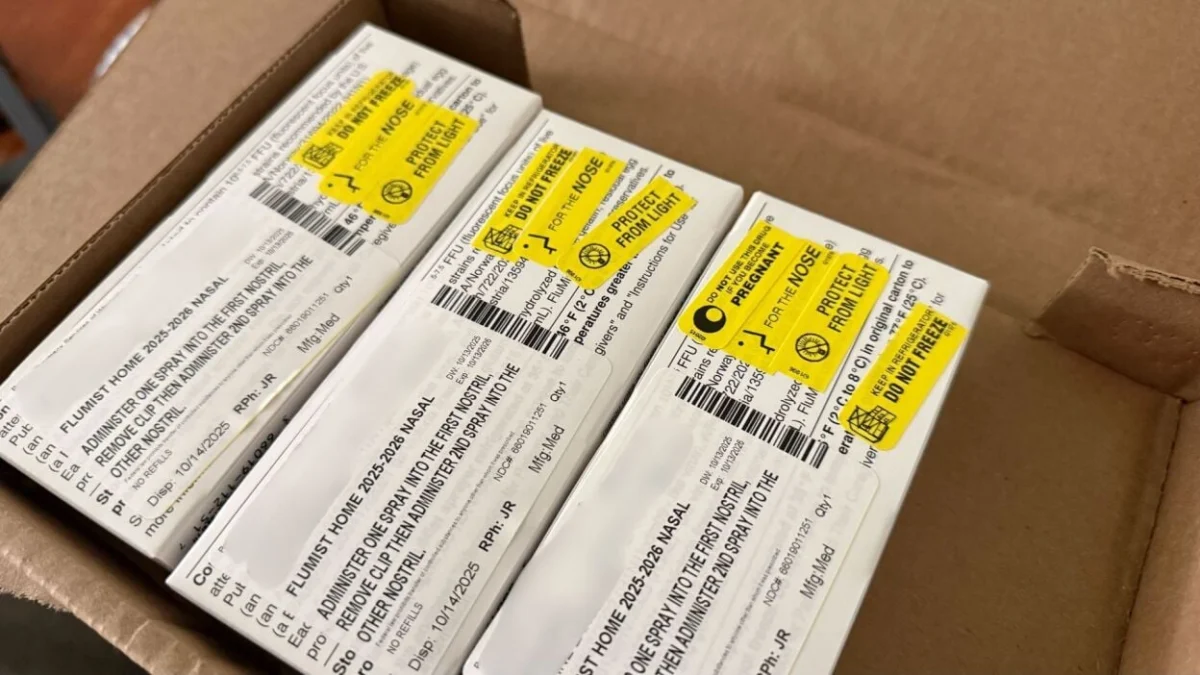
From a logistical standpoint, the process is streamlined. Patients utilize a dedicated telehealth portal—managed by AstraZeneca—to secure a prescription. Once the digital evaluation is complete, the vaccines are shipped in temperature-controlled packaging directly to the patient’s home. It is a model that mirrors the "telehealth-first" approach that became mainstream during the early 2020s, now applied to life-saving preventative medicine.
Chronology of the At-Home Vaccination Model
- Pre-2024: FluMist was widely available but strictly required administration by a licensed pharmacist, nurse, or physician.
- 2024: The FDA officially approves the nasal spray for self-administration or caregiver use, citing extensive clinical data proving the safety and efficacy of the device when used outside a clinic.
- 2025: The first public rollout occurs. The infrastructure for telehealth screening and refrigerated shipping is stress-tested on a national scale.
- 2026 (Current Season): The system has matured. Refinements in tracking, temperature monitoring (via TiveTag technology), and insurance integration have made the process seamless for thousands of users.
The Logistics: How the Process Works
Securing an at-home flu vaccine requires minimal time investment, provided one is eligible. The process follows a structured path designed to ensure both safety and regulatory compliance:
- Telehealth Consultation: Users visit the official FluMist portal. Here, they complete a health questionnaire that covers age, existing medical conditions, allergies, and pregnancy status.
- Insurance Verification: The system interfaces with national insurance databases. In most cases, the vaccine itself is fully covered, leaving only a modest administrative and shipping fee (currently approximately $8.99 for up to four doses).
- Cold-Chain Fulfillment: Once approved, the vaccines are shipped via expedited carrier (e.g., FedEx). Because the vaccine is a biological product, it must remain within a specific temperature range.
- Verification: Upon arrival, the user confirms the vaccine’s viability using an RFID-enabled temperature monitor, such as the TiveTag app. This ensures the product remained safe throughout the transit process.
- Administration: The user removes the rubber cap, delivers half the dose into one nostril, removes the spacer, and delivers the remaining half into the second nostril.
Supporting Data: Eligibility and Safety Protocols
While the at-home model offers unprecedented convenience, it is not a "one-size-fits-all" solution. The clinical guidelines remain rigorous.
- Age Requirements: The vaccine is approved for individuals aged 2 through 49. Infants younger than two and adults 50 and older must still visit a professional, as their immune profiles require different considerations or higher-dosage formulations.
- Contraindications: Because the vaccine contains a live, weakened virus, it is not suitable for everyone. Specifically, individuals who are immunocompromised, pregnant, or have chronic respiratory conditions (like severe asthma) should avoid the nasal spray. These individuals are advised to consult their primary care physician for an inactivated (injectable) vaccine.
- Safety Thresholds: The vaccine is highly stable, but it is not indestructible. While it can remain unrefrigerated for up to 12 hours before administration, the cold-chain shipping process is vital. The integration of digital monitoring ensures that users never administer a compromised dose.
Official Responses and Public Health Implications
Public health experts have viewed the at-home vaccination initiative with cautious optimism. The primary argument in favor of the program is increased compliance. "The best vaccine is the one that actually gets into the patient’s arm," noted one health policy analyst. By lowering the barrier to entry—removing the need for appointments, transit, and waiting—public health officials hope to see a spike in vaccination rates among working-class families and those in remote areas.

However, the shift also presents a challenge for primary care providers. Traditionally, the flu shot has been a "hook" that brought patients into the office for their annual check-ups. With the decentralization of care, pediatricians and family doctors are looking for new ways to ensure that other essential screenings are not neglected.
There is also the matter of record-keeping. While the telehealth platform claims to update national health databases, the integration with local pediatric electronic health records (EHR) is not yet universal. Patients are currently advised to manually report their at-home vaccinations to their primary care physician to ensure their medical records remain accurate.
Sustainability and Environmental Considerations
A modern medical delivery model must address its ecological footprint. The shipping of individual doses requires significant insulated packaging and cooling elements. The current program addresses this by utilizing "non-toxic water" cold packs that can be repurposed as household ice packs or safely discarded. The plastic components of the sprayers are designed to be returned via a prepaid envelope for proper medical disposal, mitigating the risk of biohazardous waste entering household trash streams.
Looking Ahead: The Future of Home-Administered Preventative Care
The success of the at-home FluMist program serves as a proof-of-concept for other preventative services. As telehealth continues to evolve, we may see more vaccines, diagnostic tests, and routine treatments migrate from the clinic to the kitchen table.
For the average family, the impact is profound. It turns a chore that once consumed an entire afternoon into a five-minute task completed in the comfort of one’s home. As we move further into the 2026 flu season, the data will continue to reflect whether this model succeeds in not just making vaccination easier, but in making our communities healthier overall.
For those interested in exploring this option, the key is preparation. With the flu season beginning in early autumn, ordering early—well before the peak of viral circulation—is the most effective way to ensure your household is protected. Always consult with your primary care provider if you are unsure about your specific medical history or eligibility for the nasal spray.
The move toward home-based healthcare is no longer a distant vision; it is a current, actionable reality that empowers patients to take control of their own preventative wellness.