The Nobel Prize has long occupied the apex of scientific recognition. To be a laureate is to be etched into the pantheon of human intellectual achievement. However, as the 2026 Nobel season draws to a close, a recurring critique has resurfaced: the prestigious award increasingly resembles a filter that captures only a fraction of scientific progress, leaving a vast network of essential contributors in the shadows.
The structural limitations of the Nobel Foundation—specifically the rule capping winners at three individuals per category and the prohibition of posthumous awards—have created a mismatch between the reality of modern, collaborative science and the antiquated, "lone genius" narrative that the prizes often perpetuate.
The Structural Constraints: A Legacy of Limitations
Alfred Nobel’s original will was surprisingly silent on the issue of how many people could share a prize. However, the Nobel Foundation’s internal statutes have codified a rigid structure: no more than three individuals can share a single award. Furthermore, the committee maintains a strict policy against posthumous nominations.
While these rules were intended to preserve the exclusivity and prestige of the award, they have become increasingly problematic in an era where major scientific breakthroughs are rarely the work of a single mind. Modern science relies on massive, international collaborations, interdisciplinary teams, and decades of incremental labor. By forcing the committee to choose only three names, the Nobel process often necessitates a "crowning" of leaders while omitting the legions of engineers, graduate students, and peers whose contributions were not merely supporting, but foundational.
Chronology of Recognition: Case Studies in Omission
Optogenetics and the Distributed Effort
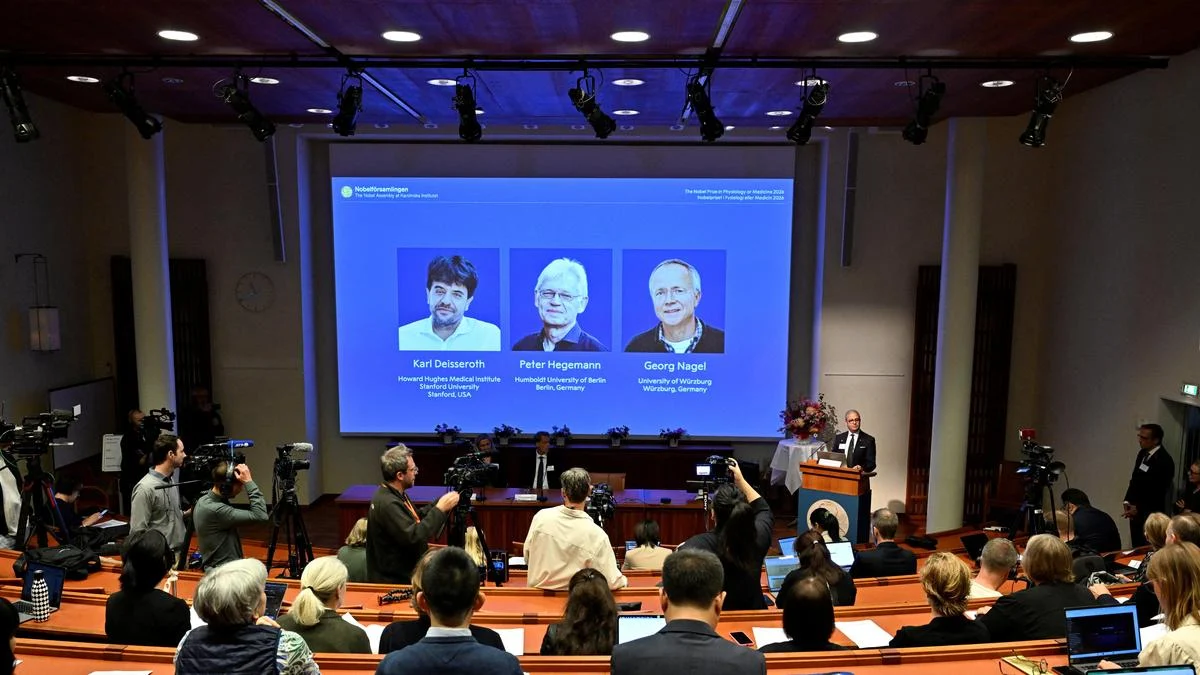
The 2026 Nobel Prize for Physiology or Medicine, awarded to Karl Deisseroth, Peter Hegemann, and Georg Nagel for their work on optogenetics, highlights the difficulty of credit allocation. While the laureates were instrumental, the history of the field is deeply distributed.
In 2002, Gero Miesenböck of the University of Oxford pioneered the sensitization of neurons to light. Despite his widely recognized role as an "inventor" of the field, he was excluded from the 2026 prize. Furthermore, the application of the protein channelrhodopsin-2 (ChR2) to control neurons was the result of a collective effort. Edward Boyden, now at MIT, served as the first author on the seminal paper that proved this application, while Ernst Bamberg was vital in the practical translation of these findings. Feng Zhang and Xue Han also contributed crucial developments, such as the use of halorhodopsin to silence neurons. By focusing solely on the "leaders," the Nobel committee obscured a rich, multi-institutional discovery process.
The "Lone Wolf" Fallacy: IceCube and Physics
Perhaps the most striking example of the prize’s disconnect from modern science is the 2026 Physics Prize, awarded exclusively to Francis Halzen for his work on the IceCube Neutrino Observatory. IceCube is a monumental achievement in international cooperation, involving approximately 450 experts across 58 institutions in 14 countries.

While the Nobel Foundation has the authority to award prizes to organizations—a move that would have been appropriate for a massive, collective feat like IceCube—the Royal Swedish Academy of Sciences has consistently shied away from this option. By selecting Halzen alone, the committee ignored the reality of the project. Specifically, the credit for discovering the high-energy neutrino candidate events—the very data that proved the concept—belongs in large part to physicist Aya Ishihara, whose work was recognized by the International Union of Pure and Applied Physics in 2013 but overlooked by the Nobel committee. Similarly, the 2013 Science paper reporting these findings listed Claudio Kopper, Naoko Kurahashi, and Nathan Whitehorn as corresponding authors, none of whom were acknowledged in the prize citation.
Chemistry and the Deadlock of Time
The 2026 Chemistry Prize serves as a grim reminder of the "no-posthumous" rule. The prize recognized the validation of Frederick Charles Frank’s 1953 model for chemical symmetry breaking. Frank, who provided the theoretical framework, died in 1998.
The experimental evidence for this model was built over decades by chemists like Henri Kagan and Kenso Soai. However, the committee also bypassed Takanori Shibata, who provided the critical 1999 paper that finally demonstrated the reaction Frank had theorized. Furthermore, the exclusion of chemical engineer Donna Blackmond, who significantly extended the mathematical understanding of these non-linear effects, suggests a committee preference for "foundational discovery" over the nuanced, technical evolution of a field.
Supporting Data: The Cost of Exclusivity
The current methodology creates a skewed perception of how science actually functions. Statistical analysis of Nobel citations over the last century shows a marked shift away from "lifetime achievement" and toward "singular breakthroughs." While this encourages rapid innovation, it devalues the "slow science" required to turn a laboratory discovery into a clinical or practical reality.
When an award is limited to three people, it forces the committee to draw lines through organic, collaborative networks. This creates a "winners’ bias" in public perception, where the history of science is mistaken for the list of Nobel laureates. As the number of researchers per paper continues to rise—often into the hundreds for high-energy physics or genomic projects—the Nobel model becomes increasingly incompatible with the socio-technical reality of global research.
Official Responses and Institutional Stance
The Nobel Foundation has historically defended its rigid criteria as a means of maintaining the award’s singular impact. By limiting the number of winners, the prize retains a "rarity value" that elevates the scientific discipline in the public eye. However, critics argue that the Foundation’s lack of transparency regarding selection criteria—specifically how they decide which three names out of a potentially vast pool of contributors are "most worthy"—remains a point of contention.
There is no formal mechanism for the committee to explain why an individual like Aya Ishihara or Takanori Shibata was omitted, nor why an organization like the IceCube collaboration was not considered as a collective entity. This silence allows for the perpetuation of the "great man" theory of science, which ignores the systemic nature of contemporary research.

Implications for the Scientific Community
The implications of this narrow focus are profound. First, it risks demoralizing the "middle tier" of researchers—the post-docs, the lab technicians, and the collaborative scientists—who perform the grueling work that turns a hypothesis into a fact.
Second, it misrepresents the nature of science to the public. When we credit a single person for the discovery of the Higgs boson or the operation of the IceCube detector, we reinforce the idea that science is the domain of solitary geniuses rather than a collective, cumulative, and often tedious process of iteration. As demonstrated by the outcry in India over the lack of recognition for Satyendra Nath Bose during the Higgs boson awards, the Nobel Prize carries enough cultural weight that its omissions are felt as national or intellectual slights.
Finally, the prize’s limitations highlight a deeper issue: the disparity in resources. A scientist’s ability to "win" is often contingent upon their institutional support, their ability to lead large labs, and even their domestic support systems. By focusing on the winners, we fail to interrogate the systemic inequalities that make such success possible for some and impossible for others.
Conclusion: A Prize, Not a Final Word
The Nobel Prize remains a powerful instrument for promoting scientific achievement, but it must be viewed for what it is: a historical snapshot, not an exhaustive record. As we look toward the future, the scientific community would do well to treat the Nobel not as an ultimate judgment, but as a conversation starter.
True scientific excellence is rarely contained within the walls of a single lab or the names on a single trophy. It is found in the hundreds of students, the thousands of hours of failed experiments, and the collaborative data-sharing that defines our era. The Nobel committee may continue to pick its three, but the history of science will, as it always has, belong to the many.