
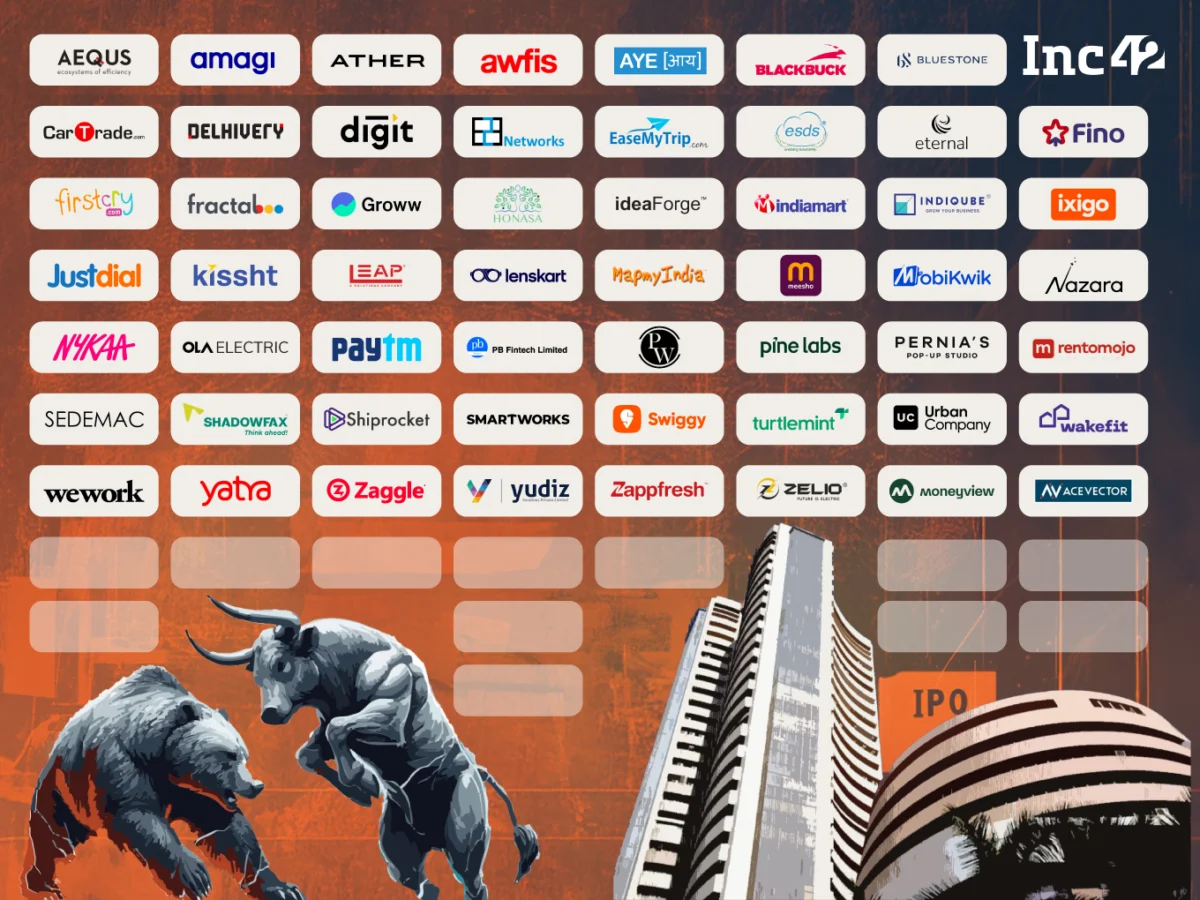
For over a decade, the Indian startup ecosystem has been viewed as a high-growth, high-risk laboratory of innovation. Today, that narrative has shifted fundamentally. The Indian startup "kid" has grown into an adult, and the clearest indicator of this maturation is the aggressive, sustained surge in public market listings. With over 70 new-age technology companies now gracing the bourses, the Indian public market has evolved into a legitimate theater for wealth creation, transparency, and operational validation.
As of October 2026, the cumulative market capitalization of these listed new-age tech entities has breached the $173 billion mark. This milestone is not merely a number; it represents a tectonic shift in how Indian entrepreneurs, investors, and public market participants interact.
The Milestone: A Surge in Public Market Debuts
The year 2026 has proven to be a watershed moment for the Indian startup ecosystem. Following a record-breaking performance in 2025, where 18 startups made their debut, the momentum has continued with 13 companies listing in the first three quarters of 2026 alone.
The roster of companies that have braved the public markets this year is diverse, spanning sectors from logistics to fintech and enterprise software. Notable debuts in 2026 include AceVector, Moneyview, Rentomojo, ESDS, Purple Style Labs, Turtlemint, Klassroom, Shiprocket, LEAP India, Kissht, Aye Finance, Fractal Analytics, Amagi, Shadowfax, and SEDEMAC.

This list is far from exhaustive. The pipeline remains robust, with high-profile names such as the defense tech innovator Tonbo Imaging and the manufacturing powerhouse Zetwerk preparing to test the appetite of public investors in the coming months.
Chronology of Evolution: From "Growth-at-All-Costs" to Profitability
To understand the current IPO boom, one must look back at the "funding winter" of 2022. Prior to this, the Indian startup ecosystem was defined by a culture of aggressive growth, where market share was prioritized over the bottom line. The 2020-22 funding frenzy allowed companies to sustain massive losses in pursuit of rapid expansion.
The cooling of global capital markets in 2022 acted as a vital reality check. Faced with a shrinking pool of private capital, startups were forced to pivot. The "growth-at-all-costs" mantra was replaced by a disciplined focus on unit economics and long-term viability.
This transition was not just a survival tactic; it was a necessary rite of passage for an IPO. Today, the data shows that over 60 of these new-age tech companies are profitable, signaling a structural change in the industry. For instance, the fintech giant Groww has emerged as a leader in profitability, reporting a net profit of ₹2,083 Cr in FY26. Other stalwarts like Paytm (₹553 Cr) and Eternal (₹366 Cr) further underscore this trend.

The journey to the stock exchange is long. While the median time for a startup to go public stands at approximately 11 years, the ecosystem is seeing outliers on both ends of the spectrum. While veteran companies like Info Edge have been listed since 2006, newer entrants like ArisInfra have managed to reach the public markets in as little as four years, reflecting the accelerated maturity of modern business models.
Sectoral Dominance and Regional Powerhouses
The sectors driving this IPO wave are largely reflective of the broader investment trends seen in the private equity and venture capital space over the last decade. Fintech, ecommerce, and enterprise technology remain the engines of this growth.
With 14 fintech and 14 ecommerce companies already listed, these sectors command the most attention on the bourses. Enterprise tech follows closely with 13 listed entities. This sectoral concentration is expected to persist as more mature companies in these domains—such as Zepto and OYO—continue to evaluate their public market trajectories.
Geographically, the map of India’s listed startups reveals a fascinating story. While Bengaluru is widely recognized as the startup capital of India, the Delhi-NCR region has quietly outpaced it in the race to the public markets. With 25 listed companies, Delhi-NCR is home to the highest number of new-age tech stocks, contributing a staggering $93.4 billion—more than half of the total $173 billion market cap of the sector.

Gurugram, in particular, acts as a primary hub for this activity, hosting giants like Delhivery, Lenskart, and Eternal. Noida and Delhi follow, housing companies like Paytm, IndiQube, and EaseMyTrip.
Supporting Data: A Deep Dive into Financial Performance
The financial data of these listed entities offers a transparent view into the health of the tech economy. Companies that have listed recently have largely demonstrated a "pre-IPO" profit discipline.
A prime example is the eyewear major Lenskart, which achieved a significant turnaround, moving from a loss of ₹10 Cr in FY24 to a net profit of ₹494 Cr in FY26. However, the path to profitability is rarely linear. Urban Company, for example, saw a fluctuation where a profitable FY25 was followed by a net loss of ₹234.8 Cr in FY26, despite a healthy revenue growth of 36% YoY. This volatility is a reminder that even for listed companies, the pressure to maintain margins while scaling is constant.
Implications: The New Standard for Startups
The institutionalization of the Indian startup ecosystem through public listings has several profound implications:

- Transparency and Governance: Public listing requires a level of disclosure and corporate governance that private startups often lack. By moving to the bourses, these companies are forcing themselves to adopt higher standards of financial reporting, which benefits the entire ecosystem by attracting more conservative, institutional capital.
- Wealth Creation and Exits: For early investors and employees holding ESOPs, the IPO wave provides a long-awaited liquidity event. This cycle of wealth creation is critical, as it encourages "angel" investing, where successful founders and employees reinvest their capital into the next generation of startups.
- A Validated Asset Class: The existence of the Indian Listed New-Age Tech Company Tracker (launched by Inc42) is proof that tech stocks have become a distinct, tracked, and analyzed asset class in India. Investors no longer view these companies as speculative bets but as integral components of a diversified portfolio.
- Operational Maturity: The transition from being a venture-backed startup to a publicly traded company necessitates a change in leadership mindset. Founders are no longer just building for growth; they are building for dividends, quarterly performance calls, and long-term shareholder value.
Conclusion: The Road Ahead
As we look toward the remainder of 2026 and into 2027, the Indian IPO landscape appears poised for continued expansion. The "Dalal Street Startup Ride" is no longer a peripheral phenomenon; it is a mainstream economic engine.
While market fluctuations, such as the mixed performance of recent debuts and the varying profitability cycles of companies like Urban Company, remain a reality, the trend is irreversible. India’s new-age companies have proven that they can not only survive the scrutiny of the public markets but can thrive within them.
The focus now shifts from "who will list next?" to "how will these companies sustain growth as public entities?" As the ecosystem continues to mature, the focus on sustainable profitability, strong corporate governance, and consistent innovation will be the primary metrics by which the next wave of Indian unicorns is measured. The transition from the garage to the exchange is complete; the new challenge is to lead the market, not just join it.