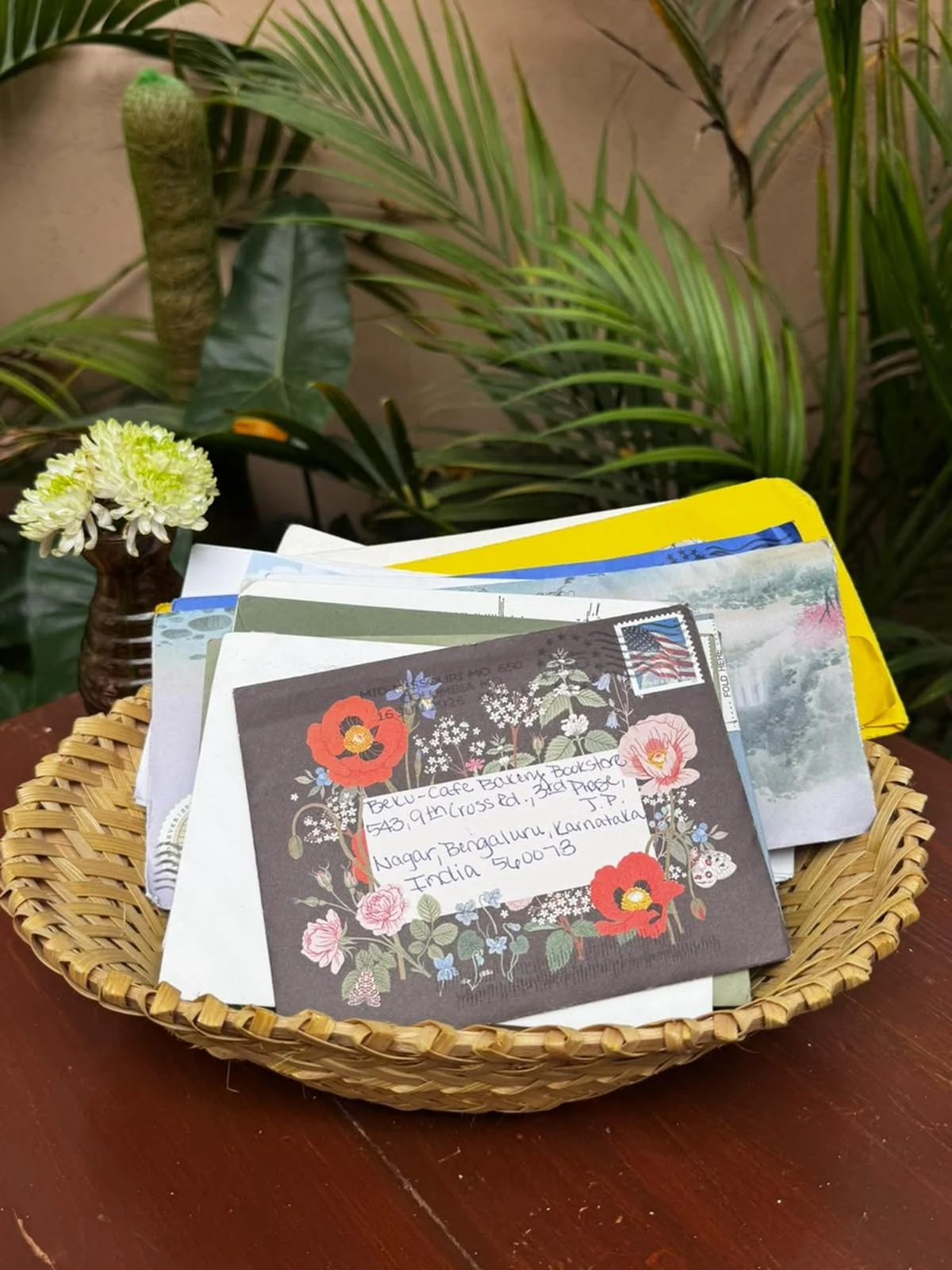
In an era defined by the frantic ping of instant messaging, the fleeting nature of ephemeral social media stories, and the clinical efficiency of artificial intelligence-generated emails, a quiet revolution is taking place in the corner of a Bengaluru bookstore. At Beku Books, located in the bustling neighborhood of JP Nagar, the physical act of putting pen to paper is being elevated from a dying craft to a vibrant, global community initiative.
This resurgence is driven by "The Sunday Letter Project," a worldwide movement founded in 2025 by Rebecca and Karl of the England-based Wildflower Illustration Co. By bridging the gap between digital discovery and analog correspondence, the project is successfully reviving the art of the handwritten letter, turning local bookstores into international hubs of human connection.
The Genesis of a Global Movement
The Sunday Letter Project began with a simple, almost meditative premise: the pledge to write one letter every Sunday. Founded by the creative minds behind Wildflower Illustration Co., the initiative was designed as a counter-cultural response to the hyper-connectivity of the digital age. The founders sought to strip away the pressure of "instant" communication, replacing it with the intentionality of ink, paper, and the passage of time.
By 2026, the project had blossomed from a personal habit into a global network. The core of its functionality relies on the "Letter-Keeper" system. These Letter-Keepers—typically independent bookstores or cafes—serve as the regional nodes for the project. They act as secure, physical transit points that allow participants to engage in international correspondence without the risk or privacy concerns associated with sharing home addresses.
The Bengaluru Connection: Beku Books as the Indian Pioneer
For those in India looking to participate in this analog revival, the search begins and ends at Beku Books. As the only registered "Letter-Keeper" in India, the bookstore has become a local sanctuary for letter-writers.
The process for joining is streamlined yet intentional. After discovering the project via social media, the team at Beku Books underwent a vetting process, submitting an application and contributing a modest annual administrative fee to the project’s central organization. Once approved, the store was added to a global directory of shops, effectively placing a small slice of JP Nagar on a map that stretches across Europe, North America, and beyond.
"It started off as a pledge to write a letter every Sunday," explains Premsakhi Mokkapati, head curator at Beku Books. The store has since transformed into a conduit for global friendships. "A customer can walk in and read a letter; they can photograph the letter and return address and choose to write back to them. Introductory letters are kept at the bookstores so a person can have more than one pen pal."

How the ‘Poste Restante’ Model Works in 2026
The Sunday Letter Project utilizes a modern iteration of the Poste Restante system—a traditional postal service where mail is held at a post office until the recipient collects it in person. In this version, the "post office" is a bookstore shelf.
The Workflow of a Letter:
- Drafting: A participant writes an introductory letter detailing their interests, thoughts, or reflections, omitting sensitive personal identifiers like phone numbers or home addresses.
- The Drop-off: The letter is sent to a Letter-Keeper shop.
- The Pool: The shop adds the letter to a curated pool of correspondence.
- Discovery: Other visitors to the shop browse the collection. When a visitor finds a letter that resonates with them, they can choose to write a response.
- The Exchange: The response is sent back through the network, held at the respective bookstore, and eventually retrieved by the original author during a visit.
This system creates a "shop-to-shop" movement. It ensures that the participant’s physical home remains private, while the letters themselves create a tangible, tactile bridge between strangers in different hemispheres.
A Strict Code of Conduct
While the project is designed to be inclusive and open, the founders and local curators enforce a strict code of conduct to maintain the integrity and safety of the community. The rules are clear:
- Privacy First: No personal contact details, including phone numbers, physical addresses, or social media handles, are permitted.
- Professionalism: Self-promotion and commercial advertising are strictly prohibited.
- Ethos: All communication must be kind, respectful, and reflective of the project’s goal to foster genuine human connection rather than exploitation or nuisance.
"We have received messages from people around India asking if they could send us letters as well," says Mokkapati. "It feels nice to be doing something that no one else is, but we are also planning to conduct a few events to encourage more people to write letters."
The Psychological Implications of ‘Slow Communication’
The popularity of the Sunday Letter Project is not merely a nostalgic trend; it is a psychological reaction to the fatigue caused by digital communication. Sociologists and communication experts have long argued that the "immediacy" of modern technology often leads to "communicative burnout."
When a person writes a letter, the process is inherently slower. It requires the writer to organize their thoughts, choose their words with care, and anticipate the weeks or months it might take for a reply. This "slow communication" forces the brain to move out of a reactive, dopamine-seeking loop and into a reflective, cognitive state.
By anchoring this practice in a physical space like Beku Books, the project adds a layer of community. It brings people out of their homes and into a shared physical environment, where they can interact with the tangible artifacts of other people’s lives. It turns the act of writing into an event—a date with one’s own thoughts and the possibility of a stranger’s perspective.

Challenges and Future Outlook
Despite the enthusiasm, the project faces logistical challenges. Maintaining a physical database of letters requires significant organization and space. For shops like Beku Books, the initiative is a labor of love that requires balancing the demands of a retail business with the responsibilities of being a community archive.
However, the response from the public has been overwhelmingly positive. The "good response" reported by the store suggests that there is a latent hunger for deeper, more meaningful engagement in urban centers. As the digital divide continues to widen, initiatives that prioritize the human element—the handwriting of a friend, the texture of the paper, the smell of the ink—are finding new relevance.
Building a Future in Ink
As the Sunday Letter Project moves into the latter half of 2026, the team at Beku Books is looking toward expansion. Beyond merely acting as a transit point, they are planning workshops and events aimed at teaching younger generations the art of letter composition and the value of preserved correspondence.
In an increasingly automated world, the handwritten letter remains a radical act of vulnerability. It is a promise that one’s thoughts are worth the time it takes to record them. For those wandering into Beku Books in search of a book or a beverage, they may find something far more lasting: a connection that refuses to be measured in megabytes, but rather in the slow, deliberate ink of a friend halfway across the world.
For those interested in participating, the path is simple: pick up a pen, find a piece of paper, and consider the person who will eventually hold your words in their hands.
For more information on how to participate, visit thesundayletterproject.com or follow the updates from the Indian node at @beku.blr on Instagram.