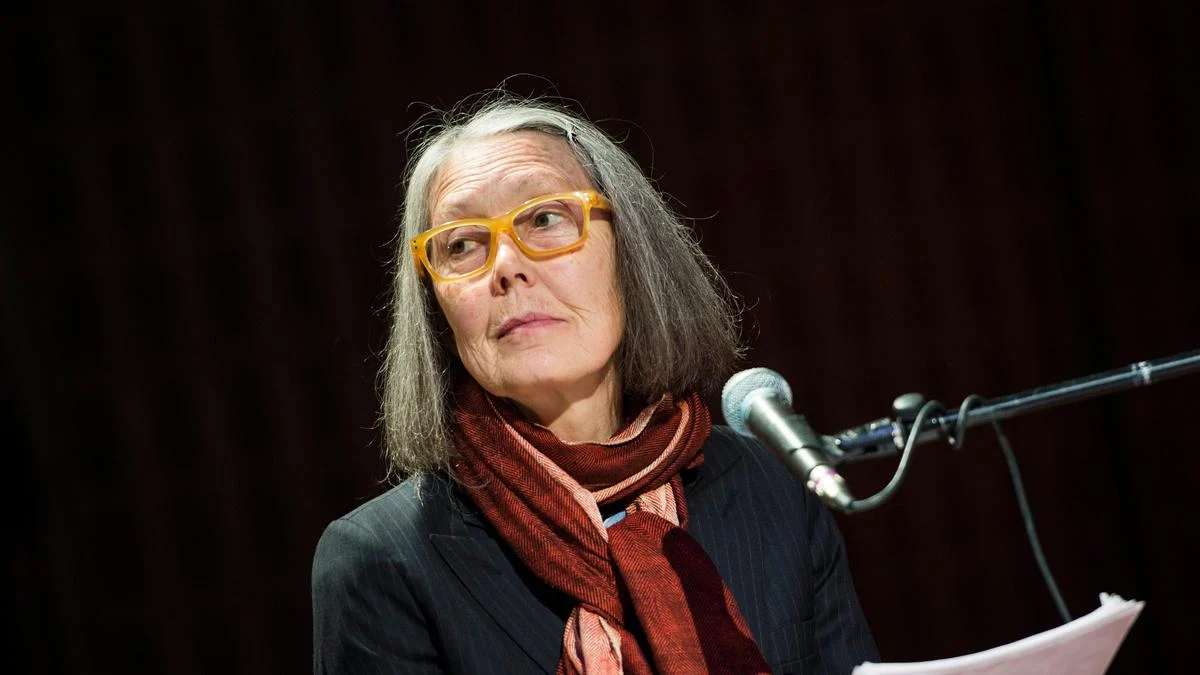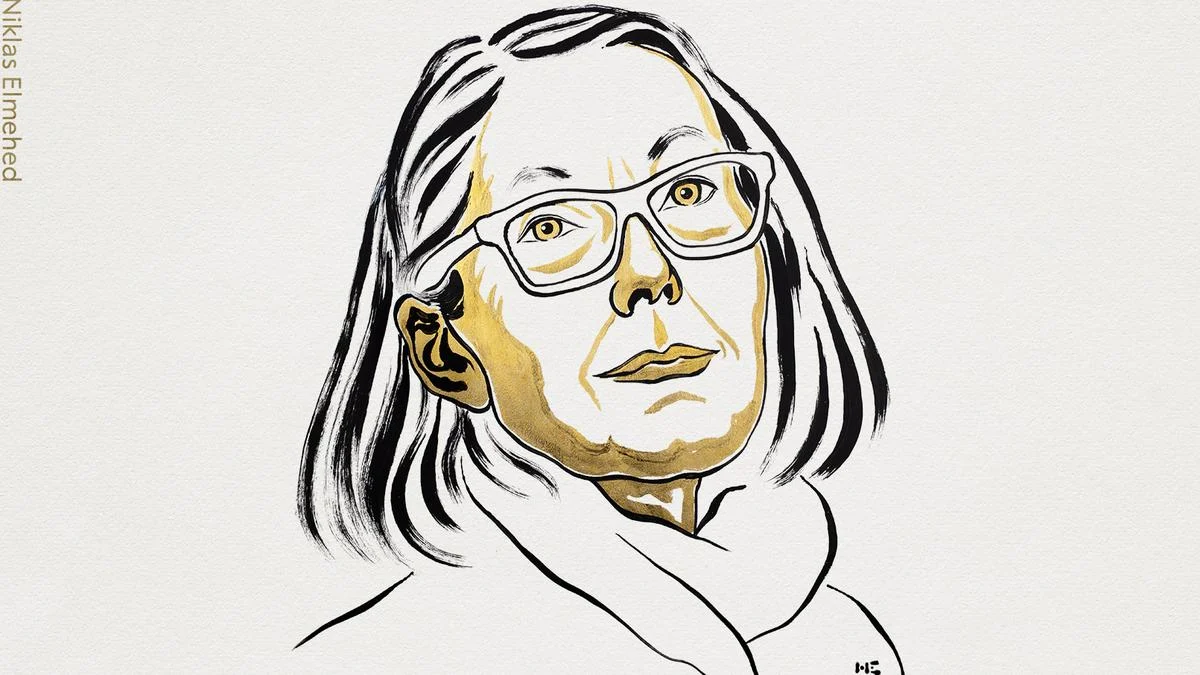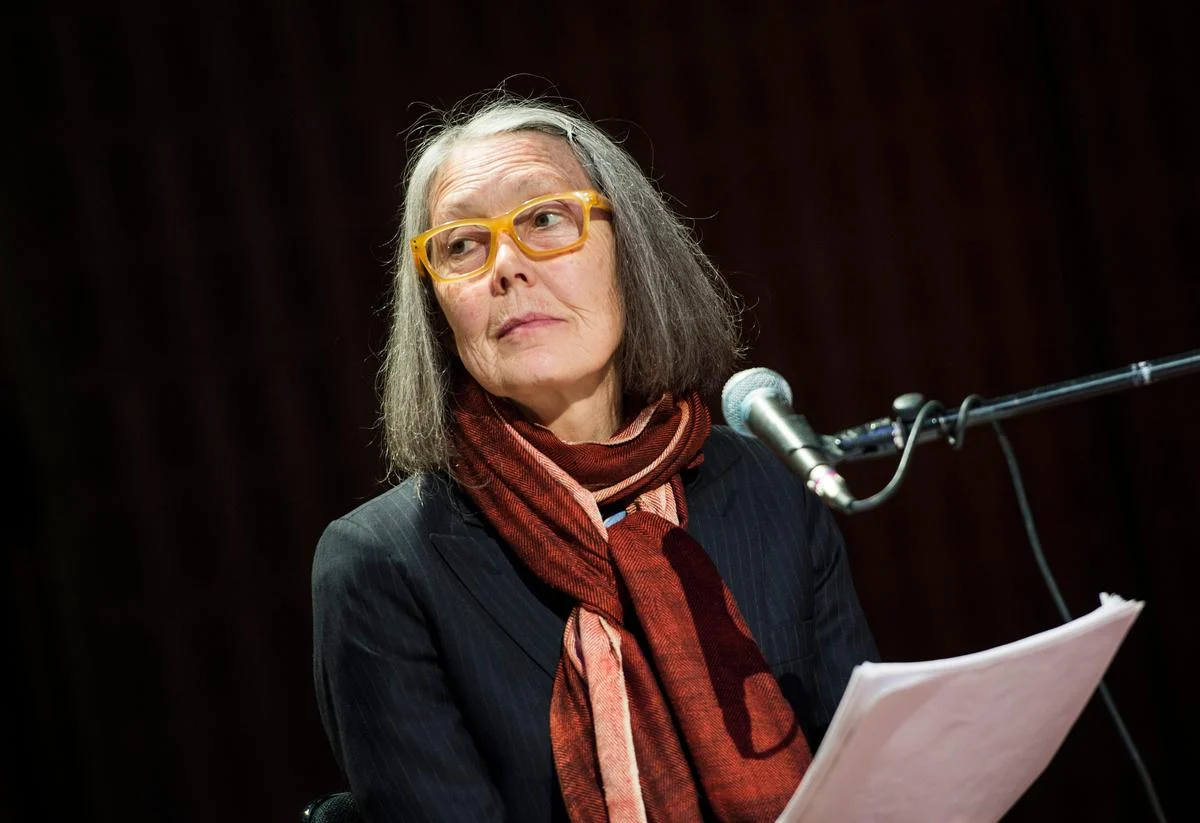
In the quiet, windswept corners of the world, where language often falters, Anne Carson has spent a lifetime building bridges between the ancient and the visceral. Last week, that lifelong endeavor was formally recognized when the Swedish Academy announced the Canadian poet, classicist, and essayist as the 2026 recipient of the Nobel Prize for Literature. The committee lauded her for a “bold and inventive oeuvre that, in playful dialogue with the classical tradition, has created new forms for contemporary literature.”
For readers who have spent years navigating the idiosyncratic, jagged, and luminous terrain of her work, the announcement felt less like a surprise and more like a necessary alignment of the world with a singular, quiet voice. Reportedly, at the moment of the announcement, Carson was at her home in Iceland—a place she frequents for its stark, elemental clarity—simply listening to the wind.
The Architecture of a Life: A Chronology
Born in Toronto in 1950, Carson’s trajectory has been marked by a profound, almost singular devotion to the study of the past. Her engagement with the classics began in high school, sparked by a Latin teacher who introduced her to the rigor of Greek, a language that would eventually become the heartbeat of her creative output.
- 1980s–1990s: Carson established herself as a formidable academic, teaching the classics at various universities while simultaneously dismantling the boundaries of the field. Her early work began to signal a departure from traditional scholarship, favoring a hybridity that defied easy categorization.
- 1998: The publication of Autobiography of Red became a literary touchstone. By reimagining the Greek myth of Geryon as a contemporary story of a gay teenager grappling with desire and identity, she proved that ancient myths were not relics, but living, breathing structures.
- 2010: The release of Nox, an elegy for her estranged brother Michael, marked a shift in how literature could handle grief. Produced as a single, long-folded accordion page, the book functioned as a physical artifact—a collage of stamps, scraps of letters, and poetry that turned the act of mourning into a tactile, monumental experience.
- 2017–2022: Her later work, including the prose poems Fate, Federal Court, Moon and Four Talks, saw her pivoting toward pressing contemporary themes—human rights, judicial bias, and the isolation of the digital age.
The Intellectual Distraction of the Pandemic
The weight of Carson’s work is often felt most acutely in times of crisis. In January 2022, during the suffocating Omicron surge of the COVID-19 pandemic, the world was shuttered, living through screens and tense, quiet rooms. It was then that many turned to her prose poem, Four Talks.

The work is dense, allusive, and profoundly intellectual. The first section, "Short Talk on Todtnauberg," serves as a masterful intersection of history and personal struggle. It recounts the 1967 meeting between the Romanian poet and Holocaust survivor Paul Celan and the philosopher Martin Heidegger—the latter of whom was infamously associated with the Nazi party—at Heidegger’s chalet in the Black Forest. Carson captures the tragedy of that encounter: the two men walking through the woods, unable to bridge the ideological and moral chasm between them.
For the reader in 2022, the poem was a mirror. It was not merely an intellectual exercise; it was a meditation on the limits of reconciliation. Carson’s work suggested that even when common ground cannot be found, the act of making the journey—the act of witnessing—is a moral necessity. As the pandemic forced a global reflection on loss, her words reminded us that cleverness is a poor substitute for the courage required to pay attention to one’s neighbor.
Breaking the Boundaries of Genre
Carson’s genius lies in her refusal to stay in a lane. She moves with an almost reckless fluidity between history, geography, and genre. Susan Sontag, one of literature’s most discerning critics, once remarked, "I would read anything she wrote," and it is easy to see why. Carson’s prose is spiky and unadorned; it possesses the sudden, sharp clarity of a flash of light in the dusk.
In her essay, "Beware the man whose handwriting sways like a reed in the wind," she imagines a dialogue between the poet Catullus and a character named Pepper, dissecting the futility of seeking a "shorter way home" when no such path exists. In Norma Jeane Baker of Troy, she dissects the historical patterns of war, observing that "War is the context/ and God is a boy… It’s a disaster to be a girl."

She is equally precise when describing the domestic and the intimate. When writing about her mother’s move into a senior facility, Carson notes the crushing realization of having "no home." She reflects on how language can "squirt sideways, mute and mad," stripping away our pretenses until we are left standing, "singed and ridiculous in the glare of the lightning." This is the core of her method: she pushes language to the point of collapse, only to find the truth hidden in the wreckage.
The Academic vs. The Human Heart
Throughout her career, Carson has frequently interrogated the limitations of the academy. In "Lieu Vague," the narrator contemplates the futility of academic training, noting that she often finds herself in circles, guided by "gentlemen with lexicons open at the page for smikrologia"—the Greek word for petty-mindedness.
She concludes that intellectual stimulation is not the final goal of art. Instead, she seeks a radical, simple clarity: the ability to point to something—a horse, a cloud, a face—and truly see it. This is why her work resonates beyond the university lecture hall. She moves from the boxing ring of a Parkinson’s support group to the tent of Achilles in The Iliad with a seamlessness that makes the ancient seem immediate and the contemporary feel timeless.
The Global Echo: Human Rights and Accountability
While Carson is often associated with the ivory tower, her work is deeply engaged with the material realities of suffering. She has long supported human rights organizations like Reprieve and Doctors Without Borders. Her poem "Fate, Federal Court, Moon" serves as a piercing examination of judicial bias, focusing on a Yemeni engineer’s quest for accountability after his family was killed in a drone strike.

Her work argues that attention is not merely a private, aesthetic act; it is a political one. By documenting the "mistaken" killings and the failures of law, she forces the reader to acknowledge the human cost of modern geopolitical conflicts. She proves that a poet’s primary duty is to ensure that the silent are not forgotten.
Implications: A New Form for a New Time
The decision of the Nobel committee to award Carson signals a shift in how we define "literature." By selecting a writer who occupies the space between the poem, the essay, and the memoir, the Academy is acknowledging that the traditional novel is no longer the sole vessel for complex truth.
Carson’s legacy is already being felt by a generation of writers who are tired of the boundaries between "fiction" and "non-fiction." She has provided a map for how to write about grief, how to translate the ancient world without losing its grit, and how to hold onto one’s humanity in a world that is increasingly loud and disconnected.
As we look at her body of work—from the folded pages of Nox to the glass pillars of Roni Horn’s The Library of Water which she so poignantly described—we see a writer who understands that "life of the mind" is incomplete without the heart.

Somewhere in the Icelandic wind, the woman who translated Sappho to tell us that "someone will remember us / I say / even in another time" remains at her desk. She has spent her life pulling "this from that," finding the connection between the ancient hero and the modern patient, the drone strike and the dinner table. In an age of fractured attention and global anxiety, Anne Carson’s win is a quiet, powerful reminder that the most radical thing one can do is to pay attention.
The journey she has taken—from the classroom to the heights of literary achievement—has been marked by a single, persistent commitment: to record the beauty of the struggle, and to ensure that, despite everything, we continue to look, to listen, and to feel.