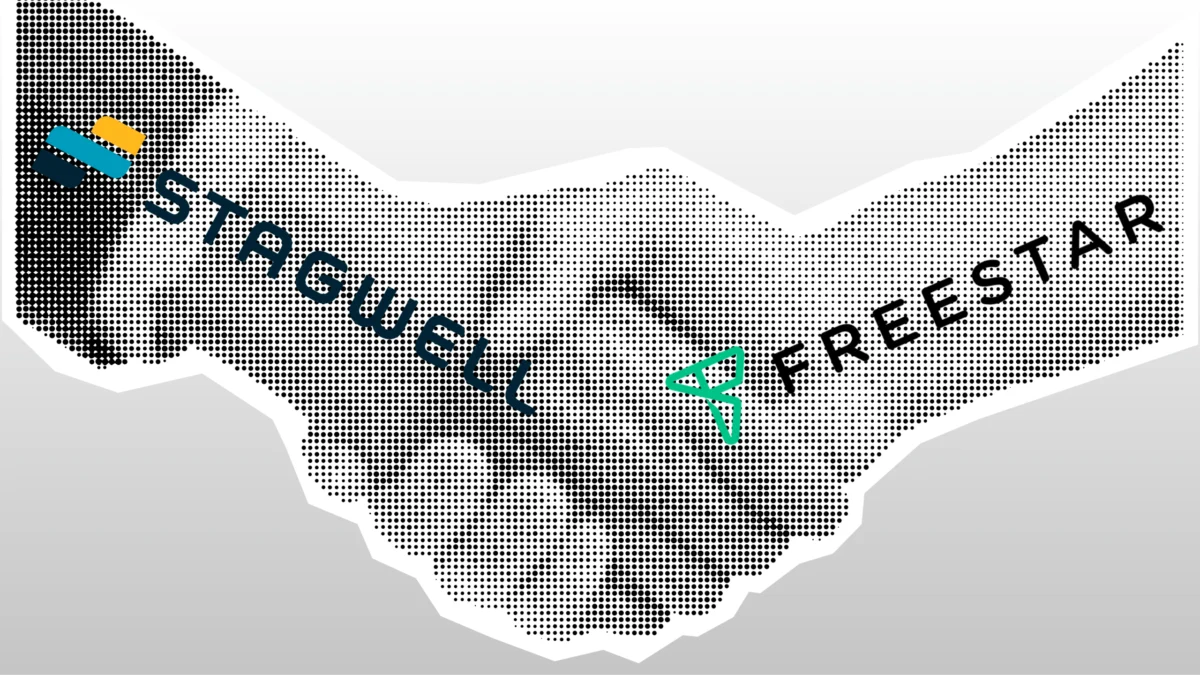
In a move signaling the intensifying arms race for automated media intelligence, Stagwell—the marketing and communications holding company led by former political strategist Mark Penn—has announced the acquisition of Freestar. A powerhouse in the digital publishing monetization sector, Freestar’s integration into the Stagwell ecosystem represents more than a simple asset purchase; it is a calculated effort to fortify the holding company’s "agentic" artificial intelligence capabilities.
By absorbing a platform that processes 50 billion ad requests monthly, Stagwell is positioning itself to bridge the gap between publishers and advertisers with unprecedented precision. This acquisition underscores a broader industry shift: the move away from fragmented, opaque ad-buying paths toward a streamlined, AI-driven supply chain where data ownership and operational speed determine market leadership.
The Core Transaction: Strategic Consolidation
The acquisition, announced today, brings Freestar’s robust ad-monetization infrastructure directly under the Stagwell umbrella. Freestar, which has built a reputation for helping digital publishers optimize their revenue through programmatic advertising, serves as a crucial intermediary in the digital economy.
The financial terms of the deal remain undisclosed, but the strategic intent is transparent. Stagwell intends to fold Freestar’s proprietary technology, publisher inventory, and audience insights into its "AI Media Machine." This "agentic operating system" is the centerpiece of Stagwell’s digital transformation strategy, designed to automate complex media buying processes that were historically prone to human error and inefficiency.
For Stagwell, the primary value proposition lies in the "supply path optimization" (SPO). By controlling the interface where publisher inventory meets advertiser demand, Stagwell aims to remove the "middlemen" who traditionally extract fees while muddying data quality.
A Chronological Perspective: The Road to Acquisition
To understand the weight of this deal, one must look at the evolution of Stagwell under Mark Penn’s leadership. Since the merger of MDC Partners and The Stagwell Group, Penn has pursued a strategy of "digital-first" growth, emphasizing technological infrastructure over traditional creative services.
- 2020-2021: The Genesis of the Holdco: Stagwell emerged as a challenger to legacy holding companies like WPP and Omnicom. The focus was immediately on data, digital transformation, and the integration of AI.
- 2022-2023: Building the AI Media Machine: Stagwell began investing heavily in its proprietary media stack. The objective was to create a centralized system that could handle programmatic media buying with the speed and accuracy of an AI agent, rather than a manual media buyer.
- Q1-Q3 2024: Market Volatility and Supply Chain Focus: As privacy regulations (such as the deprecation of third-party cookies) intensified, Stagwell identified a need to get closer to the "source" of publisher data.
- Q4 2024: The Acquisition of Freestar: The deal was finalized to solidify the company’s ability to bypass traditional, opaque programmatic exchanges, allowing Stagwell to offer clients a "cleaner" route to high-value publisher inventory.
Supporting Data: The Scale of Freestar
Freestar’s value is rooted in its massive operational scale. In the world of programmatic advertising, volume equates to data, and data equates to better predictive modeling.
- Monthly Ad Requests: 50 billion. This staggering volume provides the "fuel" for Stagwell’s AI Media Machine, allowing its algorithms to learn from a diverse range of ad environments.
- Publisher Base: Over 1,000 publishers. This includes high-tier media entities such as The Associated Press, Boston Globe Media, Fortune, and Essence.
- The Power of Quality Inventory: Unlike smaller ad-tech startups that rely on "long-tail" or low-quality websites, Freestar’s portfolio consists of brand-safe, high-authority publishers. For Stagwell’s clients, this means access to premium inventory that is often shielded from the open programmatic market.
- Efficiency Metrics: Freestar’s technology is designed to minimize latency and maximize the "bid density" for each impression. By integrating this into Stagwell’s tech stack, the holdco expects to reduce "take rates"—the fees taken by intermediaries—thereby increasing the portion of an advertiser’s dollar that actually reaches the publisher.
Official Responses and Strategic Rationale
Mark Penn has long argued that the future of marketing lies in the intersection of data science and creative storytelling. Following the acquisition, the internal rhetoric from Stagwell leadership focused on the concept of "agentic" media.
"This is not just about buying a tech company; it is about building an infrastructure that can act on behalf of our clients in real-time," a Stagwell spokesperson noted. The goal is to move beyond passive data analysis to active media execution.
Freestar’s leadership has echoed this sentiment, suggesting that the partnership allows them to scale their publisher-first approach with the backing of a global holding company. For Freestar, the acquisition provides the resources to expand their feature set, while for Stagwell, it provides the "publisher footprint" required to compete with the walled gardens of Google and Meta.
Industry analysts note that Stagwell’s "agentic" approach is a direct response to the "black box" nature of current ad-tech. By owning the publisher relationship and the buying tech, Stagwell is attempting to create a "glass box" model—transparent, efficient, and highly performant.
Implications: The Future of Media Buying
The acquisition of Freestar carries significant implications for the broader advertising ecosystem, touching on everything from privacy to the role of the agency of record.
1. The Death of the "Middleman"
The traditional programmatic advertising chain is notoriously complex. Advertisers buy through Demand Side Platforms (DSPs), which interact with Supply Side Platforms (SSPs), which in turn deal with ad exchanges. Each step introduces fees and data leakage. By bringing Freestar in-house, Stagwell is effectively shrinking this chain. This could force other holding companies to pursue similar vertical integration strategies.
2. Data Sovereignty and AI Training
In an era where AI models are only as good as the data they are trained on, Freestar’s proprietary data set is a goldmine. Stagwell’s AI Media Machine will now have direct access to 50 billion monthly data points. This will allow them to optimize ad placement, audience targeting, and pricing strategies in ways that competitors relying on third-party data providers simply cannot.
3. Strengthening Publisher Relationships
Publishers have historically had a fraught relationship with ad-tech holding companies, often viewing them as entities that siphon off value. By acquiring a publisher-focused company like Freestar, Stagwell is positioning itself as an ally to the publishing industry. This could lead to exclusive inventory deals that give Stagwell’s clients a competitive advantage during high-demand periods like the holiday season or major election cycles.
4. Competitive Pressure on Walled Gardens
Google’s dominance in the ad-tech stack has been the subject of antitrust scrutiny globally. Stagwell’s move is a localized rebellion against this dominance. By creating a private, high-quality marketplace that operates independently of the major search and social giants, Stagwell is offering its clients an "alternative ecosystem"—a space where they can control their data and verify their results without being subject to the opaque policies of the dominant platforms.
Conclusion: A New Era for Stagwell
The acquisition of Freestar is a clear signal that the agency model is evolving into a technology-first model. Mark Penn’s vision for Stagwell has always been to build a firm that combines the agility of a consultancy with the technical depth of a software company.
By integrating Freestar into the AI Media Machine, Stagwell has secured a critical piece of the digital advertising puzzle. As the industry moves toward a future defined by agentic AI, the companies that own the supply chain, the data, and the execution engine will be the ones that define the market.
For the clients of Stagwell, the promise is simple: lower costs, higher transparency, and better performance. For the rest of the advertising industry, the deal serves as a warning—the race to "own the stack" is accelerating, and the consolidation of ad-tech is far from over. Whether this strategy will allow Stagwell to successfully disrupt the entrenched players remains to be seen, but with 50 billion ad requests flowing through its new infrastructure, the holding company is clearly ready to play at scale.