In an era defined by perpetual connectivity and workplace burnout, Southwest Airlines is making a bold play to position itself not just as a carrier, but as a necessary escape valve for the modern professional. The airline’s latest marketing initiative, titled "Enter Airplane Mode," leverages a combination of satirical cultural commentary and strategic consumer insights to address the growing epidemic of stress, all while driving massive growth in its loyalty program.
With enrollment in the Southwest Rapid Rewards program surging by 35%—nearing a milestone of 100 million members—the brand is doubling down on its effort to convert casual travelers into long-term loyalists. By addressing the "booking point"—a clever play on the breaking point—Southwest is attempting to bridge the gap between consumer aspiration and actual travel behavior.
The Strategy Behind "Enter Airplane Mode"
The core premise of the campaign is simple: air travel is the last sanctuary where one can legitimately disconnect from the relentless ping of notifications. Southwest’s research indicates that 76% of Americans feel overwhelmed by the pace of daily life, with 68% identifying travel as one of the few moments where they feel in control of their own time.
The campaign, developed in partnership with creative agency GSD&M, is anchored by a series of spots directed by the acclaimed duo Will Speck and Josh Gordon. Perhaps most notably, the ads are narrated by actor Adam Scott, whose performance as the protagonist in the workplace thriller Severance—a show about the literal separation of work and personal life—adds a layer of meta-commentary that resonates deeply with a demographic currently obsessed with the concept of work-life balance.
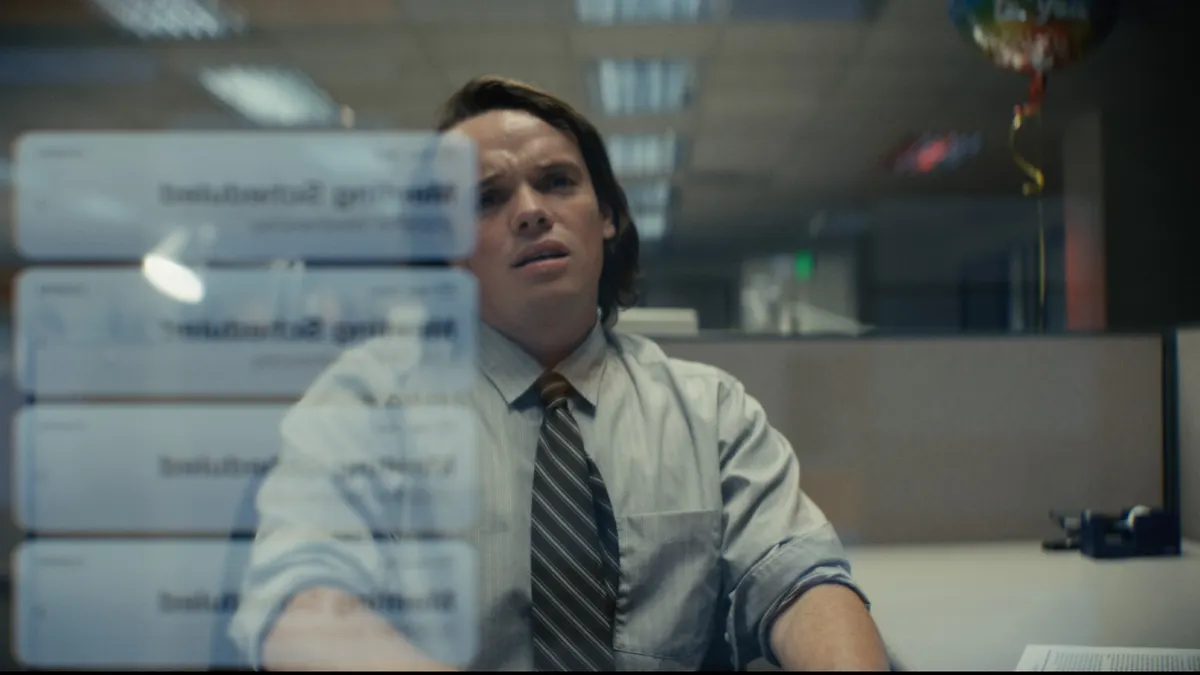
In the hero spot, "Meetings," an office worker is buried under an avalanche of digital notification pings, a visual representation of professional exhaustion. He finds solace only after transitioning to the cabin of a Southwest flight, where the phrase "Enter Airplane Mode" serves as both a literal instruction and a metaphorical promise. A secondary 15-second spot, "Mass Transit," highlights the contrast between the indignities of the daily commute and the relative peace of the sky, positioning Southwest as the ultimate antidote to urban friction.
Chronology of a Brand Evolution
Southwest’s pivot to this messaging didn’t happen in a vacuum. It is the latest chapter in a multi-year effort to modernize the brand while retaining its signature "cheeky" persona.
- Early 2025: Facing increased competition and changing consumer habits, Southwest began evaluating its core service offerings, including its long-standing open-seating policy.
- June 2025: The airline made a seismic shift in its operational strategy, announcing the introduction of assigned seating. To mitigate potential backlash and reframe the conversation, it launched the "Are You Sitting Down?" campaign, which used humor to signal that the change was a positive step toward a more comfortable, predictable passenger experience.
- October 2026: Building on the momentum of that operational shift, the airline launched the "Enter Airplane Mode" campaign. This marks a strategic transition from talking about how we fly to why we must fly.
- Current State: With Q2 2026 operating revenues hitting a record $8.4 billion—a 16.4% year-over-year increase—Southwest is clearly operating from a position of financial strength, allowing it to invest heavily in emotional branding.
Supporting Data: The Travel Disconnect
The motivation for this campaign is rooted in hard data. Southwest’s sponsored survey of 2,001 Americans revealed a paradoxical relationship with time off: while people are desperate for a break, they are increasingly failing to take one. Approximately 75% of Americans report leaving paid time off (PTO) on the table, and 34% haven’t taken a trip longer than two days in over a year.
This "vacation deficit" is compounded by economic pressures. With airfare costs having seen a 21% year-over-year increase earlier in 2026—driven in part by global geopolitical instability and fuel price volatility—travel has become a luxury item for many.
The data highlights a crucial role for loyalty programs in this economy. According to the Barclays 2025 Travel Rewards and Loyalty Report, nearly 80% of travelers now rely on loyalty programs to subsidize their vacations, and 72% of millennials specifically use rewards points to stretch their travel budgets. By focusing its campaign on the rewards program, Southwest is providing a tangible solution to the financial anxiety that prevents people from clicking "book."
Official Perspectives and Agency Integration
The campaign represents a high-level coordination between internal marketing leadership and external partners. While GSD&M led the creative direction, the initiative is supported by Later, serving as the creator agency, and Sparks Foundry, which manages media strategy.

"We aren’t just selling a seat on a plane; we are selling the permission to disconnect," said a spokesperson for the brand during the launch. By framing the purchase of a flight as an act of self-care, the airline is attempting to move its product from the "discretionary expense" column to the "essential mental health" column in the household budget.
The choice of Adam Scott as the narrator is widely viewed as a masterstroke in cultural positioning. By hiring an actor who is culturally synonymous with the struggle to separate work and self, Southwest has effectively communicated its understanding of the "modern malaise" without needing to spell it out.
Market Implications and Future Outlook
The implications for the aviation industry are significant. As major airlines move away from pure price-based competition, the battleground has shifted to the "experience economy." Southwest’s ability to turn its loyalty program into a repository of "time-off equity" is a compelling differentiator.
The Loyalty Flywheel
The 35% jump in program enrollment suggests that the "Enter Airplane Mode" messaging is successfully converting latent interest into active participation. When customers view their points not just as "miles," but as "vacation days," the perceived value of the rewards program skyrockets. This "loyalty flywheel" is crucial for Southwest as it navigates a volatile fuel market and high operating costs.
A New Standard for Airline Marketing
Southwest’s transition toward addressing consumer burnout sets a high bar for competitors. For years, airline advertising was focused on legroom, destination lists, or cabin amenities. Southwest is betting that the most valuable commodity a passenger has is their peace of mind. If the campaign continues to drive record-breaking engagement, it is likely that we will see other major carriers attempt to emulate this shift toward psychological-benefit advertising.

Financial Resilience
The airline’s record Q2 revenue of $8.4 billion provides the necessary cushion to experiment with such high-concept marketing. However, the true test will be whether this emotional connection translates to long-term brand preference in a market where price sensitivity remains high. As the company continues to implement its assigned-seating transition, the "Enter Airplane Mode" campaign serves as a vital distraction—a way to keep the focus on the benefits of the journey rather than the logistics of the seat.
Ultimately, Southwest is positioning itself as a partner in the consumer’s quest for sanity. Whether the "Airplane Mode" movement will result in a sustained shift in travel habits remains to be seen, but the airline’s aggressive push into the cultural conversation suggests that it is not content to be just another utility in the lives of its passengers. It wants to be the destination where the stress stops and the life-affirming journey begins.