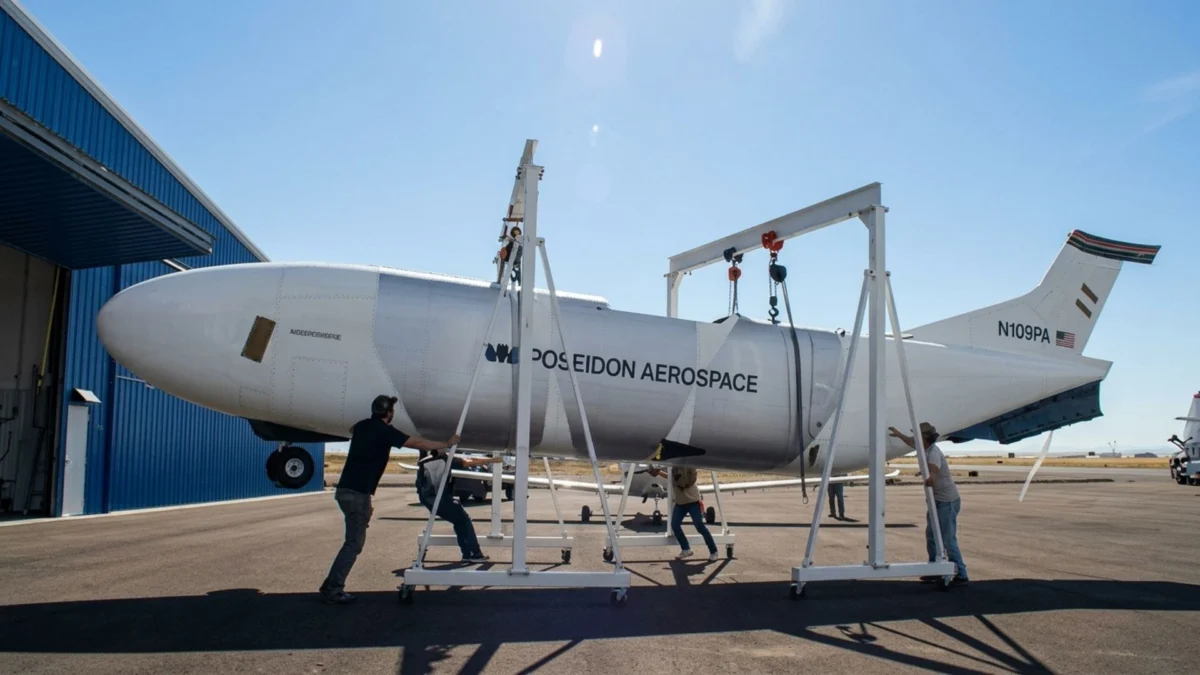
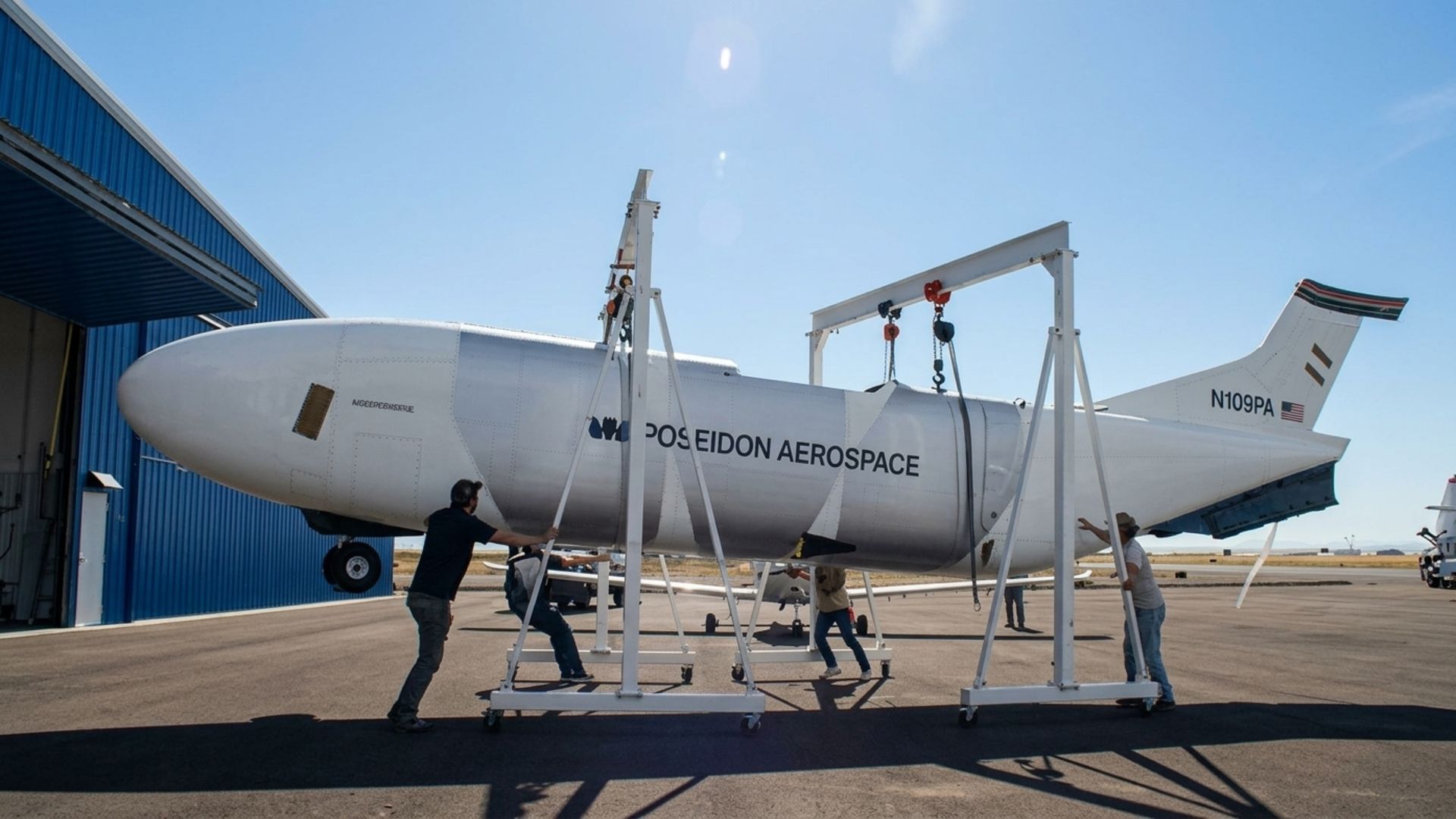
The global supply chain is poised for a potential paradigm shift. While the trucking industry has spent years chasing the dream of autonomous long-haul vehicles, a new contender is taking that ambition to the skies. Poseidon Aerospace, an emerging player in the aviation sector, is currently developing "Egret," an ambitious autonomous cargo aircraft that promises to redefine how freight is moved globally. With a 50-foot wingspan and a design philosophy that completely discards the human cockpit, Egret represents a bold bet on the future of unmanned logistics.
Main Facts: A Blueprint for the Future
At its core, Egret is designed to solve a fundamental inefficiency in aviation: the weight and spatial penalties imposed by human-centric design. Traditional cargo planes are essentially modified passenger airframes or modified versions of designs that originally assumed a pilot would be on board. By stripping away the cockpit, life-support systems, and flight deck controls, Poseidon Aerospace has created a vessel dedicated entirely to its primary function—transporting up to 4,000 pounds of freight.
The aircraft is not merely a drone in the hobbyist sense; it is a heavy-lift autonomous vehicle. Its architecture is optimized for volume and payload, treating the fuselage as a pure cargo hold. By removing the pilot, the company not only sheds the weight of the cockpit and its attendant equipment but also eliminates the physical constraints that dictate the cabin’s geometry. This design strategy, according to co-founder David Zagaynov, is akin to creating an "autonomous truck of the sky."
Chronology: From Concept to Runway
Poseidon Aerospace’s path to the Egret project has been one of iterative development and rigorous testing. The journey began with the "V0" prototype, a foundational experimental aircraft that served as the company’s initial proof of concept. The V0 was not without its challenges; it underwent multiple redesigns—a common hurdle in the aerospace industry—before finally achieving a successful flight profile that validated the team’s core engineering assumptions.
Building on the lessons learned from the V0, the company moved to the "Seagull" program. This project involved a quarter-scale prototype of their larger "Heron" aircraft. Notably, the Seagull was designed for water-based operations, utilizing an advanced, lightweight carbon-fiber structure that emphasized durability and weight efficiency. This phase was critical for the company’s reputation, as it allowed Poseidon to demonstrate its technology to high-stakes stakeholders, including the U.S. Department of Defense, the Navy, and Special Operations Command.
These demonstrations served as a vital bridge, transitioning the company from a boutique engineering firm to a serious contractor capable of meeting stringent military and logistical standards. Today, the focus has shifted entirely to the Egret, which is currently slated for extensive flight testing in Oregon.
Supporting Data: The Engineering and Financial Landscape
While technical specifications regarding Egret’s exact range, fuel efficiency, and cruising speed remain closely guarded, the scale of the company’s ambition is supported by significant financial backing. Poseidon Aerospace recently secured $60 million in a Series A financing round led by TQ Ventures. This capital injection is earmarked specifically for accelerating autonomous aviation development and scaling the infrastructure required to move Egret from the testing phase to operational readiness.
The choice of Oregon for testing is strategic. The state’s diverse topography and favorable regulatory climate for Unmanned Aerial Systems (UAS) make it an ideal sandbox. Should the tests proceed as planned, Egret is expected to hold the title of the largest cargo drone currently operating in the United States.
However, the industry remains cautious. The lack of public data regarding the craft’s specific operating costs—the ultimate metric for any logistics company—means that Egret’s market viability remains theoretical until it can prove its performance metrics in real-world scenarios.
Official Responses and Strategic Philosophy
The vision behind Egret is driven by a team with deep roots in logistics and mechanical engineering. Co-founder David Zagaynov, formerly of Amazon, brings an intimate understanding of the scale and cost-pressures inherent in global supply chains. His partner, Parker Tenney, provides the mechanical rigor honed at Lockheed Martin.
In his public comments, Zagaynov has been clear about the company’s objective: cost reduction. "We’re building the autonomous trucks of the sky to be able to move things as cheaply as possible from point A to point B," he stated. This philosophy suggests that the goal is not to compete with high-speed, high-cost air freight, but to provide a more efficient, automated alternative to ground-based logistics, bridging the gap between slow, ground-based shipping and expensive, pilot-operated air cargo.
The transition from human to remote control is handled through a sophisticated ground control station. This system allows a remote pilot to maintain oversight, utilizing live video feeds and direct control inputs for critical flight surfaces such as throttles, flaps, and rudders. While the aircraft is "autonomous," this human-in-the-loop architecture ensures that, at least during the testing and regulatory validation phases, the aircraft never truly leaves human oversight.
Implications: The Future of Autonomous Logistics
The introduction of a vehicle like Egret has profound implications for the logistics sector. If proven successful, the model could lead to a massive disruption in regional freight transport.
1. Economic Efficiencies
The primary implication is the potential for drastic cost reduction. Pilots are the most expensive operational variable in commercial aviation. By removing them, the cost-per-mile for air cargo could drop significantly, potentially making small-batch, rapid-delivery logistics affordable for a wider array of industries.
2. The Regulatory Hurdle
Before Egret can become a common sight in the skies, it must clear significant regulatory hurdles. The Federal Aviation Administration (FAA) has stringent requirements for "beyond visual line of sight" (BVLOS) operations. Proving that an autonomous aircraft can safely navigate civilian airspace alongside traditional, manned aircraft will be the ultimate challenge for Poseidon. The success of the Egret tests will likely influence future FAA rulemaking regarding large-scale, unmanned cargo operations.
3. The "Trucking" Parallel
If Egret succeeds in becoming an "autonomous truck of the sky," it could change the geography of manufacturing and warehousing. Businesses that currently rely on trucking networks might find that regional air-delivery nodes become more viable, allowing for decentralized distribution centers that can receive inventory via Egret with high frequency and low overhead.
4. Military and Humanitarian Applications
The early interest from the Department of War and Special Operations Command suggests that the utility of Egret extends beyond commercial retail. In conflict zones or disaster-relief scenarios, an autonomous aircraft capable of delivering 4,000 pounds of supplies without risking human personnel is a strategic asset. The ability to deploy such a craft in high-risk environments could be the difference between success and failure in time-sensitive operations.
Conclusion
Poseidon Aerospace sits at the intersection of extreme engineering and supply chain necessity. The Egret project is an audacious attempt to strip away the historical legacy of the "pilot in the cockpit" and replace it with a lean, automated system designed solely for the movement of goods. While the company still faces the monumental task of proving its operational capabilities and satisfying aviation authorities, the combination of strong financial backing and a clear, focused engineering mission suggests that the sky may soon become significantly more crowded—and significantly more efficient. As the industry watches the upcoming tests in Oregon, one thing is certain: the future of freight is looking increasingly pilotless.