
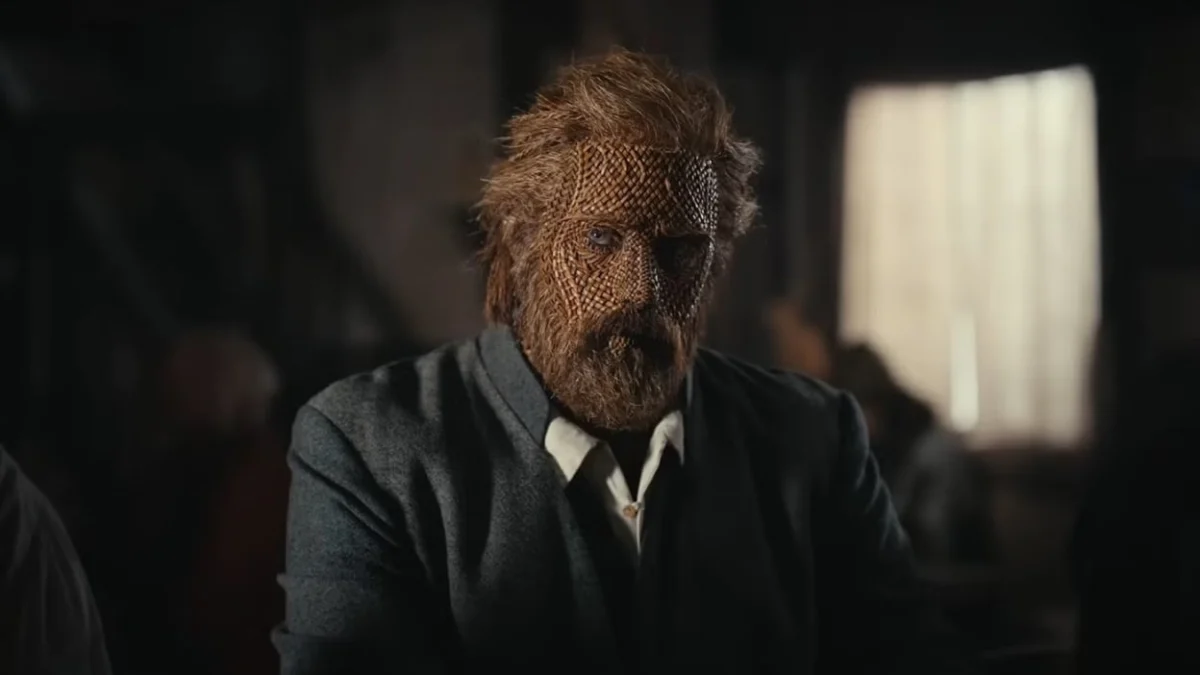
In the rapidly evolving landscape of modern cinema, the line between audience participation and studio marketing has become increasingly porous. Nowhere is this more apparent than with Wicker, the forthcoming romantic comedy starring Academy Award-winner Olivia Colman and Alexander Skarsgård. Following a surge of ironic, enthusiastic, and frankly bewildered social media discourse, the production company Black Bear has announced that the film will receive a one-night-only 4DX screening on October 28, 2026.
What began as a niche internet fixation—centered largely on the film’s bizarre premise—has morphed into a legitimate theatrical event, proving that in the digital age, audience engagement can dictate distribution strategies as effectively as any traditional marketing budget.
The Premise: A Romantic Comedy Like No Other
Directed by the visionary duo Eleanor Wilson and Alex Huston Fischer, Wicker is poised to be one of the most eccentric entries in the 2026 autumn slate. The narrative centers on an ostracized fisherwoman, played with characteristic depth by Colman, who finds herself disillusioned by the local dating pool. In an act of radical self-reliance, she commissions a local, reclusive basketmaker (played by Peter Dinklage) to craft her a husband out of wicker.
The resulting creation—a sentient, woven figure portrayed by Skarsgård—becomes the object of her affection. However, as their romance blossoms, it threatens to dismantle the fragile social order of their quaint village. The film is described as a blend of absurdist humor and genuine emotional stakes, but it is the physical nature of the male lead that has captured the collective imagination of the internet.
Chronology: How the ‘Wicker’ Phenomenon Ignited
The road to this 4DX announcement was not a straight line, but rather a chaotic climb up the social media trending charts.

- August 2026: The initial teaser trailer for Wicker dropped, showcasing Skarsgård’s transformation into the titular character. The juxtaposition of a prestige cast in a high-concept, surrealist premise immediately triggered a flood of memes and speculative discourse across TikTok and X (formerly Twitter).
- Late August 2026: The official 4DX USA TikTok account entered the fray, posting a tongue-in-cheek video suggesting that the film would be "perfect" for the sensory-heavy 4DX format. The post went viral, garnering millions of views and thousands of comments from fans begging the studio to make it a reality.
- September 2026: Fan campaigns gained momentum. Hashtags surrounding the film’s "wicker aesthetic" reached a fever pitch, with users speculating on what kind of "environmental effects" would be necessary to capture the sensation of dating a woven man.
- October 7, 2026: Black Bear officially confirms the one-night-only 4DX event, citing "mass fan requests" as the primary catalyst for the decision.
The 4DX Experience: Beyond the Screen
For the uninitiated, 4DX is a premium theater format that goes far beyond high-definition visuals and surround sound. It utilizes motion-synchronized seating that tilts, heaves, and vibrates, combined with environmental sensors that can release scents, spray water, generate wind, and strobe with light.
While these features are typically reserved for high-octane blockbusters—such as the Twister franchise, which saw a massive resurgence in 2024—the application of this technology to a quirky romantic comedy is unprecedented. Fans have spent the last few weeks debating the "sensory roadmap" of the film. Will the seats vibrate whenever the wicker husband moves? Will the theater smell of dried grass and sea salt?
The studio has remained coy regarding the specific effects, likely leaning into the mystery to drive ticket sales. However, the decision to grant the request highlights a major shift in how studios view their "digital footprint." By embracing the absurdity, Black Bear has essentially turned the audience’s memes into a premium, revenue-generating product.
Official Perspectives: When the Creators Meet the Meme
The directors, Wilson and Fischer, were reportedly caught off guard by the public’s obsession with the 4DX prospect, initially viewing the online chatter as a harmless joke.
"We were surprised how much 4DX enhances the experience of watching our film," director Eleanor Wilson stated in a press release. "The comedy is so much more hilarious while you’re being rocked out of your chair, and the more subtle environmental shifts really situate you in our strange world."

Alex Huston Fischer echoed these sentiments, admitting that the transition from a hypothetical meme to a physical reality was a surreal experience for the creative team. "We thought this was a joke. But now it’s real. And it’s spectacular," he said. This endorsement from the creators effectively validated the fans’ enthusiasm, bridging the gap between the film’s artistic intent and the internet’s penchant for irony.
Supporting Data: The Power of Premium Formats
The success of 4DX, particularly in the post-pandemic era, is supported by significant box-office data. Following the massive success of Twisters in 2024, which led to a historic return to theaters, exhibition chains like Regal have noted a marked increase in demand for "experiential cinema."
Data from the last 24 months suggests that audiences are increasingly prioritizing "event-based" viewings. Recent successes in the 4DX space include:
- Final Destination: Bloodlines: Which utilized the format to heighten the physical tension of its death sequences.
- Spider-Man: Brand New Day: Which leveraged motion seats to simulate the sensation of web-slinging.
- The Odyssey: A summer surprise that used environmental effects to immerse viewers in the maritime setting.
Industry analysts suggest that the "Wicker 4DX" event is a test case. If a mid-budget romantic comedy can successfully fill premium format auditoriums, it could signal a shift in how studios distribute non-action films.
The Implications: Is This the Future of Marketing?
The Wicker situation has broader implications for the film industry. We are witnessing the birth of "Algorithmic Distribution," where the studio does not simply push a film onto the public, but rather listens to the niche desires of digital communities and adjusts the release strategy accordingly.

However, there is a risk involved. By leaning into the "meme-ification" of the film, there is a possibility that the artistic merits of the work—a film featuring high-caliber talent like Colman and Skarsgård—could be overshadowed by the gimmickry. Conversely, it could be argued that in a crowded entertainment market, this is the most effective way to ensure a film finds an audience.
As we approach the October 28 screening, the question remains: will the audience be laughing at the experience, or will they be genuinely immersed in the world Wilson and Fischer have built? The ticket sales for the one-night-only event will likely provide the answer.
Conclusion: A Wicker-Infused Legacy
As the theater doors prepare to open on October 23 for the standard release, and October 28 for the 4DX spectacle, one thing is certain: Wicker has already succeeded in achieving the primary goal of any modern film—it is being talked about.
Whether you are a devotee of Alexander Skarsgård, a fan of Olivia Colman’s dramatic range, or simply a curious moviegoer wondering what it feels like to be "swept off your feet" by a basket-woven husband, the Wicker 4DX event represents a unique moment in cinema history. It is a testament to the fact that when the internet speaks, the industry is increasingly willing to listen—even if the request involves a wicker-clad actor and a theater seat that moves.
For one night only, the screen will dissolve, the seats will move, and the absurdity of the digital age will manifest in the most tactile way possible. It is a strange, wild, and entirely modern experiment in storytelling.