The landscape of personal mobility is undergoing a tectonic shift, and Chinese automotive titan Chery is no longer content to remain on the sidelines of the two-wheeler revolution. Known globally for its robust portfolio of SUVs and passenger vehicles—including the Omoda, Jaecoo, Jetour, and Exeed brands—Chery has officially signaled its intent to dominate the electric two-wheeler space. With government approval secured for motorcycle production and a suite of high-tech prototypes already unveiled, the company is positioning itself to bridge the gap between mass-market utility and premium, tech-forward electric mobility.
The Strategic Shift: From Four Wheels to Two
Chery’s decision to enter the two-wheeler sector is a calculated move designed to leverage its existing expertise in New Energy Vehicle (NEV) architecture, battery management, and software integration. While the company has long been a household name in the automotive sector, the transition to motorcycles and scooters represents a significant diversification of its business model.
Recent filings with China’s Ministry of Industry and Information Technology (MIIT) have confirmed that Chery’s commercial vehicle arm has received the green light for motorcycle manufacturing. This regulatory milestone is more than just a bureaucratic step; it is the foundation upon which Chery intends to build a brand identity that emphasizes high-end, intelligent mobility. The company’s focus is clearly aimed at the tech-savvy urban commuter, moving away from the "cheap and cheerful" electric mopeds that have historically dominated the lower rungs of the Chinese market.
Chronology of the Development
The path to this announcement has been marked by rapid internal development and quiet regulatory preparation.
- Early 2026 (Strategic Planning): Chery internalizes the development of a two-wheeler division, leveraging research from its existing EV passenger car platforms.
- Mid-2026 (Regulatory Approval): The Chinese government, through the MIIT, officially grants Chery’s commercial arm the necessary licensure to manufacture motorcycles.
- Late 2026 (The Reveal): During a major technology summit at its Wuhu headquarters, Chery moves from concept to public demonstration, showcasing the "Grow C3" and a new adventure-style electric scooter.
- Future Outlook (Q1 2027 and beyond): Industry analysts anticipate a phased rollout, beginning with the entry-level moped to establish production pipelines, followed by the launch of the premium Cinnox brand.
Supporting Data: Understanding the Product Portfolio
Chery’s approach to the two-wheeler market is bifurcated, targeting both the entry-level utility sector and the high-performance premium segment.

The Entry-Level Moped: A Learning Exercise
At the foundational level, Chery has registered a low-cost electric moped. While the company is positioning itself as a premium player, this entry-level model serves as a "regulatory placeholder" and a critical learning tool. By entering the market with a simpler, cost-effective platform, Chery can refine its manufacturing processes and supply chain logistics before scaling up to more complex, high-voltage vehicles.
Market observers have noted that this initial e-moped shares a striking aesthetic resemblance to the classic Yamaha Vino range—a design language that has been ubiquitous in China for nearly two decades. These machines typically utilize budget-friendly lead-acid batteries and hub-mounted motors, allowing them to retail at extremely low price points (often around CNY 2,000 or USD 280). For Chery, this is not just about sales volume; it is about establishing a foothold in the high-frequency production environment of two-wheelers.
The Cinnox Brand: Innovation at the Core
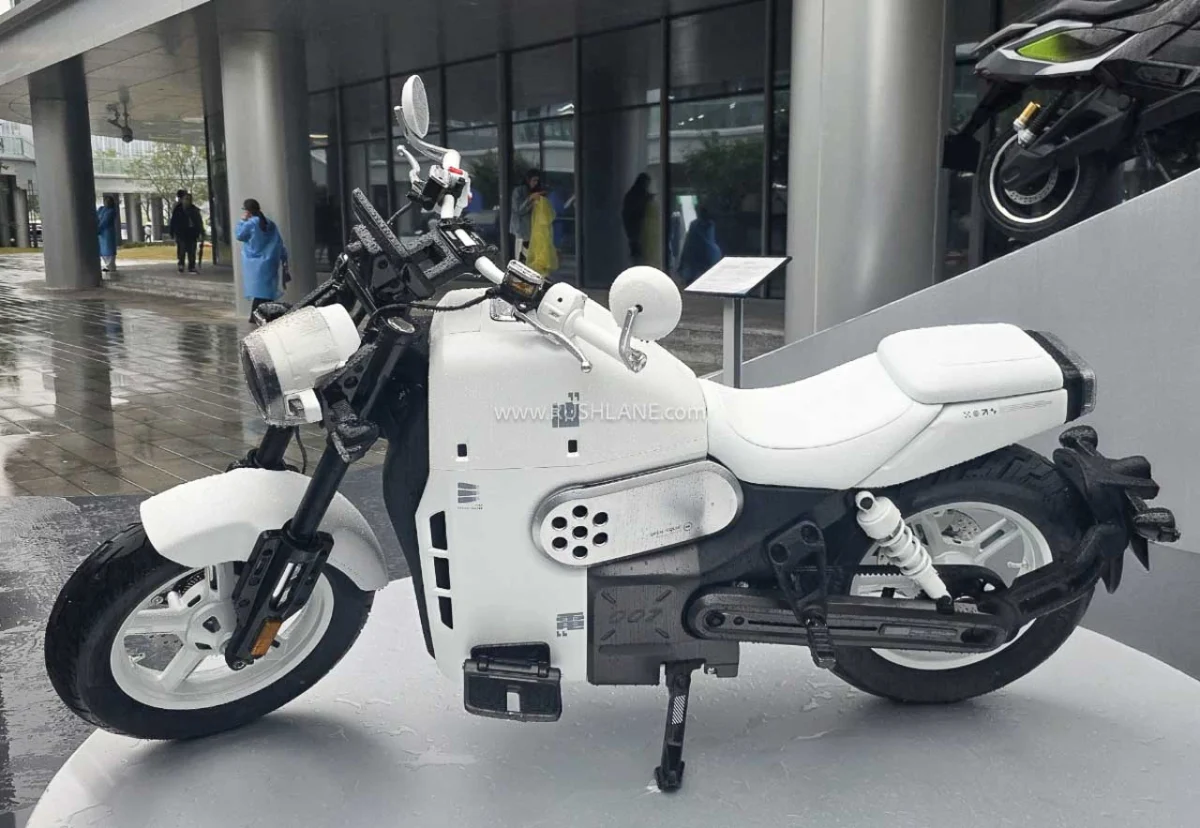
The true ambition of the company is embodied in its new sub-brand, Cinnox. The flagship of this brand is the "Grow C3," a motorcycle that represents a significant leap forward in hybrid electric technology.
The Grow C3 is being marketed as the world’s first "AI-intelligent range-extended cruiser." Unlike pure battery-electric motorcycles that suffer from "range anxiety," the Grow C3 utilizes a range-extender (EREV) system. This setup features a small, efficient internal combustion generator that acts exclusively as an onboard power plant, keeping the battery charged during long rides. This combination offers the torque and smoothness of an electric motor with the convenience of liquid fuel for long-distance travel.
Key features of the Cinnox Grow C3 include:

- V2L (Vehicle-to-Load) Capability: Allowing the bike to power external electronic devices, effectively turning the motorcycle into a mobile power station for camping or emergency use.
- Advanced Connectivity: A digital instrument console that offers seamless integration with smartphones for navigation, telematics, and real-time performance monitoring.
- OTA (Over-the-Air) Updates: Ensuring that the vehicle’s software remains current, improving battery management and AI-assisted riding modes over time.
The Electric ADV Scooter
Complementing the cruiser is an electric Adventure (ADV) scooter designed for versatility. While technical specifications remain sparse, Chery has confirmed that it will be compatible with standard automotive charging infrastructure. Boasting an estimated range of 150 to 200 kilometers on a single charge, this vehicle is designed to bridge the gap between urban commuting and weekend touring.
Official Stance and Corporate Vision
In statements provided during the Wuhu technology event, Chery executives emphasized that the company’s entry into the two-wheeler market is an extension of its "Green Mobility" philosophy. The primary goal is not merely to compete on price, but to provide an integrated ecosystem of transport solutions.
"By bringing our experience in automotive AI, battery safety, and global quality control to the two-wheeler segment, we are redefining what a commuter vehicle can be," stated a company representative. Chery’s leadership believes that the transition to electric motorcycles will follow a similar trajectory to their passenger vehicle business—starting with innovation, scaling with quality, and sustaining through software-led customer engagement.
Implications for the Market and Competitors
The entry of a Tier-1 automotive giant like Chery into the motorcycle market sends a clear message to established legacy brands and existing electric startups alike.
1. The Death of the "Cloned" Market
For years, the Chinese two-wheeler market has been flooded with low-cost, unbranded clones of legacy scooters. Chery’s entrance, supported by a massive R&D budget, will likely exert downward pressure on these smaller, non-compliant manufacturers. As consumers begin to prioritize safety, reliable warranty coverage, and smart software integration, the "cheap and dirty" segment of the market may see significant consolidation.

2. The Rise of EREV Technology
By championing EREV (Extended Range Electric Vehicle) technology in the motorcycle space, Chery is challenging the industry-wide consensus that lithium-ion battery capacity is the only path to long-range travel. If the Grow C3 succeeds, it could set a new industry standard for high-performance electric cruisers, offering a compelling alternative to pure-EV models that currently require long charging stops.
3. Global Export Potential
Chery is already one of China’s most successful automotive exporters, with a significant presence in Southeast Asia, the Middle East, and Latin America. It is highly probable that the company intends to use its established global distribution networks to ship these electric two-wheelers to international markets. This would provide a serious challenge to Japanese and European motorcycle manufacturers who have been slower to innovate in the premium electric scooter and cruiser categories.
4. Integration with Passenger Car Ecosystems
One of the most compelling aspects of Chery’s strategy is the potential for cross-platform integration. Imagine a single Chery mobile app that manages your Tiggo SUV and your Cinnox motorcycle, sharing data on battery health, charging history, and service intervals. This "lifestyle ecosystem" approach is something that traditional motorcycle manufacturers have struggled to implement, giving Chery a significant competitive edge in customer retention.
Conclusion
Chery’s venture into the electric two-wheeler market is a bold, multi-faceted strategy that leverages their automotive heritage to address the evolving needs of global commuters. By balancing a utilitarian, entry-level approach with the high-tech, AI-driven performance of the Cinnox brand, they are positioning themselves to be a formidable disruptor.
While the market awaits further details on pricing and international availability, one thing is certain: the era of the "smart motorcycle" has officially arrived. As Chery begins to roll out its production lines, the competition will be forced to adapt, innovate, or risk being left behind in a rapidly changing, electric-first world. The Grow C3 and the upcoming ADV scooter are not just new products; they are the first indicators of a new chapter in the history of the motorcycle—one where the divide between car and bike technology is finally, and permanently, erased.