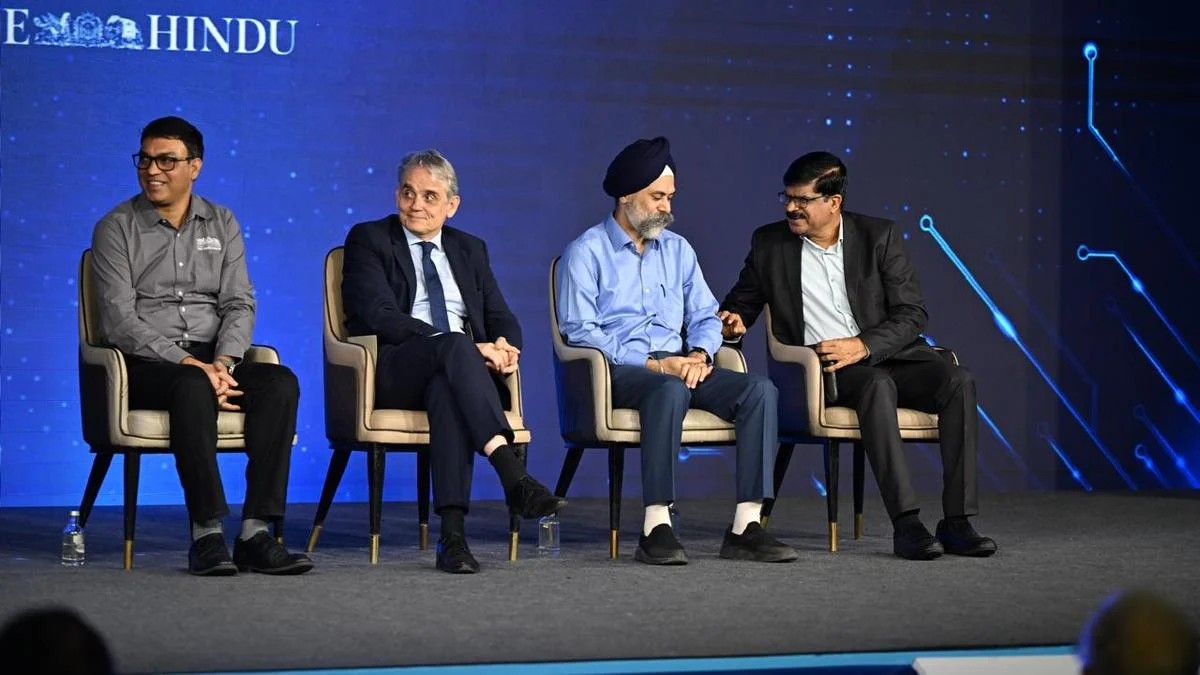
CHENNAI — In a landmark event that underscores India’s burgeoning role in the global electronics value chain, the SRM Institute of Science and Technology (SRMIST), in strategic partnership with The Hindu Group, inaugurated the Semiconductor Summit 2026 on Tuesday, October 27, 2026. Held at a high-tech venue in Chennai, the summit serves as a premier global gathering for innovators, engineers, and industry leaders who are currently architecting the future of the semiconductor industry.
As the world grapples with the transition toward a post-silicon era and the demands of artificial intelligence (AI), the summit arrives at a critical juncture. The event focuses on the twin pillars of technological acceleration: advanced lithography and sustainable manufacturing. With the Indian government’s "India Semiconductor Mission" (ISM) entering its next ambitious phase, the summit provides a vital platform for stakeholders to harmonize their efforts in chip design, power efficiency, and the development of next-generation materials.
I. Main Facts: A Convergence of Policy, Industry, and Academia
The Semiconductor Summit 2026 is not merely a technical conference but a strategic assembly intended to bridge the gap between academic research and industrial application. The opening ceremony featured a distinguished panel of leaders representing the core sectors of the ecosystem:
- Kamaljeet Singh, Director General of the Semi-Conductor Laboratory (SCL), Mohali, representing the Ministry of Electronics and Information Technology (MeitY), Government of India.
- Michael Hasper, Consul General of the Federal Republic of Germany, highlighting the international collaborative nature of the semiconductor supply chain.
- C. Muthamizhchelvan, Vice-Chancellor of SRMIST, representing the academic engine driving the talent pipeline.
- Navneet, CEO of The Hindu Group, representing the media’s role in fostering public-private discourse on national strategic interests.
The summit’s agenda is designed to address the most pressing challenges of 2026: the scaling of 2nm process nodes, the integration of Gallium Nitride (GaN) and Silicon Carbide (SiC) in electric vehicle (EV) ecosystems, and the urgent need for "green" fabs that minimize water and energy consumption.
II. Chronology of the Summit: A Day of Strategic Deliberation
The summit unfolded through a series of tightly curated sessions designed to move from broad policy frameworks to granular technical breakthroughs.
Morning Session: The Sovereign Silicon Vision
The day began at 9:30 AM with a keynote address by Kamaljeet Singh. He detailed the modernization roadmap for SCL Mohali, which has undergone a significant transformation into a research-cum-commercial fab. Singh emphasized that by late 2026, India’s domestic capabilities in legacy nodes (28nm and above) would be robust enough to support the automotive and IoT sectors, reducing import dependency.
Mid-Morning: International Synergies
At 11:00 AM, a plenary session titled "The Indo-German Semiconductor Corridor" was led by Michael Hasper. The discussion focused on the "Silicon Saxony" model in Germany and how Indian states like Tamil Nadu can replicate such clusters through specialized vocational training and joint R&D ventures.
Afternoon Session: Technical Deep-Dives
Following a networking lunch, the summit split into technical tracks. One track focused exclusively on Advanced Lithography, discussing the transition from Deep Ultraviolet (DUV) to Extreme Ultraviolet (EUV) systems and the logistics of bringing such high-cost equipment to Indian soil. A parallel track discussed Next-Generation Materials, specifically the rise of 2D materials and graphene-based transistors that promise to surpass the thermal limits of traditional silicon.
Evening: The Talent Roadmap
The final session of the day featured Dr. C. Muthamizhchelvan outlining SRMIST’s new curriculum, which includes "Cleanroom Internships" and AI-driven chip design modules. The day concluded with a high-level roundtable involving CEOs of global fabless firms and Indian startups, moderated by The Hindu Group.
III. Supporting Data: The 2026 Semiconductor Landscape
The context of this summit is backed by staggering economic data. As of late 2026, the global semiconductor market is projected to reach a valuation of approximately $850 billion, with India’s domestic consumption accounting for nearly $60 billion.
Key Data Points Discussed:

- Investment Inflow: Under the ISM Phase 2, India has successfully attracted $15 billion in cumulative investments in the last 36 months, spanning assembly, testing, marking, and packaging (ATMP) units and two major fabrication plants.
- Power Efficiency: With the global push for Net Zero, the summit highlighted that next-generation power chips (GaN) could reduce energy loss in data centers by up to 40%.
- The Talent Gap: Industry reports presented at the summit indicate a global shortage of 1 million semiconductor professionals by 2030. India is positioned to fill nearly 25% of this gap through its university ecosystem.
- R&D Allocation: SRMIST announced a dedicated ₹100 crore fund for semiconductor research, aiming to file 50+ patents in chip architecture by 2027.
IV. Official Responses: Leadership Perspectives
The speakers at the summit provided nuanced views on how India should navigate the complexities of the global market.
Kamaljeet Singh (SCL Mohali):
"The Semi-Conductor Laboratory is no longer just a government entity; it is the nucleus of India’s chip sovereignty. Our presence here at the SRMIST-The Hindu summit is to signal to the world that India is ready to move from ‘Design’ to ‘Design and Fabricate.’ We are actively looking for industry partners to co-develop specialized chips for India’s strategic sectors."
Michael Hasper (Consul General of Germany):
"Germany sees India as a primary partner in the diversification of the tech supply chain. The synergy between German precision engineering and Indian software prowess is the ‘secret sauce’ for the next decade of electronics. We are not just looking at India as a market, but as a co-innovator."
Dr. C. Muthamizhchelvan (SRMIST):
"Higher education must evolve at the speed of light—or in this case, at the speed of a photon. Our partnership with The Hindu and industry leaders ensures that our students aren’t just reading about semiconductors in textbooks; they are working on the very architectures that will power the AI of 2030."
Navneet (The Hindu Group):
"As a chronicler of India’s progress for over 140 years, The Hindu Group recognizes that the semiconductor race is the defining industrial revolution of our time. By co-organizing this summit, we aim to provide a platform where complex policy meets public understanding, ensuring that the ‘Silicon Dream’ becomes a national reality."
V. Implications: Beyond the 2026 Horizon
The Semiconductor Summit 2026 carries profound implications for India’s geopolitical and economic standing.
1. Strategic Autonomy
By focusing on domestic manufacturing and R&D, India is insulating its critical infrastructure—from defense to telecommunications—against global supply chain shocks. The summit reinforced the idea that "Silicon Diplomacy" will be as important as oil diplomacy was in the 20th century.
2. Economic Multiplier Effect
For every job created in a semiconductor fab, approximately 10 to 15 jobs are created in the peripheral ecosystem (chemicals, logistics, software, and maintenance). The summit’s focus on sustainable manufacturing also ensures that this growth does not come at an environmental cost, positioning India as a leader in "Green Electronics."
3. The Rise of the ‘Deep Tech’ Startup
A significant takeaway from the summit was the shift from "Service-based IT" to "Product-based Deep Tech." With the infrastructure discussed at the summit, Indian startups can now dream of designing "India-specific" chips for local problems—such as low-power chips for rural healthcare devices or localized AI processors for regional languages.
4. Regional Development
Hosting this summit in Chennai cements Tamil Nadu’s position as the "Electronics Hub of India." The state’s existing automotive strength, combined with the new semiconductor focus, creates a "Silicon Coast" that could rival global clusters in Hsinchu or Santa Clara.
Conclusion
As the Semiconductor Summit 2026 concludes its first day, the message is clear: the era of India as a passive consumer of technology is over. Through the collaborative efforts of institutions like SRMIST, the strategic vision of the Government of India, the diplomatic support of partners like Germany, and the communicative power of The Hindu Group, the country is carving out a permanent seat at the global silicon table. The breakthroughs discussed today in Chennai are the building blocks of a more resilient, efficient, and technologically sovereign tomorrow.