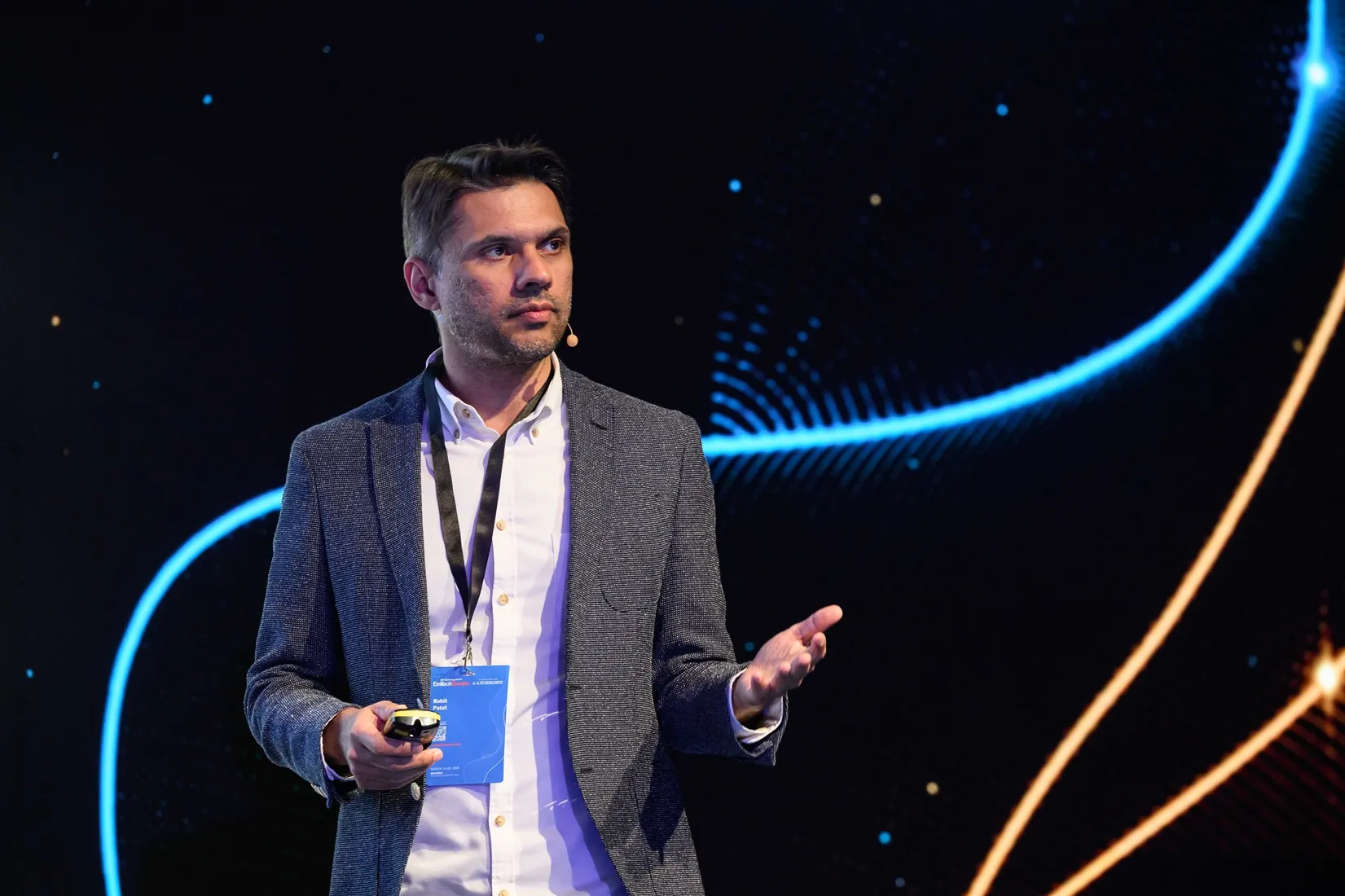
In a high-profile departure from Meta’s ranks, Rohit Patel—a veteran who spent eight years architecting AI systems at the social media giant—is stepping away to pursue an ambitious vision for the future of enterprise productivity. As the former director at Meta Superintelligence Labs, Patel’s exit marks the latest in a series of significant talent migrations from the company, joining the ranks of former Chief Global Affairs Officer Joel Kaplan, AI researcher Andrew Tulloch, and Emily Dalton Smith, the former Head of Product for AI-for-Work.
Patel is not merely starting a new company; he is attempting to fundamentally disrupt the digital infrastructure of modern labor. His new venture, Ndoc, is being positioned as an "AI-native" replacement for the entrenched monopolies of Microsoft Office and Google Workspace. By moving away from the fragmented, app-switching workflows that have defined the last three decades of office work, Patel aims to unify data analysis, narrative building, and modeling into a single, cohesive environment.
The Genesis of Ndoc: A New Paradigm for Knowledge Work
For years, the professional world has operated on a disjointed assembly line of software: Excel for calculations, PowerPoint for presentations, Tableau for visualization, and various code editors for technical tasks. When AI was introduced to this ecosystem, it was largely implemented as a "layer" on top—an assistant that would suggest a sentence or fill a cell.
Patel argues that this approach is a category error. “Companies are basically attaching AI to spreadsheets and it fills your cells for you,” Patel told TechCrunch. “It just sort of kills my soul. This is like if you just figured out electricity, and then you decided the best use case is to put lights on my bulls that till my soil. No. Get a tractor.”
Ndoc is designed to be the "tractor" of the AI era. It replaces the traditional "file" concept with a unified, three-pane workspace:
- The Stage: A presentation-centric tab where slide decks, dashboards, and live simulations live.
- The Narrative: A document-based interface that explains the "why" behind the data, featuring automated citations and generated figures.
- The Model: The technical backbone where raw datasets and Python scripts reside.
By keeping these three components in one layout, Ndoc aims to eliminate the "ChatGPT copy-paste" cycle, where workers move data between disparate apps, often losing context and accuracy in the process.
Chronology of the Shift: Why Now?
Patel’s departure from Meta is symptomatic of a broader shift in the tech landscape. As Big Tech firms grapple with the logistical hurdles of integrating AI across massive, legacy product suites, innovators are finding that the "human pace" of large corporations is incompatible with the "AI pace" of modern development.
The Timeline of Transition
- 2018–2026: Patel serves at Meta, focusing on reinforcement learning—a method where AI agents maximize rewards through trial and error. His work centered on "trustworthiness," specifically evaluating whether AI outputs could be relied upon for critical business decisions.
- Mid-2026: A wave of high-level departures at Meta signals a pivot in the industry. As companies like OpenAI, Google, and Anthropic race to embed AI into existing ecosystems, specialized talent begins to look toward "greenfield" projects that don’t carry the baggage of legacy code.
- Late 2026: Patel launches Ndoc, opting to build from the ground up rather than working within the constraints of a trillion-dollar company.
- Present Day: Ndoc enters an enterprise pilot phase, moving toward a broader beta release.
Transparency and the "Black Box" Problem
One of the most significant hurdles for AI in the enterprise is the "black box" nature of current models. If an AI generates a financial forecast or a market strategy, how does a middle manager verify it?
Patel’s background in reinforcement learning at Meta informs his approach to this problem. Ndoc is designed with "verifiability" at its core. Because the platform houses the underlying Python scripts used to generate charts and narratives, users can query the AI to explain its logic.
“Even if you don’t know any Python, you can ask the AI to explain: ‘Hey, what does this script do? Which line has my formula?’” Patel explains. “And you can verify that formula. There’s nothing hidden behind the curtain here.”
This commitment to auditability is a strategic play to win over corporate clients who are currently wary of using LLMs for high-stakes business intelligence.
Supporting Data: Efficiency vs. Legacy Costs
One of the most striking aspects of Ndoc is its underlying architecture. By utilizing a curated mix of open-source models, Patel has engineered the platform to be significantly more cost-effective than competitors relying on expensive, proprietary "frontier" models.
While many competitors are focused on scaling massive models that require immense computational power, Ndoc focuses on efficiency. Patel initially believed potential users would be attracted to the cost savings, but he found the market’s response to be more visceral: users are less concerned with the "how" and more interested in the "where."
“I thought that’s what people would be excited about, but people don’t care about that,” Patel noted. “What people are excited about is that they love seeing their end-to-end [workflow] in one place.”
The Open Source Ambition
Patel’s long-term goal is to reinvent the file format itself. He is developing the .ndoc.html file format, which he intends to open-source. This would allow users to open complex, interactive, AI-driven documents in any web browser, effectively breaking the vendor lock-in that has characterized the Microsoft and Google dominance for decades.
Implications for the Enterprise AI Market
The competitive landscape is crowded. OpenAI recently launched "Space," a collaborative environment that mirrors many of the ambitions Ndoc holds. Google and Microsoft are aggressively integrating Gemini and Copilot, respectively, into their existing product lines.
Patel acknowledges that his three-person, zero-funding startup is an underdog, but he remains steadfast in his critique of the incumbents. He believes that by attempting to shoehorn AI into existing spreadsheets and word processors, the tech giants are fundamentally misunderstanding the needs of the modern knowledge worker.
The "Graveyard of Tools" Strategy
Patel is acutely aware of the "change management" problem. Replacing a company’s entire software suite is a monumental task. To mitigate this, Ndoc includes connectors that allow users to import existing data from the tools they already use. However, Patel has a personal threshold for success:
“My bar was that I’m not going to release anything I don’t love using,” he said. “I have very optimized AI workflows for everything I do. If I start using this tool, and I keep going back to my workflows, I haven’t built a good enough tool. I have a graveyard of tools that did not meet that bar.”
Execution Over Perfection: A Founder’s Philosophy
Patel’s departure from Meta was, in part, a reaction to the slow-moving nature of consensus-driven corporate environments. He suggests that at a firm the size of Meta, getting a new file format or architectural change approved would involve hundreds of stakeholders and endless deliberation.
His philosophy for Ndoc is simple: Execute, even if the plan is suboptimal.
“Execution is extremely cheap, so go execute on a suboptimal plan and worry about it later,” he argues. “By the time you make the best plan, the execution will be done by somebody else.”
This urgency is currently driving the development of Ndoc. The company is now in an enterprise pilot phase and is opening an alpha version to a limited waitlist. While the sign-up is free, the long-term business model will be based on usage and tokens, putting Ndoc in direct competition with the subscription-heavy models of legacy office suites.
Conclusion: The Road Ahead
As the industry watches to see if Ndoc can gain traction, the broader implication is clear: the era of the "static" document is coming to an end. Whether it is through a startup like Ndoc or a pivot by the major incumbents, the future of work is moving toward dynamic, AI-native environments where the "how" (the code) and the "what" (the presentation) are inextricably linked.
Patel’s bet is that by being the first to offer a unified, verifiable, and open-standard workspace, he can entice organizations to leave the "bulls and the plow" of the 20th century behind and move toward the "tractor" of the 21st. The challenge remains significant—habit is a powerful force—but as the AI revolution accelerates, the appetite for tools that actually reduce friction rather than just adding layers of complexity is higher than ever.