Design has long been relegated to the periphery of aesthetics—a pursuit of form, function, and commercial viability. Yet, in the contemporary landscape, a radical shift is underway. Design is no longer merely an act of making; it has evolved into a rigorous methodology for inquiry, a tool for social critique, and a blueprint for ecological survival. At the vanguard of this shift is the Godrej Design Lab (GDL), an initiative by the Godrej Enterprises Group that seeks to dissolve the boundaries between industry, craft, community, and the environment.
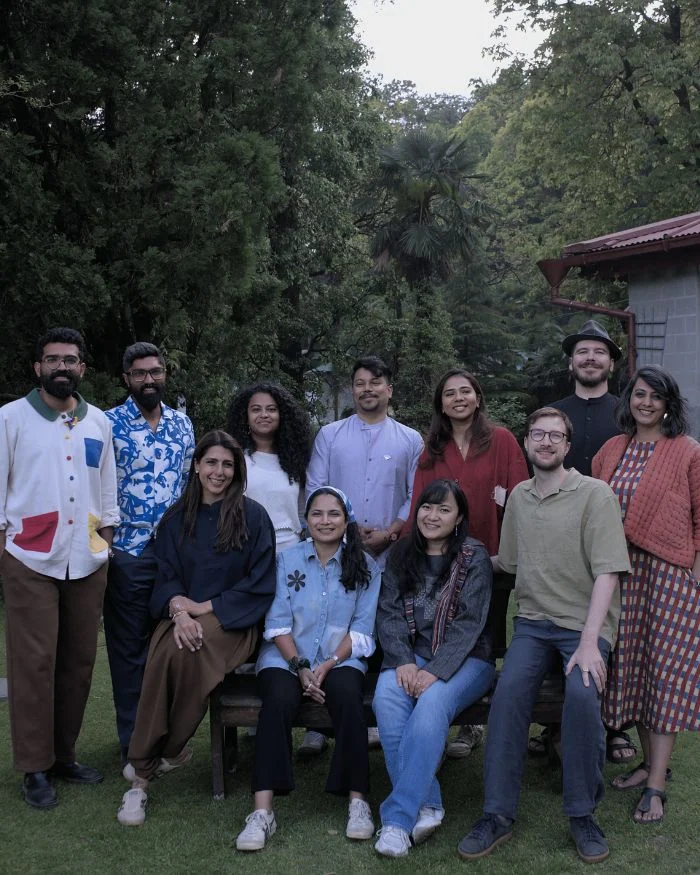
With the announcement of its 2026 cohort, the Godrej Design Lab has once again solidified its reputation as a crucible for experimental thinking. The new selection of practitioners does not simply design products; they interrogate the systems that govern our existence. From the materials we use to construct our homes to the spatial dynamics that define our communities, the 2026 cohort is mapping a path toward a more sustainable, reflexive, and human-centric future.
The Core Mandate: Design as a Catalyst for Inquiry
At the heart of the Godrej Design Lab’s philosophy is a fundamental question: Can design serve as a way of questioning the world as it exists, and can it effectively imagine how it might be otherwise?
For many, design is the final step in a production cycle. For the Godrej Design Lab, it is the initial spark of intellectual curiosity. The 2026 cohort is composed of innovators who view their practice through a wide-angle lens. Their work spans the delicate intersection of traditional craft and high-tech manufacturing, exploring how heritage-led techniques can inform modern ecological imperatives.
By supporting these practitioners, GDL is not just funding prototypes; it is cultivating a community of thinkers who challenge the simplicity of convention. In an era of mass production and rapid consumption, this cohort demands that we slow down and consider the lifecycle of our surroundings.
Chronology: A Trajectory of Innovation
To understand the significance of the 2026 cohort, one must look at the evolution of the Godrej Design Lab. Since its inception, the lab has functioned as a bridge between the vast manufacturing capabilities of the Godrej Enterprises Group and the agile, often subversive, creativity of independent designers.
- Foundation and Early Years: GDL was established to disrupt the static nature of industrial design in India, providing designers with access to advanced R&D, metalworking facilities, and global distribution networks.
- The Mid-Career Pivot: As the global climate crisis intensified, the lab shifted its focus toward sustainability. Early cohorts focused on material efficiency; later, the focus transitioned to circular design principles.
- The 2026 Cohort Selection: This cycle represents the most multidisciplinary group in the lab’s history. The selection process, which concluded in late 2025, prioritized applicants who demonstrated a clear connection between their work and broader sociological impacts.
- The Current Phase: As of early 2026, the cohort is currently engaged in intensive prototyping, utilizing GDL’s proprietary facilities to test new construction materials and spatial configurations that respond to urban density and environmental volatility.
Supporting Data: The Convergence of Craft and Ecology
The 2026 cohort’s work is underpinned by a rigorous commitment to data-driven design. The projects currently under development are not merely conceptual; they are backed by material science and structural analysis.
The Shift to Bio-Materials
A significant portion of the 2026 cohort’s research involves the integration of bio-based materials into industrial construction. Preliminary data from the lab indicates that the new prototypes aim to reduce the carbon footprint of domestic furniture and spatial fixtures by approximately 30-40% compared to conventional industry standards.
Spatial Density and Urban Living
With global urban populations projected to rise significantly by 2030, the cohort is addressing the "spatial crunch." Their projects utilize modular, adaptive, and reconfigurable design frameworks. These structures are not just space-saving; they are designed to be "future-proof," allowing for rapid assembly and disassembly, which reduces construction waste—a critical factor in urban environmental sustainability.
Community-Centric Craft
The data highlights a move away from hyper-automated manufacturing toward "human-in-the-loop" systems. By incorporating artisanal techniques into industrial workflows, the cohort is proving that scale does not have to come at the expense of cultural identity or social equity.
Official Perspectives: Shaping the Future
Henry Skupniewicz, the Head of Godrej Design Lab, has been instrumental in steering the initiative toward this more holistic vision. His perspective on the role of the lab is clear: it is a lens through which we view our collective tomorrow.
"Design is not just an aesthetic layer on the surface of our lives," Skupniewicz notes. "It is fundamental to how we innovate, how we build sustainably, and how we anticipate the future of everyday life. The 2026 cohort isn’t just making objects; they are making a statement about our responsibilities to the environment and to each other."
Skupniewicz emphasizes that the "Godrej advantage"—the marriage of the lab’s experimental spirit with the massive industrial backbone of the Godrej Enterprises Group—is what allows these radical ideas to survive the transition from a laboratory bench to the real world. "We provide the infrastructure for risk," he adds. "When you provide the right support, the design process becomes a laboratory for societal evolution."
Implications: The Future of Living
The work being conducted by the 2026 cohort has profound implications for the manufacturing, architectural, and design sectors at large. If these experiments prove scalable, they could rewrite the rulebook for how we inhabit our spaces.
1. The Death of Disposable Design
The most immediate implication is a move toward the longevity of objects. By emphasizing material circularity and modularity, the GDL 2026 cohort is challenging the "fast-furniture" culture that has dominated the retail landscape for decades. This shift encourages consumers to view their environment as an investment rather than a disposable commodity.
2. A New Paradigm for Manufacturing
Large-scale manufacturing has historically been rigid. The 2026 cohort is demonstrating that industrial-grade production can be flexible. By utilizing modular components that can be customized, designers are effectively "democratizing" high-quality, sustainable design, making it accessible beyond the luxury market.
3. Ecology as a Design Requirement
In the past, sustainability was often an "add-on" or a marketing feature. For the 2026 cohort, it is a foundational constraint. Every project is evaluated based on its ecological impact, from the sourcing of raw materials to the energy required for its eventual recycling. This internalizes the environmental cost of production, setting a standard for the industry.
4. Strengthening the Social Fabric
Perhaps the most intangible yet vital implication is the focus on community. The GDL projects are designed to facilitate human connection, whether through shared modular workspaces or home environments that adapt to the changing needs of the modern, multi-generational family. By acknowledging that design influences human behavior, the cohort is actively shaping the social interactions of the future.
Conclusion: A Blueprint for What’s Next
As the 2026 cohort continues its residency at the Godrej Design Lab, the world watches to see which of these experimental seeds will germinate into the industry standards of tomorrow. The lab has succeeded in creating a space where the question "Why?" is just as important as the question "How?"
In a world increasingly fraught with uncertainty—climatic, social, and technological—the work of the Godrej Design Lab provides a necessary anchor. It reminds us that while we cannot always predict the future, we have the agency to design it. By prioritizing the intersection of craft, community, and ecology, the 2026 cohort is doing more than creating products; they are constructing the architecture of a more resilient, thoughtful, and interconnected world.
The Godrej Design Lab remains a testament to the idea that design, when practiced with integrity and curiosity, is the most powerful tool we have to imagine how the world might be otherwise. As these practitioners move forward, they carry the weight of that potential, turning the abstract ideals of sustainability and community into the tangible reality of our daily lives.