The landscape of modern literary publishing is currently saturated with anthologies, yet a persistent malaise haunts the genre. Too often, collections of Urdu short stories—frequently marketed with hyperbolic titles like “The Best of,” “The Selected,” or “The Greats”—operate within a narrow, predictable loop. They cycle through the same pantheon: Saadat Hasan Manto, Ismat Chughtai, Munshi Premchand, and Intizar Husain. While these writers are foundational, the relentless focus on the established canon has created a "literary glass ceiling," obscuring the vast, diverse, and experimental voices that have shaped, and continue to evolve, the Urdu tradition.
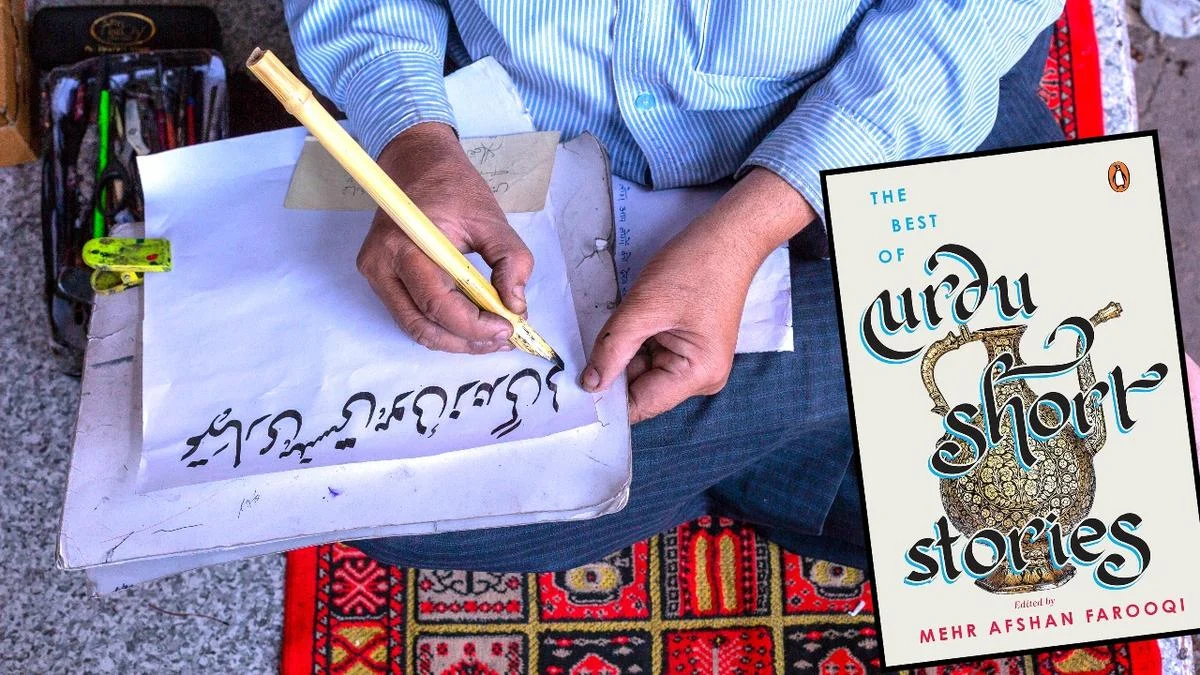
A significant corrective to this imbalance arrives in the form of The Best of Urdu Short Stories, a new anthology edited by Mehr Afshan Farooqi, a distinguished professor of Urdu and South Asian literature at the University of Virginia. Farooqi’s work does not merely repackage the giants; it attempts to broaden the horizon for the non-Urdu reader, offering a bridge into the nuanced, polyphonic world of Urdu fiction.
The Evolution of the Urdu Short Story: A Chronological Overview
To understand the weight of this new anthology, one must situate it within the historical trajectory of the Urdu short story. According to Farooqi’s scholarly introduction, the genre began to solidify in the early 20th century, emerging as a potent vehicle for social and political commentary.
The story of the Urdu short story is one of rapid maturation. It began with the towering influence of Munshi Premchand, whose work serves as the anchor for Farooqi’s collection. Premchand introduced a realist tradition—often compared to the social consciousness of Leo Tolstoy—that moved away from the romanticized, Persianate tales of the past. His stories were anchored in the grit of the Indian soil; they spoke for the disenfranchised, the peasantry, and the urban working class. Themes of social justice, communal amity, and the moral dilemmas of the impoverished became the hallmark of his era.

Following the Premchand era, the narrative arc of Urdu fiction was defined by two massive, often overlapping, movements: the Progressive Writers’ Movement (PWM) and the rise of Modernism. The PWM brought a fierce, Marxist-leaning political urgency to the literature, demanding that the writer be a mirror to the suffering of the masses. Modernism, which gained traction in the post-Partition decades, shifted the gaze inward. It became preoccupied with existential dread, the fragmentation of memory, the surreal nature of urban displacement, and the intricacies of the human psyche. Farooqi’s anthology masterfully weaves these historical currents into a cohesive narrative, providing the reader with a roadmap through the evolving ideological landscape of the Urdu literary world.
Correcting the Imbalance: Voices Beyond the Usual Suspects
The primary achievement of The Best of Urdu Short Stories is its curation. While it dutifully acknowledges the necessity of Manto, Chughtai, Rajinder Singh Bedi, and Intizar Husain, the collection serves as a platform for writers who are often overlooked in global literary discourse.
One of the most compelling inclusions is "Is Hammam Men" by Ghulam Abbas, a master of satire and observational prose, translated here with grace by Farooqi herself. The inclusion of Muhammad Hasan Askari’s "Phislan" offers a glimpse into the intellectual depth of a critic-turned-fiction writer whose influence is often debated but rarely ignored. Furthermore, the anthology features "Ummat-e-Marhoom" by the formidable Hajra Masroor, whose work continues to be a vital link in the feminist literary history of Urdu.
Perhaps the most daring choice is the inclusion of "Lahore Ka Ek Waqia" by the late polymath and scholar Shamsur Rahman Faruqi. The story functions as an experimental piece that challenges the reader’s perception of reality. By blurring the boundaries between history, dream, and memory, Faruqi forces the audience to engage with the surreal. It is a testament to the editor’s vision that she chose such a structurally complex piece, signaling that the Urdu short story is as much about experimental form as it is about social realism.

Contemporary Currents and Global Intersections
The anthology is not merely a historical survey; it is an interrogation of the contemporary moment. By including voices from the current generation, Farooqi illustrates how the tradition is adapting to a changing world.
Khalid Jawed’s "Akhiri Dawat" (The Last Supper) is a standout contemporary inclusion. It is a haunting metaphor for the decline of traditional family structures and the rapid erosion of ancestral values in the face of modern consumerism. Through the microcosm of a patriarch organizing a feast, Jawed captures the existential anxiety of a society in transition.
Similarly, Ali Akbar Natiq—a poet and fiction writer of immense power—is represented by "Qaim Din." The story provides a visceral, unfiltered look at rural Pakistan, exposing a social order held together by the machinery of exploitation, poverty, and systemic injustice.
The collection even looks beyond the borders of South Asia. The inclusion of "Adil ka Safar" by French author Julien Columeau is a fascinating, if unconventional, choice. Set in Pakistan, the story follows a troubled youth on a journey of self-discovery, highlighting the universal appeal and the cross-cultural reach of the Urdu literary sensibility.

Translation: The Bridge and the Barrier
A collection of translated literature is only as good as the transparency of its prose. In her translation of "Eidgah," Premchand’s quintessential tale of the boy Hamid, Farooqi succeeds in conveying the emotional core of the narrative. The story of the young child who chooses to buy fire tongs for his grandmother—thereby sacrificing his own desires—is arguably one of the most famous pieces of Urdu literature.
However, the translation also serves as a point of critical reflection. Compared to the rhythmic and often more lyrical translation by Khushwant Singh, Farooqi’s version remains somewhat restrained. While the translation is technically sound and accurate, it occasionally misses the opportunity to capture the idiomatic flair of the original. This raises a recurring question in literary translation: to what extent should a translator "domesticate" the text to make it accessible to an English-speaking reader, and at what point does that effort strip away the unique cultural texture of the original language?
Implications for Future Anthologies
The publication of this collection serves as a wake-up call to the publishing industry. While The Best of Urdu Short Stories is a commendable effort, it highlights a broader, systemic issue: the lack of thematic and genre diversity in translated South Asian literature.
The market remains overly fixated on "serious," socially conscious, or historical fiction. There is an entire sub-continent of Urdu literature that remains locked away in dusty journals and out-of-print books: the horror stories, the intricate fantasy epics, the biting pulp fiction, and the experimental romance. These genres are not just "lowbrow" entertainment; they are essential expressions of the human condition and the cultural identity of Urdu speakers.

For publishers, the implication is clear: there is a hunger for a more expansive view of the Urdu canon. Readers are looking for variety. They want to experience the full spectrum of the Urdu imagination, from the ghost stories that populated early 20th-century magazines to the sci-fi experiments of modern writers.
Conclusion
Mehr Afshan Farooqi has performed a necessary service. By balancing the familiar with the unfamiliar, she has curated a collection that respects the past while inviting the reader into the future. The Best of Urdu Short Stories is a finely crafted, intellectually rigorous volume that acts as an essential primer for anyone interested in the soul of Urdu literature.
However, it should be seen as a beginning, not an end. The task now lies with publishers and translators to continue the work of excavation. The Urdu short story is not a static relic of the past, but a living, breathing tradition that is far wider, deeper, and more colorful than the standard anthologies would have us believe. It is time for the next generation of collections to push further, explore more, and finally give the full range of Urdu storytelling the global platform it deserves.
Publication Details:
- The Best of Urdu Short Stories
- Editor: Mehr Afshan Farooqi
- Publisher: Penguin
- Price: ₹699
- Reviewer Note: The reviewer is the author of Patna Blues and A Man from Motihari.