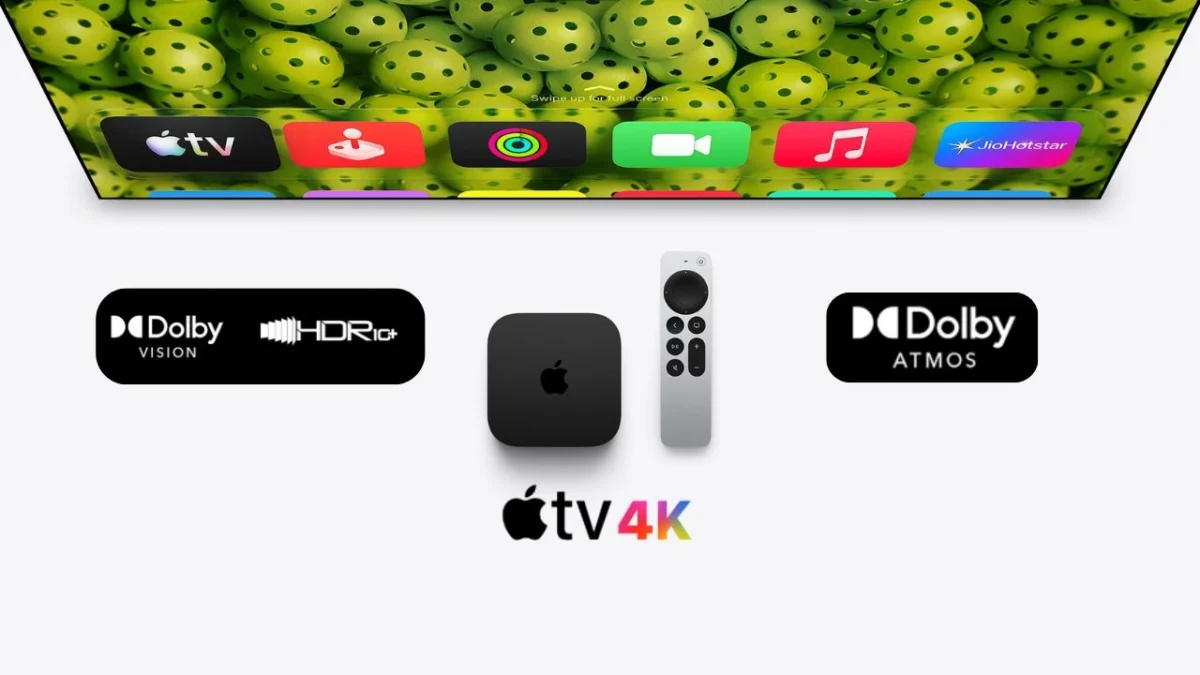
In a move that signals a significant leap forward for the home entertainment industry, Apple has officially unveiled its latest iteration of the Apple TV 4K. This new model is not merely a refinement of its predecessor but a complete architectural overhaul designed to position the device as the definitive hub for the modern smart home. Powered by the groundbreaking A19 chip and featuring a suite of "Pro" level capabilities, the new Apple TV 4K seeks to blur the lines between a high-end streaming box, a gaming console, and a sophisticated AI-driven home assistant.
Main Facts: A Powerhouse in a Compact Frame
The headline feature of the new Apple TV 4K is undoubtedly the inclusion of the A19 silicon. This marks the first time Apple’s latest-generation mobile architecture has been ported so rapidly into its home entertainment lineup. According to technical specifications released alongside the launch, the A19 chip provides a staggering 50% increase in CPU performance compared to the previous model. Perhaps more impressively, the GPU has seen a monumental upgrade, now supporting hardware-accelerated ray tracing—a feature previously reserved for high-end gaming PCs and the latest iPhone Pro models.
Priced at ₹39,900 in the Indian market, the device sits at the premium end of the streaming spectrum. However, Apple justifies this price point through an array of industry-leading connectivity standards and audio-visual technologies. The device introduces Wi-Fi 7 support, Bluetooth 6.0, and HDMI 2.1, ensuring it remains future-proof for the next decade of television hardware.
Beyond hardware, Apple is leaning heavily into "Apple Intelligence." The new Apple TV 4K features a completely redesigned Siri experience, enhanced by local on-device AI processing. This is further complemented by a new "Far-field" microphone array integrated into the chassis, allowing users to control their home environment and media playback without ever needing to pick up the Siri Remote.
Chronology: From Announcement to Living Room
The rollout of the new Apple TV 4K follows a meticulously planned schedule designed to capture the high-demand holiday season.
- The Unveiling: The device was announced during a dedicated "Home Entertainment" keynote, where Apple also introduced the Home View ecosystem and the HomePod Mini 2.
- Pre-order Phase: Pre-orders for the device opened immediately following the keynote, with Apple’s online store and authorized premium resellers seeing an immediate influx of traffic.
- Retail Availability: The official sale and shipping date has been set for November 13. On this day, the device will be available across global markets, including major retail hubs in India, the US, and Europe.
- Software Ecosystem: Simultaneously with the hardware launch, Apple will push a major tvOS update to enable the "Apple Intelligence" features across compatible devices, though the full suite of AI capabilities will be exclusive to the A19-powered model.
Supporting Data: Breaking Down the Technical Excellence
To understand the impact of this launch, one must look at the granular data provided by Apple’s engineering teams. The transition to the A19 chip is not just about raw speed; it is about efficiency and new media capabilities.
Computational Prowess
The 50% jump in CPU performance allows for instantaneous app switching and a zero-latency user interface, even when running resource-heavy applications. The GPU’s ability to handle complex light and shadow calculations (ray tracing) suggests that Apple is positioning the Apple TV 4K as a viable alternative to dedicated gaming consoles for casual and mid-core gamers.
Video Standards and Codecs
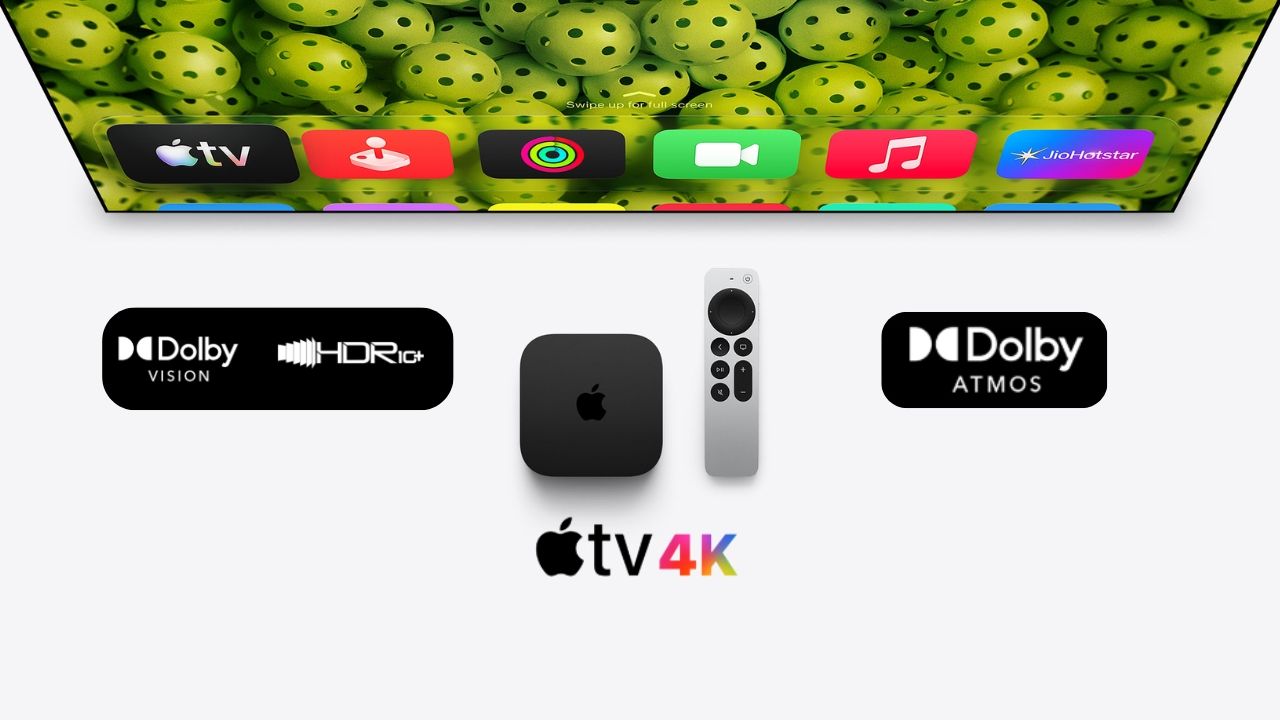
A critical addition to the A19 chip is the dedicated AV1 hardware decoder. As the industry moves toward the AV1 codec for its superior compression and quality, the Apple TV 4K is now equipped to stream 4K content at higher bitrates while consuming less bandwidth. This is supported by a comprehensive suite of HDR formats, including:
- Dolby Vision: For cinematic color and contrast.
- HDR10+: Offering dynamic metadata for optimized viewing on Samsung and Panasonic panels.
- HLG (Hybrid Log-Gamma): Ensuring compatibility with high-quality broadcast television.
The Audiophile Experience
On the audio front, Apple continues to lead with support for Dolby Atmos and Dolby Digital Plus 7.1. The device also supports FLAC (Free Lossless Audio Codec), catering to the growing demographic of users who utilize their home theater systems for high-fidelity music streaming via Apple Music.
Connectivity and Throughput
The inclusion of Wi-Fi 7 is a significant data point. With the ability to handle multi-gigabit speeds and lower latency, the Apple TV 4K is designed for a future where 8K streaming and cloud gaming become the norm. The Gigabit Ethernet port remains for power users who demand a hardwired, interference-free connection.
Official Responses: Apple’s Vision for the Smart Home
While Apple rarely comments on competitor products, their official statements emphasize a vision of "seamless integration." In promotional materials, Apple executives highlighted that the Apple TV 4K is "the heart of the home."
"Our goal was to create a device that disappears into the user’s life while providing immense power," stated a lead engineer during the product briefing. "With the A19 chip and the new Siri AI, we are moving away from ‘searching’ for content to ‘interacting’ with our environment. The Apple TV 4K understands context, recognizing who is in the room and suggesting content that fits the collective mood of the household."
Apple has also doubled down on its commitment to privacy. Unlike other smart home hubs that process voice commands in the cloud, the A19’s Neural Engine allows the vast majority of Siri’s new AI functions to be processed locally on the device. This ensures that voice data remains within the home, a key selling point for privacy-conscious consumers.
Implications: How the Apple TV 4K Changes the Market
The launch of this premium device has several far-reaching implications for the tech and media landscape.

1. The Threat to Traditional Gaming
With the A19 chip, Apple is effectively placing a "mini-console" in the living room. As the Apple Arcade library grows to include more "AAA" titles, traditional console manufacturers like Nintendo and Sony may find themselves competing for the "living room time" of families who find the Apple TV 4K a more versatile and cost-effective investment than a standalone gaming machine.
2. Setting a New Standard for Streaming Hardware
Most streaming sticks (like those from Amazon or Roku) are designed as "thin clients" that rely on the cloud. Apple’s approach is the opposite; they have built a "fat client" with massive local processing power. This forces competitors to either move upmarket or risk being relegated to the budget "disposable" segment of the industry.
3. The Centralization of the Smart Home
With Matter and Thread support built-in, the Apple TV 4K acts as a border router for the smart home. The addition of Far-field microphones means the Apple TV 4K can now do everything an Amazon Echo or Google Home can do, but with the added benefit of a massive visual interface (the TV). This could potentially cannibalize sales of smaller smart speakers as users realize their TV box can manage their lights, cameras, and thermostats via voice from across the room.
4. The Price Barrier in Emerging Markets
In markets like India, the ₹39,900 price tag is substantial. It is nearly double the price of some 4K Smart TVs themselves. The implication here is that Apple is not targeting the mass market but is instead focusing on the "Prosumer" and luxury segment. This strategy maintains the brand’s premium allure but may limit its market share in regions where price sensitivity is high.
Conclusion
The new Apple TV 4K represents a bold bet on the future of home computing. By equipping a streaming box with the A19 chip—a processor more powerful than many laptops—Apple is betting that the television will remain the central screen of our lives. Whether it is through AI-driven assistance, console-quality gaming, or pristine 4K HDR cinematography, the new Apple TV 4K is designed to be the only box beneath the television that a user will ever need. As it hits shelves on November 13, the industry will be watching closely to see if consumers are ready to embrace this high-priced, high-power vision of the future.