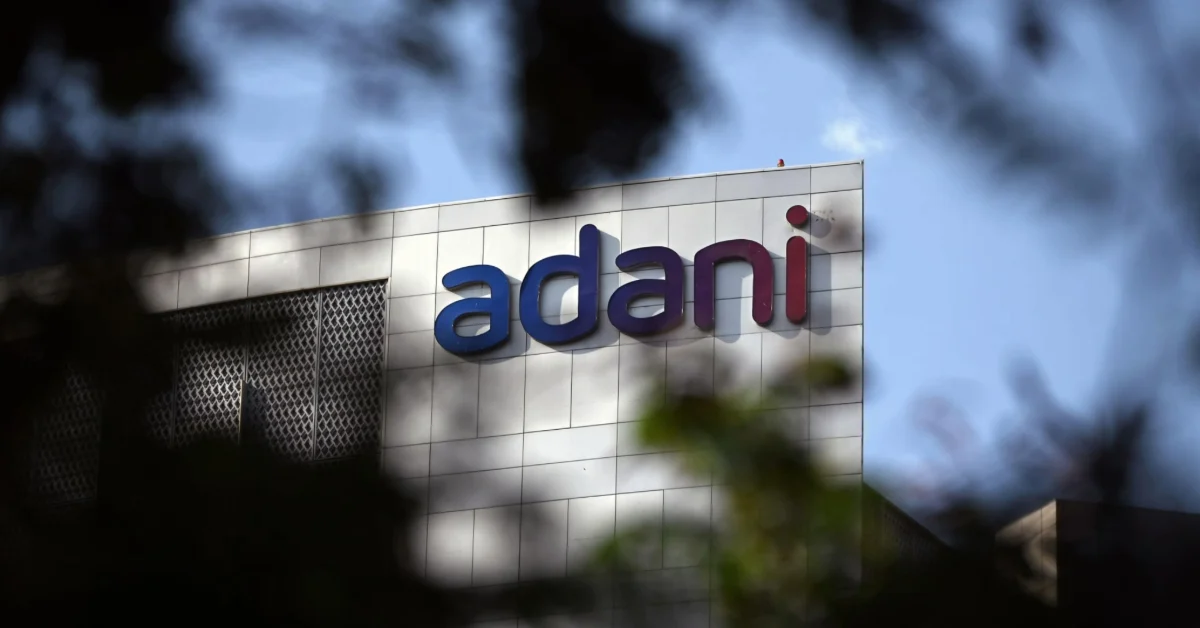
In a move that signals a seismic shift in India’s industrial landscape, the Adani Group and US-based manufacturing titan Jabil Inc. have entered into a strategic partnership to establish a 50:50 joint venture. This collaboration is designed to localize the production of sophisticated AI and data center hardware, effectively positioning India as a global manufacturing hub for the physical infrastructure that powers the artificial intelligence revolution.
As the demand for high-compute power surges globally, this partnership seeks to build a multi-gigawatt-scale manufacturing ecosystem. The joint venture will focus on the end-to-end assembly and production of critical hardware, including liquid-cooled AI racks, high-performance servers, advanced storage units, and networking equipment. By bringing this manufacturing capability to Indian soil, the alliance aims to serve both the burgeoning domestic market and the insatiable appetite of international hyperscalers.
Main Facts: The Anatomy of the Partnership
The non-binding memorandum of understanding (MoU) signed between Adani Enterprises and Jabil represents more than just a business deal; it is a convergence of two industrial powerhouses. Adani brings to the table its vast, integrated strengths in renewable energy, large-scale infrastructure, and data center management, while Jabil contributes its globally recognized engineering prowess and high-tech manufacturing expertise.
Core Objectives of the Joint Venture:
- Vertical Integration: The platform will manufacture not just compute hardware, but the essential support ecosystem. This includes power distribution units (PDUs), coolant distribution units (CDUs), transformers, switchgear, and advanced thermal management systems—all vital for maintaining the stability of high-density AI clusters.
- Scalability: By aiming for multi-gigawatt capacity, the venture addresses the immediate bottleneck in the AI supply chain: the physical build-out of racks capable of housing thousands of GPUs.
- Global Export Potential: While the primary focus is meeting India’s domestic data center growth, the infrastructure is being designed with global standards in mind, allowing the venture to cater to international markets seeking alternatives to existing supply chain hubs.
Chronological Evolution: From Vision to Execution
The journey toward this partnership reflects the rapid acceleration of India’s digital economy.
Phase 1: The Initial Intent (June 2024)
The collaboration was first unveiled in mid-June 2024, when the Adani Group signaled its intent to build vertically integrated AI infrastructure. At the time, the focus was on mapping out the operational framework and establishing a roadmap for high-density hardware manufacturing. Both companies began finalizing formal documentation to bring the manufacturing capacity to life.
Phase 2: Formalizing the JV (October 2024)
By mid-October, the initial discussions matured into a concrete 50:50 joint venture agreement. This transition from a vague intent to a formalized non-binding MoU marks a significant milestone, confirming that both parties have moved past the exploratory phase. The deal now awaits final regulatory approvals and the execution of definitive agreements to begin ground operations.
Supporting Data: Why India? Why Now?
The timing of this partnership is dictated by a convergence of technological necessity and national policy.
The Macroeconomic Drivers
- Capacity Explosion: India’s data center capacity is currently on an aggressive growth trajectory. Industry projections suggest the nation’s capacity will reach 5–8 gigawatts by 2030. This growth is being fueled by the rapid adoption of generative AI across industries and a massive shift in cloud computing usage.
- The AI Compute Market: The global market for AI compute infrastructure is expected to exceed $3 trillion within the next seven years. India, by capturing even a fraction of this manufacturing value chain, could add billions to its GDP.
- Policy Tailwinds: India’s Data Protection and Digital Privacy (DPDP) Act and stringent data localization laws mandate that much of the data generated in India must reside within its borders. This has forced global hyperscalers—such as Amazon, Google, and Meta—to invest heavily in local data center infrastructure.
The Competitive Landscape
Adani is not acting in isolation. The race to dominate India’s AI infrastructure is becoming increasingly crowded:
- Reliance Industries & Meta: Recent partnerships indicate a massive push to build a 168 MW AI-enabled data center in Jamnagar, Gujarat, powered entirely by sustainable energy.
- Amazon (AWS): With a committed investment of $12.7 billion in Indian cloud infrastructure through 2030, Amazon is aggressively scaling its footprint.
- OpenAI & Tata Group: Reports suggest a collaboration to build a 1 GW data center, highlighting the urgency for specialized AI compute facilities.
Official Responses: Aligning the Vision
Gautam Adani, Chairman of the Adani Group, framed the partnership as a logical extension of the group’s overarching energy-compute strategy.
"At Adani, our vision is to move up the AI value chain," stated Gautam Adani. "We are evolving from powering and hosting AI infrastructure to engineering and manufacturing the critical systems that will define the next generation of computing. Our proposed joint venture with Jabil marks a strategic step towards this future, combining Jabil’s world-class engineering and manufacturing capabilities with Adani’s integrated strengths in energy, infrastructure, and data centers."
This response underscores a key philosophy: the "Energy-Compute" nexus. By controlling the power source (renewable energy), the physical structure (data centers), and now the internal hardware (servers and cooling), Adani aims to capture every segment of the AI lifecycle.
Implications: The Road Ahead for India’s Tech Ecosystem
The Adani-Jabil partnership carries profound implications for the Indian economy and the global tech supply chain.
1. Supply Chain Resilience
By localizing the manufacturing of liquid-cooled racks and power management systems, India reduces its reliance on East Asian supply chains. This "Made in India" approach for high-end tech aligns with the government’s broader "Make in India" initiative, specifically targeting the electronics and semiconductor ecosystem.
2. Energy Efficiency as a Competitive Edge
The most critical aspect of modern AI data centers is cooling. AI chips generate immense heat, and liquid cooling is the industry standard for efficiency. By manufacturing these systems domestically, Adani and Jabil are directly addressing the sustainability challenges of AI. Coupled with Adani’s massive investments in renewable energy—including a $100 billion commitment to green energy and hyperscale AI data centers by 2035—the venture is positioned to offer some of the most sustainable computing infrastructure in the world.
3. The "Data Sovereignty" Play
As the world moves toward data nationalism, countries are increasingly wary of where their citizens’ data is processed. By building the hardware in India, the Adani-Jabil venture ensures that the "brains" of the data centers—the servers and networking gear—are audited and controlled within the local regulatory framework. This is a massive selling point for the Indian government and local enterprises.
4. Challenges to Overcome
Despite the optimism, the venture faces significant hurdles. The production of AI-ready hardware requires highly specialized components, including advanced semiconductors and high-speed networking chips, which are currently largely imported. Scaling to "multi-gigawatt" production will require a robust local ecosystem of secondary suppliers and a highly skilled workforce proficient in AI hardware assembly. Regulatory hurdles and the speed of infrastructure build-out remain the primary variables that will dictate the success of this partnership.
Conclusion
The Adani-Jabil joint venture is a hallmark of the new era of industrialization in India. It is no longer about simple assembly; it is about building the complex, high-energy, high-compute backbone required to participate in the AI-driven global economy. As India moves toward its goal of becoming a $5 trillion economy, the ability to manufacture its own AI infrastructure will be a definitive marker of its success, transforming the nation from a consumer of global tech into a critical architect of the future.