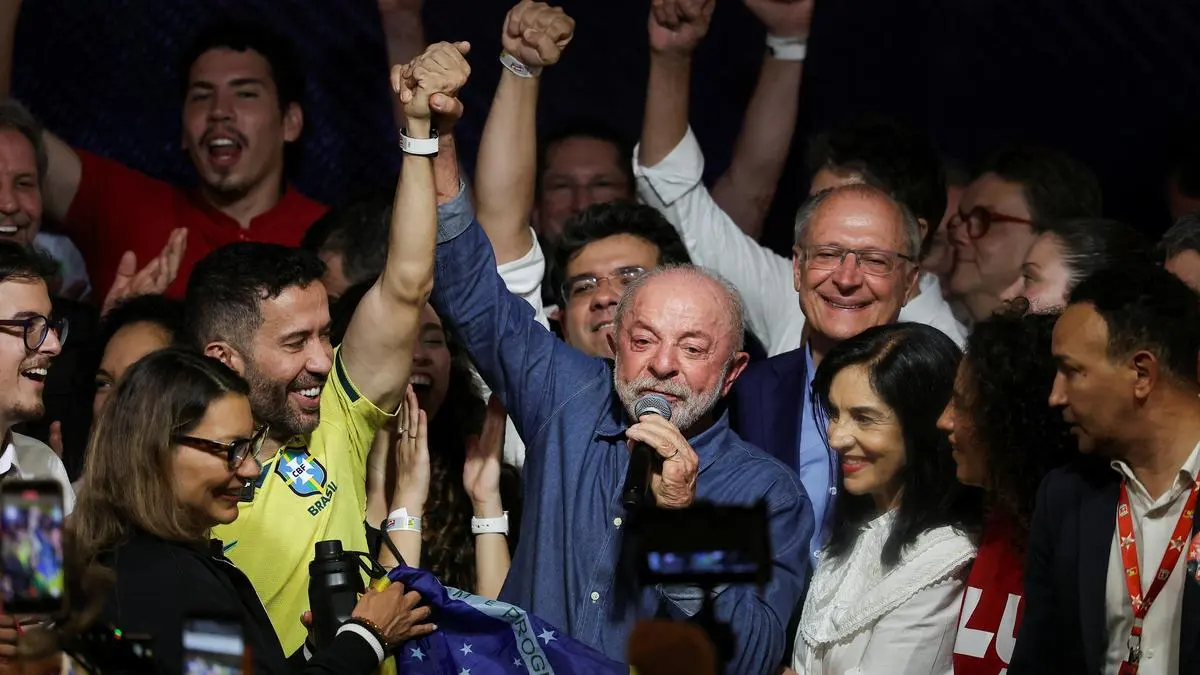
SAO PAULO – In a political comeback that defies the prevailing right-wing momentum across Latin America, Brazilian President Luiz Inácio Lula da Silva has been reelected to a non-consecutive fourth term. The veteran leader, who turns 81 this month, overcame a significant first-round deficit to defeat his challenger, Flávio Bolsonaro, in a high-stakes electoral showdown that concluded on Sunday, October 26, 2026.
With 100 percent of the vote officially tabulated, the Superior Electoral Court confirmed that Lula secured an unassailable lead of approximately 4.4 million votes. This victory marks a pivotal moment for the world’s fourth-largest democracy, ensuring that Latin America’s two most populous nations—Brazil and Mexico—remain under left-of-centre governance.
The Chronology of a Chaotic Election Day
The path to the presidency was far from straightforward. The final hours of the campaign were defined by administrative friction and a late-breaking judicial intervention that triggered immediate legal threats from the Bolsonaro camp.
As polls were scheduled to close, Supreme Court Justice Cristiano Zanin—a former personal lawyer to President Lula—issued a last-minute ruling extending voting hours by two additional hours. The decision followed urgent requests from both campaigns. Lula’s team cited logistical failures involving public transportation in the critical strongholds of São Paulo and Salvador, which reportedly hindered his voter base. Conversely, the Bolsonaro campaign argued that torrential downpours in the southern regions of the country, where the challenger maintains a loyal following, justified the extension.
The ruling ignited immediate controversy. In the federal capital of Brasilia, electoral officials were left in a state of confusion, with many polling stations already in the process of dismantling their equipment when the order reached them. In Rio de Janeiro, reports surfaced that several voting machines had been deactivated immediately upon the original closing time and could not be successfully rebooted.
The result was a two-hour delay in the tallying process, creating a vacuum of information that fueled anxiety and speculation across the nation. Nikolas Ferreira, a prominent ally of Flávio Bolsonaro, was quick to leverage the optics of the situation, publicly questioning the impartiality of Justice Zanin and hinting at a formal challenge to the election’s integrity. Despite the chaos, the electoral court maintained that the final results accurately reflect the will of the Brazilian electorate.
The Path to Victory: A Campaign Reimagined
Lula’s triumph is a masterclass in political resilience. The trajectory of this election was arguably the most volatile in Brazil’s modern history. In the first round of voting held earlier this month, Bolsonaro outperformed expectations, leading the incumbent by 2.2 million votes—a margin of 47 percent to 45 percent.
Historically, no candidate in Brazil has overcome a first-round deficit to win the presidency since the restoration of democracy in 1985. Recognizing the existential threat to his political legacy, Lula’s campaign underwent a radical transformation in the final weeks. The strategy focused on three core pillars:
- Mobilizing the Youth: Lula’s team pivoted to digital platforms and grassroots outreach, successfully capturing the attention of younger voters who had previously been disillusioned with the political status quo.
- Defending Democratic Institutions: By framing the election as a referendum on Brazil’s democratic future, Lula successfully tapped into public anxieties regarding a potential return to the governance style of the previous Bolsonaro administration.
- Strategic Policy Incentives: Recognizing that cost-of-living concerns and food inflation were his greatest liabilities, the administration launched a series of high-impact, short-term government initiatives aimed at providing immediate relief to the working class.
Economic Implications and Foreign Policy
The victory of the veteran leftist carries profound implications for Brazil’s USD 2.6 trillion economy. Throughout the campaign, Lula positioned himself as a bulwark against the widening influence of the United States in Latin American affairs. His rhetoric frequently targeted the protectionist stance of U.S. President Donald Trump, specifically regarding the imposition of increased tariffs on Brazilian exports.

By securing another term, Lula has solidified Brazil’s commitment to an independent foreign policy. This approach seeks to strengthen regional trade blocs and deepen ties with the BRICS+ nations, effectively insulating the Brazilian economy from the more aggressive unilateralism currently emanating from Washington. Analysts suggest that while the tension between Brasilia and the White House is likely to persist, the size of Brazil’s market makes it an indispensable partner that the U.S. cannot afford to ignore, regardless of ideological differences.
A Legacy Defined by Struggle
Lula’s political biography is perhaps the most colorful in contemporary global politics. His career, which began in the 1970s as a charismatic trade union leader, has seen him traverse the heights of power and the depths of incarceration. After founding the Workers’ Party (PT), he first ascended to the presidency in 2002, serving two successful terms before passing the torch to his protégé, Dilma Rousseff.
Following the impeachment of Rousseff in 2016 and his own subsequent imprisonment on corruption charges in 2018—convictions later annulled by the Supreme Court on the grounds of judicial bias—Lula’s return to power in 2022 was widely considered his final act. Yet, the 2026 election cycle compelled the elder statesman to return to the fray.
Observers note that at 80 years of age, Lula now joins a select group of world leaders—including Donald Trump and Daniel Ortega—who are currently steering their nations while in their ninth decade of life. This generation of "octogenarian leaders" presents a unique dynamic in global governance, raising questions about the longevity of institutional memory versus the need for generational renewal.
The Road Ahead: Challenges and Expectations
As the celebrations die down at the hotel in São Paulo, where the President and First Lady Rosângela da Silva observed the final tally, the reality of governance sets in. Lula faces a fractured Congress and an electorate that remains deeply polarized.
In a candid moment in 2024, the President admitted that his administration had struggled to fully capture the hearts of the voters who had brought him back to power. His current mandate, which begins on January 5, 2027, will be defined by his ability to bridge the security-versus-economy divide. While Bolsonaro’s platform centered on a "tough-on-crime" approach that resonated deeply with urban populations, Lula must now translate his electoral victory into tangible safety improvements without alienating his core base of progressive supporters.
The shadow of corruption, which has haunted the Brazilian political establishment for decades, remains a potent force. With both camps having faced accusations of impropriety involving family members and political allies, the incoming administration will likely face intense scrutiny from the opposition and the judiciary.
Ultimately, Sunday’s result represents a reprieve for the Brazilian left. However, as the dust settles, the mandate is clear: the Brazilian people have chosen stability and the continuation of the Lula project over the populist nationalism championed by his opponents. Whether this mandate can sustain a nation facing global economic headwinds and internal division remains the defining question of the next four years.
As the President prepares for his fourth inauguration, the international community watches closely. In a world increasingly defined by the clash of competing geopolitical spheres, Brazil’s decision to choose a path of sovereignty and social-democratic reform marks a significant chapter in the history of the Americas.