Main Facts: The Ten-Year Milestone
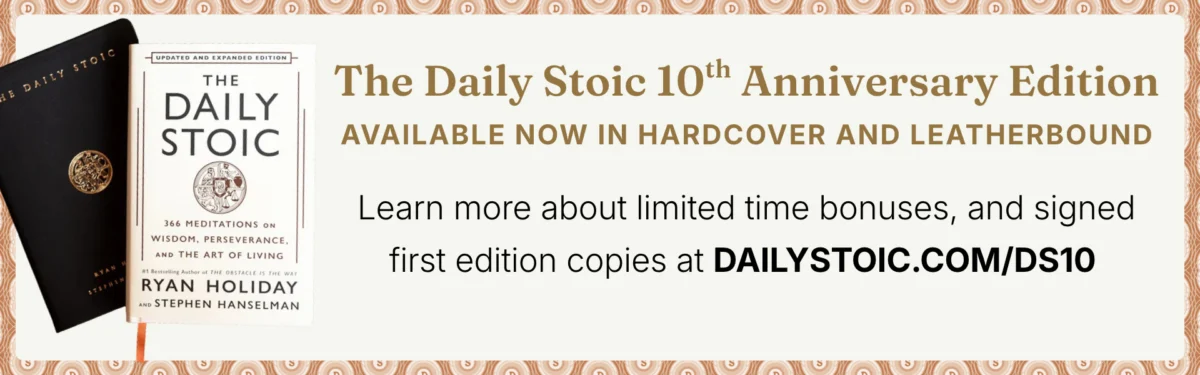
It has been exactly one decade since Ryan Holiday published The Daily Stoic, a seminal work that brought ancient Hellenistic philosophy to the modern masses through a structured, day-by-day format. To mark the 10th anniversary, Holiday has released an expanded edition of the book, featuring updated translations, new insights, and a deeper exploration of the core tenets that have defined his career.
The project, which began when Holiday was 29, has grown from a personal exploration of Stoic wisdom into a global cultural phenomenon. The anniversary edition is not merely a reprint; it serves as a retrospective of a decade spent navigating parenthood, global pandemics, and the shifting landscape of modern success. For Holiday, the milestone represents more than a commercial achievement—it is a testament to the idea that Stoicism is not a subject to be mastered, but a practice to be perpetually refined.
Chronology: From Ambition to Stewardship
The trajectory of The Daily Stoic mirrors the life stages of its author. When Holiday first encountered the Stoics at 19, his interest was largely instrumental. Like many young, ambitious professionals, he viewed philosophy as a toolkit for productivity, resilience, and personal gain. He wanted to know how to control his emotions and how to "win" in a competitive world.
- The Early Years (Age 19–29): This period was characterized by a focus on "what Stoicism can do for me." Holiday operated with a high-octane mindset, saying yes to every opportunity and pushing for professional expansion.
- The Publication (10 Years Ago): At 29, with 482 weeks and 3,379 days of study behind him, he codified his understanding into the first edition of The Daily Stoic.
- The Decade of Change (The Last 10 Years): The intervening years—spanning 7,294 days and 175,056 hours—brought significant life changes, including the complexities of raising children, the isolation of a pandemic, and the weight of public leadership.
- The Present Day: Now in his late thirties, Holiday’s perspective has shifted. He views his role as a "steward" of the philosophy rather than a mere practitioner, focusing on service and the common good.
Supporting Data: The Depth of the Practice
To understand the significance of this anniversary, one must look at the quantitative commitment behind the philosophy. Stoicism, as articulated by the greats like Marcus Aurelius, Epictetus, and Seneca, is a daily discipline.

| Metric | Context |
|---|---|
| Study Duration | 10 years (totaling ~175,000 hours) since the book’s inception. |
| Core Theme Frequency | "The common good" is mentioned over 80 times in Meditations. |
| Philosophical Pillars | Practical wisdom, self-discipline, courage, and justice. |
| The "No" Factor | A deliberate shift from saying yes to everything to protecting time for what is essential. |
Holiday notes that the "success" of the book—measured in sales and reach—has paradoxically taught him the importance of knowing what "enough" is. He points to contemporaries like Mark Manson, whose success serves as a reminder that external metrics of achievement are often outside of one’s control. True success, in the Stoic sense, is the alignment of one’s actions with their own internal standards, not the relative performance of their peers.
Official Perspectives: The Philosophy of the "Long View"
Holiday’s evolution is best captured in his shifting interpretation of specific Stoic concepts.
On Adversity
"Every obstacle is an opportunity," a mantra from his earlier work The Obstacle is the Way, has matured into a more profound understanding. It is no longer just about flipping a problem into a business advantage. Instead, Holiday now interprets the "opportunity" within adversity as a chance to practice virtue. Whether facing a pandemic or a personal loss, the goal is to respond with courage, selflessness, and justice.
On Mortality (Memento Mori)
Perhaps the most striking change is in his view of Memento Mori. In his twenties, the meditation on death was a tool for urgency—a way to move faster and achieve more. Now, in his late thirties, he sees it as a tool for deceleration. Recognizing that one’s time is finite is no longer a call to hurry; it is a call to be fully present for the mundane—the bedtime stories, the shared meals, and the daily chores.

On Stewardship
Perhaps the most vital shift is the recognition that Stoicism is fundamentally a social philosophy. Holiday maintains a physical note on his wall: "Are you being a good steward of Stoicism?" This question serves as his primary filter for decision-making. If an opportunity, even a lucrative one, violates his responsibility to the philosophy or the common good, he declines it. This is why he has moved away from traditional advertising and toward a model of service.
Implications: The Never-Ending Education
The release of the 10th Anniversary Edition carries a clear implication for the reader: You do not graduate from philosophy.
Holiday argues that the moment one believes they have "arrived" at an understanding, they have ceased to learn. His decision to revise the book was driven by the realization that he is a different person than he was ten years ago. Just as Heraclitus noted that one never steps into the same river twice, Holiday asserts that one never reads the same book twice. Our experiences—the grief, the joy, the changing world—alter the lens through which we view ancient wisdom.
Why We Must Reread
The implications for the modern reader are practical and urgent:

- Iterative Growth: Revisit core ideas periodically. You will find layers of meaning that were previously inaccessible because you lacked the life experience to contextualize them.
- The Virtue of "No": Discipline is not just about doing; it is about the strength to refuse the non-essential. Saying "no" to the trivial is, in effect, saying "yes" to one’s values and family.
- Active Service: A life well-lived is a series of unselfish actions. Whether you are a parent, a neighbor, or a citizen, your primary duty is to contribute to the collective health of your community.
Conclusion: Remaining a Student
As Ryan Holiday looks toward the future, he does so with the humility of someone who recognizes that the path of wisdom is long. The 10th anniversary is not a finish line; it is a checkpoint. By continuing to write, teach, and practice, he exemplifies the Stoic ideal: the philosopher king who, despite his status, remains a student, always looking to learn what he does not yet know.
For those who have followed his work, the lesson is clear: keep reading, keep struggling, and keep practicing. As Seneca famously said, "We learn even as we teach." In a world defined by constant noise and rapid change, the quiet, daily commitment to the Stoic virtues remains one of the few reliable anchors for a life of purpose.