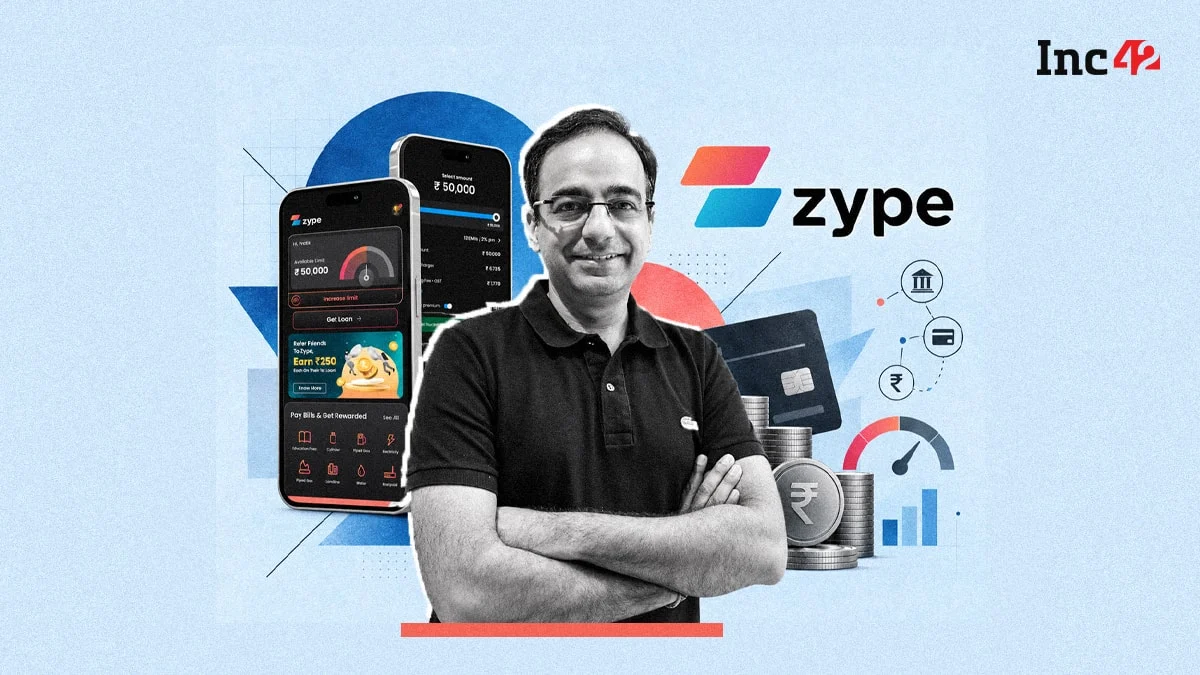
In a significant turnaround for the Indian digital lending landscape, Mumbai-based Easy Platform Services—the parent company of the prominent fintech brand Zype—has officially crossed the threshold into profitability. According to recent financial disclosures, the company successfully pivoted from a net loss of ₹12.9 Cr in FY25 to a consolidated Profit After Tax (PAT) of ₹5.3 Cr in FY26.
This transformation marks a pivotal moment for the startup, which has navigated the volatile post-pandemic fintech ecosystem by focusing on disciplined asset growth, robust risk management, and the scaling of its proprietary non-banking financial company (NBFC) subsidiary, Respo Financial Capital.
The Financial Turnaround: A Deep Dive into FY26 Performance
The fiscal year 2026 proved to be a watershed moment for Easy Platform Services. The company’s consolidated total income surged by 66.6%, climbing to ₹176.6 Cr from ₹106 Cr in the previous fiscal year. This growth trajectory was not merely a product of top-line expansion but was underpinned by a fundamental shift in the company’s operating efficiency.
Sustaining Momentum into Q1 FY27
The momentum observed in FY26 has shown no signs of slowing down in the current fiscal year. Provisionally, the company reported a PAT of ₹6.1 Cr on a total income of ₹66 Cr for the first quarter of FY27 alone. This suggests that Easy Platform has moved beyond the "growth-at-all-costs" phase that characterized much of the Indian fintech sector between 2021 and 2023, opting instead for a model that prioritizes sustainable margins and recurring revenue streams.
Asset Growth and Quality
Central to this financial health is the company’s ability to manage its portfolio. Total managed assets witnessed a 63.5% jump, rising from ₹379.9 Cr in FY25 to ₹621.2 Cr in FY26. By the end of Q1 FY27, these assets had climbed further to a provisional ₹798.4 Cr.
Critically, this rapid expansion was achieved without compromising on asset quality. The "Gross Stage 3" ratio—a key indicator of credit-impaired loans that are overdue for more than 90 days—declined from 3% in FY25 to 2.2% in FY26, and further improved to 1.7% by the end of June 2026. This downward trend in bad loans is a testament to the efficacy of the company’s underwriting algorithms and its internal collection mechanisms.
Chronology: Building the Zype Ecosystem
Founded in 2019 by industry veterans Yogi Sardana and the late Ajay Relan, Easy Platform Services was conceived with a vision to democratize credit access for the "missing middle" in India—salaried individuals across Tier I, II, and III cities who often found themselves underserved by traditional banking institutions.
The Developmental Timeline:
- 2019: The company is incorporated, setting the groundwork for an integrated digital lending platform.
- June 2023: Respo Financial Capital, the company’s wholly-owned NBFC subsidiary, secures its license from the Reserve Bank of India (RBI). This was a critical milestone, allowing the group to transition from a pure-play lead generator to a balance-sheet-led lender.
- August 2025: Zype completes a major Series B funding round, raising ₹90 Cr (approx. $10.3 Mn) led by Japanese VC firm UNLEASH Capital Partners, with significant participation from existing backer Xponentia Capital.
- FY26: The company achieves its first full year of consolidated profitability, driven by the maturity of its loan book and the diversification of its income streams.
Supporting Data: The Anatomy of a Fintech Player
The strength of Easy Platform’s balance sheet is highlighted by its Capital-to-Risk Weighted Assets Ratio (CRAR). In FY26, the company reported a healthy CRAR of 33.3%, a marked improvement from 24.7% in FY25. While this ratio moderated to 23.6% in Q1 FY27, it remains comfortably above the 15% regulatory threshold mandated by the RBI, providing the firm with significant headroom to continue expanding its loan book.
Securitization and Financial Instruments
The recent financial transparency was precipitated by ICRA’s decision to assign a provisional A-(SO) rating to Pass-Through Certificates (PTCs) worth ₹8.07 Cr. These instruments, issued by the Nebula Trust 2026, are backed by a pool of personal loan receivables originated by Respo Financial Capital.
Securitization serves as a vital tool for fintechs, allowing them to offload risk from their balance sheets, recover capital, and recycle it into new loan originations. The fact that the market is willing to back these receivables is a strong vote of confidence in the underlying quality of Zype’s loan book.
Ownership Structure
As of June 30, 2026, the ownership of Easy Platform reflects a strong backing from institutional investors:
- Xponentia Opportunities Fund I & II: 85.5% (Cumulative)
- UNLEASH Capital: 4.7%
- Yogi Sardana: 3.7%
Official Responses and Strategic Implications
The shift toward profitability for Easy Platform is reflective of a broader "Great Reset" within the Indian fintech ecosystem. Since the introduction of the RBI’s Digital Lending Guidelines, companies have been forced to prioritize compliance, transparency, and sustainable unit economics.
Operational Synergies
Easy Platform operates an integrated model. Through Zype, the company manages the entire value chain:
- Customer Acquisition: Utilizing advanced digital marketing and data analytics to lower CAC (Customer Acquisition Cost).
- Underwriting: Using proprietary algorithms that look beyond traditional credit scores to assess the repayment capacity of salaried individuals.
- Loan Servicing and Collections: Managing the post-disbursement lifecycle to ensure low delinquency.
- Insurance Distribution: Through Respo’s status as an IRDAI-registered corporate agent, the company generates commission-based revenue, adding a layer of non-interest income that stabilizes cash flows.
Competitive Landscape
Zype operates in an intensely competitive arena, squaring off against well-funded incumbents like Fibe, KreditBee, and Navi. The differentiator for Zype appears to be its focus on the "salaried professional" segment, which historically demonstrates lower default rates compared to the gig economy or self-employed segments. By maintaining a sharp focus on this demographic, Zype has managed to keep its asset quality superior to the industry average.
The Path Forward: What Does This Mean for the Sector?
The success of Easy Platform Services provides several key insights for the Indian fintech industry:
- The NBFC Advantage: Owning an NBFC license (as seen with Respo) is no longer just an advantage; it is a necessity. It provides the firm with control over the lending lifecycle and allows for a more favorable net interest margin (NIM) compared to platforms that act solely as intermediaries.
- Profitability is the New Growth: Investors are no longer rewarding hyper-growth fueled by massive cash burns. The ability to generate a PAT of ₹5.3 Cr in FY26, and sustaining that into FY27, makes Easy Platform an attractive candidate for future capital infusions or potential M&A activity.
- Regulatory Compliance as a Moat: By adhering to stringent RBI norms and maintaining a CRAR well above requirements, Easy Platform has insulated itself from the regulatory crackdowns that have plagued other players in the digital lending space.
As Zype continues to scale toward its target of an ₹800 Cr+ managed asset base, the focus will likely shift toward product diversification. With a firm foundation in unsecured personal loans, the company is well-positioned to expand into other credit products, potentially including consumer durables financing or small-ticket credit lines.
For the founders and the team at Easy Platform, the journey from 2019 to the present has been one of tactical execution. By balancing the agility of a technology startup with the prudence of a regulated financial institution, Zype has carved out a sustainable niche in a market that remains one of the most vibrant, yet challenging, financial landscapes in the world.
As the firm enters the latter half of FY27, the industry will be watching closely to see if it can maintain its 1.7% gross stage 3 ratio while continuing to scale, setting a benchmark for what a responsible, profitable digital lender looks like in modern India.