
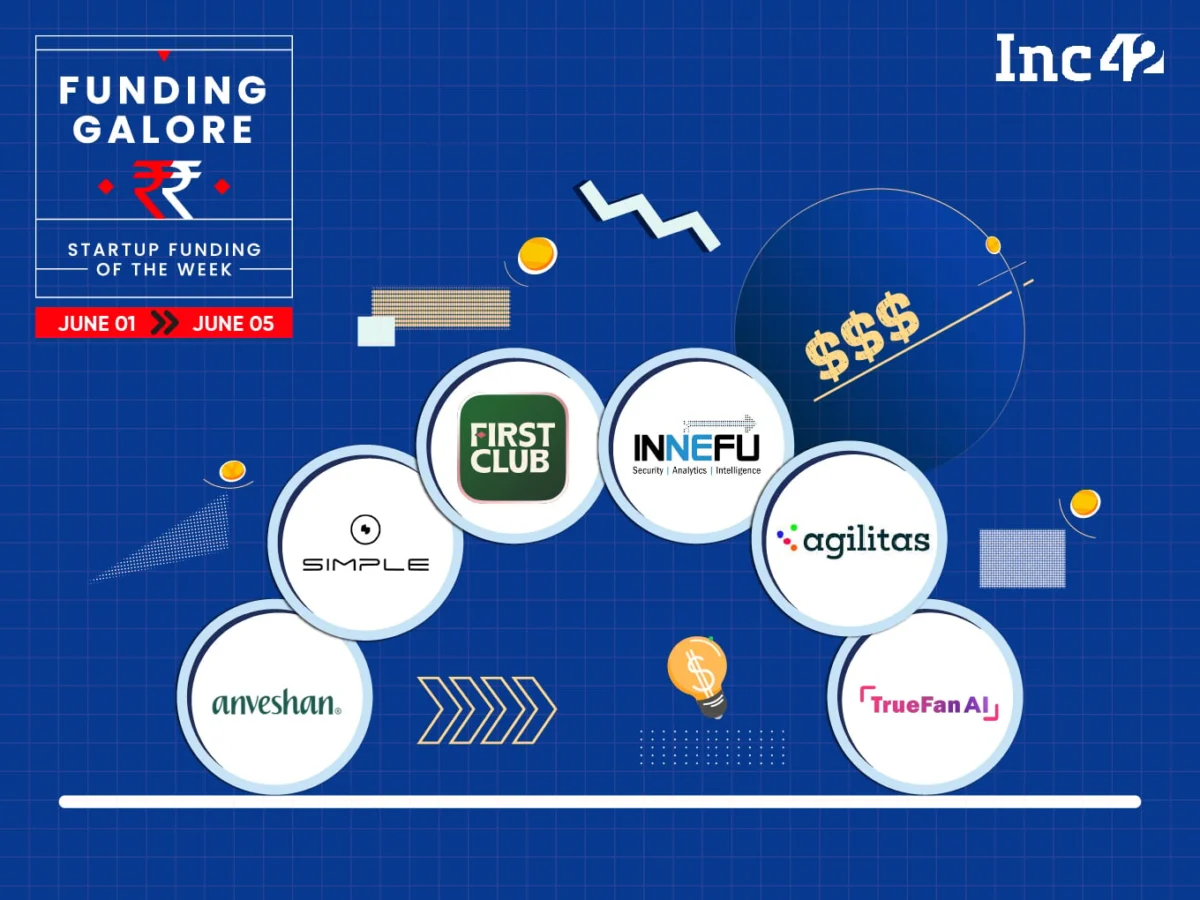
The Indian startup ecosystem has staged a remarkable recovery in the first week of June 2026, signaling a potential shift in investor sentiment and a renewed appetite for growth-stage capital. After a subdued preceding period, the ecosystem witnessed a substantial influx of liquidity, with startups collectively raising $187.4 million across 21 funding deals. This represents a staggering 260% week-on-week increase from the $52 million recorded in the final week of May, providing a much-needed morale boost for founders and stakeholders alike.
Main Facts: A Week of Renewed Momentum
The week of June 1 to June 5 was characterized by a diverse range of investments, spanning across consumer services, enterprise technology, and the increasingly dominant D2C (Direct-to-Consumer) ecommerce segment.
The highlight of the week was the $55 million Series B round secured by FirstClub, a quick-commerce player in the consumer services space. Backed by heavyweights such as Peak XV Partners, Sofina, Accel, and RTP Global, this deal underscores the sustained investor interest in the rapid delivery model despite broader macroeconomic headwinds. Following closely was Innefu, an enterprise tech firm specializing in horizontal SaaS, which closed a $30 million Series B round led by Panthera Growth Partners.
The data reveals a clear trend: while the total deal count rose from 14 to 21, the average deal size has also trended upward, suggesting that investors are increasingly confident in writing larger checks for established startups that demonstrate a clear path to profitability.
Chronology of Capital: Notable Deals from June 1–5
The week’s funding activity was spread across various sectors, reflecting a broad-based recovery. Below is a breakdown of the major financial milestones achieved during this period:
- June 1: Simple Energy, a leader in the cleantech and electric vehicle (EV) space, secured $26.3 million in a Series B round led by the Dr. Arokiaswamy Velumani Family Office. On the same day, Anveshan, a D2C ecommerce brand, closed an impressive $15.8 million Series B round, backed by a consortium including Vertex Ventures, IFC, and notable angel investors like Aman Gupta and Sameer Mehta of boAt.
- June 2: ProLearn, an edtech platform, raised $3.2 million in a pre-seed round, signaling continued interest in digital skill-building. Additionally, Aquapulse, an agritech firm, secured $2.1 million, and Rovia (fintech) pulled in $1 million.
- June 3: Ecommerce dominated the day with three significant deals. Aglitias Sports secured $23.5 million, Phab raised $4 million, and Fraganote secured $3 million. Propsoch also successfully closed a $2 million seed round in the real estate tech sector.
- June 4: The momentum continued as TrueFan AI announced a $10 million Series A round. VoltSeal, an EV startup, secured $1.5 million, and The Sweet Change closed a pre-seed round of $187,000.
- June 5: Innefu finalized its $30 million round, rounding off a high-activity week for the Indian technology landscape.
Supporting Data: Sectoral Dominance and Investor Behavior
Ecommerce Takes the Lead
The ecommerce sector emerged as the clear winner this week, accounting for 8 of the 21 recorded deals. Collectively, these startups raised $49.1 million. The D2C model remains the darling of the venture capital community, with brands focusing on specialized product categories—ranging from sports apparel to health foods—attracting both institutional venture firms and high-net-worth individual investors.

Seed-Stage Revival
A particularly encouraging development is the resurgence of seed-stage funding. This week, seed-stage startups raised $3.1 million across three deals, more than double the $1.5 million raised during the previous week. This uptick suggests that early-stage investors are moving past their "wait-and-watch" stance, potentially sensing that valuations for early-stage companies have stabilized to a level that offers better long-term risk-adjusted returns.
Most Active Investors
Strategic partnerships were a recurring theme this week. Antler, IAN Alpha Fund, and Rainmatter emerged as the most active investors, each backing two startups. Their participation highlights a growing trend of institutional investors diversifying their portfolios across both high-growth consumer brands and deeper tech-heavy solutions like cleantech and SaaS.
Official Responses and Strategic Perspectives
While the funding figures are robust, the qualitative aspect of these deals provides deeper insight. Investors are prioritizing "sustainable growth" over "growth at any cost." For instance, the involvement of the International Finance Corporation (IFC) in Anveshan’s funding round points toward a growing interest in companies that have clear social or supply-chain impact.
The participation of family offices, such as the Dr. Arokiaswamy Velumani Family Office and the Chona Family Office, suggests that private wealth is increasingly filling the gap left by more cautious global venture funds. This influx of "patient capital" is critical for Indian startups, as it allows them to build long-term infrastructure rather than focusing solely on short-term customer acquisition costs (CAC).
Implications for the Indian Startup Ecosystem
The massive 260% jump in funding is not just a statistical anomaly; it serves as a barometer for the health of the broader Indian economy. Several key implications can be drawn from this week’s activity:
1. The Maturity of the D2C Market
The success of brands like Anveshan and Aglitias Sports confirms that the Indian consumer market is maturing. Consumers are moving toward premium, niche, and high-quality local brands. Investors are rewarding these companies for building strong brand loyalty and defensible supply chains, moving away from the "discount-heavy" models that defined the last decade.

2. The Cleantech/EV Pivot
With Simple Energy and VoltSeal securing capital, the message is clear: the energy transition in India is attracting serious capital. Investors are no longer just looking at the vehicle manufacturers; they are investing in the hardware, the charging infrastructure, and the underlying technology that supports the electrification of transport. This sector is expected to see a sustained influx of funding as government mandates for greener transport accelerate.
3. A Shift in SaaS and Enterprise Tech
Innefu’s $30 million raise proves that Indian SaaS is not limited to simple office tools. The focus is shifting toward horizontal, enterprise-grade solutions that cater to both domestic and global markets. By solving complex security and operational challenges, these companies are positioning themselves as global contenders rather than just local service providers.
4. The "Seed-to-Scale" Pipeline
The jump in seed-stage funding is a leading indicator of future deal flow. A healthy pipeline of pre-seed and seed companies ensures that the ecosystem will not suffer from a "funding winter" in the later stages (Series B and C) in the years to come. By supporting entrepreneurs at the ideation stage, investors are ensuring a steady supply of high-quality startups ready for growth-stage investment in 2027 and 2028.
Conclusion: A Cautiously Optimistic Outlook
The first week of June 2026 has provided a template for what the remainder of the year could look like. While global economic pressures remain, the resilience of the Indian startup ecosystem is evident. Investors are becoming more discerning, but they are clearly not sidelined.
The focus has firmly shifted toward unit economics, sustainable growth, and innovative technology. As the ecosystem moves forward, the success of these 21 startups will likely attract further interest, potentially drawing in larger global funds that have been on the sidelines for much of the past year.
For founders, the message is clear: the capital is available for those who can demonstrate a robust business model, operational efficiency, and a clear vision for scale. If this week is any indication, the Indian startup narrative is moving away from the era of hyper-inflated valuations and toward a more disciplined, productive, and sustainable chapter of growth. The next few months will be critical in determining whether this surge is a one-off recovery or the beginning of a sustained upward trajectory for the Indian tech economy.