
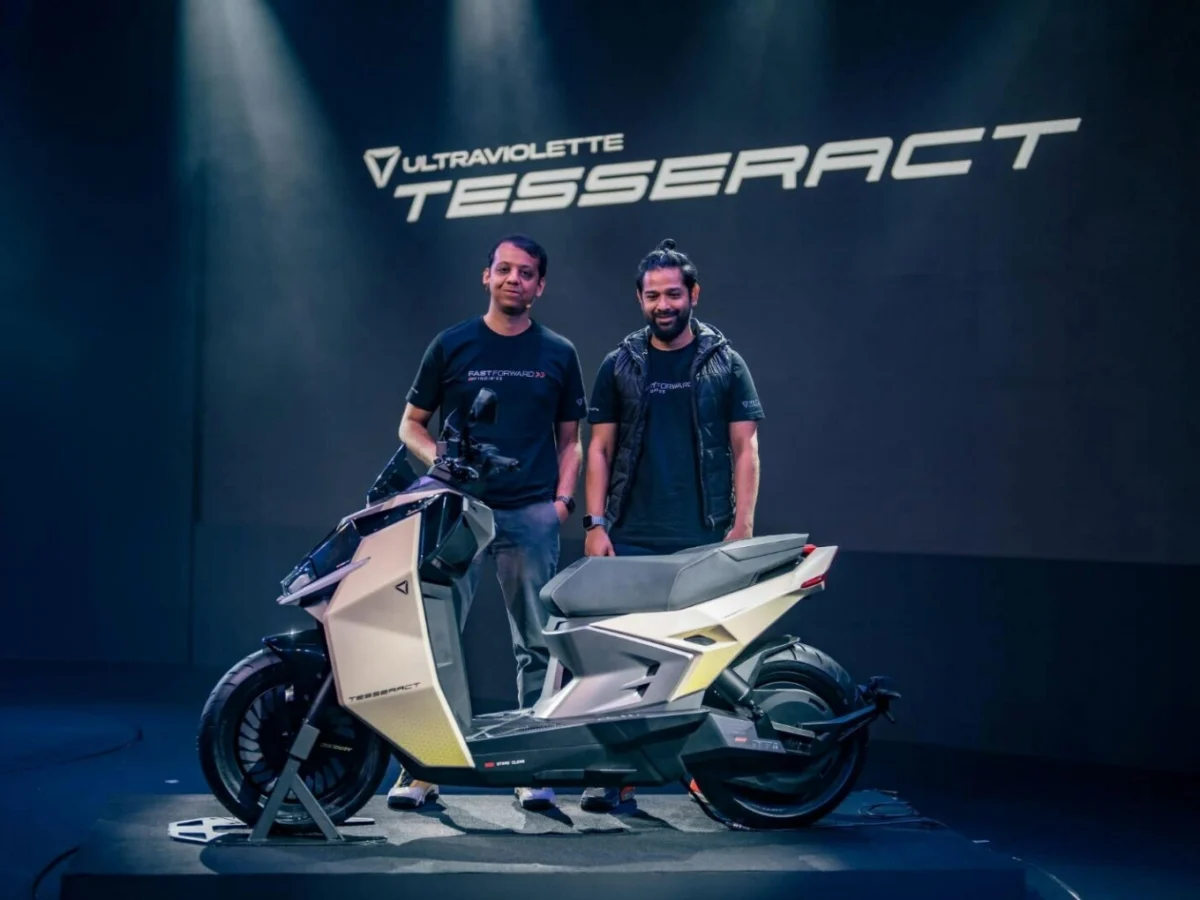
In a significant move that underscores the continued investor appetite for high-performance electric mobility, Bengaluru-based electric two-wheeler (E2W) manufacturer Ultraviolette Automotive has successfully raised $85 million (approximately ₹813 Cr) in a Series E funding round. This latest injection of capital, co-led by Yali Capital and TDK Ventures—with participation from high-profile investors including Intel CEO Lip-Bu Tan—marks a pivotal moment for the startup as it transitions from a niche performance-motorcycle maker to a global electric-mobility powerhouse.
The funding arrives at a critical juncture for Ultraviolette. As the company prepares to scale its industrial footprint, it has committed to an ambitious capital expenditure plan of over ₹1,000 Cr over the next five years. This investment is earmarked not only for the aggressive expansion of its manufacturing capacity but also for the long-awaited commercial rollout of its new product portfolio and the strengthening of its distribution networks across India and key international markets.
The Series E Chronology: Building Momentum
The path to this $85 million milestone has been characterized by a multi-phase fundraising approach. The company’s financial trajectory began to shift significantly earlier this year, with a series of strategic allotments.
Early September Developments
On September 11, regulatory filings accessed via the Ministry of Corporate Affairs (MCA) revealed that Ultraviolette was in the process of raising an additional ₹373.04 Cr. The filings detailed the issuance of 8.15 lakh Series E3 Compulsorily Convertible Preference Shares (CCPS) and 7.24 lakh Series E4 CCPS, priced at ₹2,435 per share.
This internal capital raise set the stage for the broader Series E announcement, drawing in Yali Deeptech Fund I—a newcomer to the Ultraviolette cap table—and reaffirming the confidence of TDK Ventures, which had previously led a $21 million round in August 2025.
A History of Strategic Backing
This latest round builds upon a robust history of venture support. Approximately one year prior, the startup secured $45 million in a round led by Zoho and Lingotto. To date, Ultraviolette has successfully attracted over $135 million from a diverse group of marquee investors, including TVS Motor Company, Qualcomm Ventures, Breathe Capital, and Mudhal Partners. The presence of such institutional heavyweights highlights the industry’s belief in Ultraviolette’s proprietary technology and its unique positioning within the electric vehicle (EV) ecosystem.
Manufacturing Ambitions: The "BIGGA" Factory
At the heart of the company’s growth strategy is the construction of its massive new manufacturing facility, internally dubbed the "BIGGA Factory." The company’s leadership team, cofounders Narayan Subramaniam and Niraj Rajmohan, have laid out a clear roadmap for this infrastructure:
- Capital Allocation: Out of the total ₹1,000 Cr planned investment, roughly ₹800 Cr is dedicated specifically to the BIGGA Factory, while the remaining ₹200 Cr will optimize the existing Bengaluru facility.
- Production Capacity: The BIGGA plant is designed for an initial annual capacity of 2.5 lakh vehicles, with the capability to scale up to 5 lakh units as market demand matures.
- Operational Role: Once fully operational, the BIGGA Factory will serve as the industrial engine for the company, while the original Bengaluru plant will pivot into a dedicated hub for advanced engineering, research and development, and prototyping.
This infrastructure push is a direct response to the company’s need to transition from low-volume, high-performance assembly to mass-market industrial production.
Navigating Product Delays and Market Positioning
While the funding news is positive, it coincides with a challenging phase regarding product delivery timelines. Ultraviolette’s expansion into the broader consumer market hinges on two highly anticipated products: the Tesseract electric scooter and the Shockwave electric motorcycle.
The Delivery Gap
When these products were first unveiled in March 2025, the company projected a Q1 FY26 delivery window. However, both vehicles have missed their initial launch targets. Recent updates from the company’s official website indicate that the Tesseract is now slated for final configuration unveiling in Q1 2027, with deliveries following thereafter. A revised timeline for the Shockwave has yet to be disclosed.
Tech-First Differentiation
Despite the delays, Ultraviolette maintains that its product strategy is sound. The Tesseract is positioned as a disruptive force in the scooter segment, boasting a 100-volt architecture—a significant technical leap over the 48-volt systems that define the current domestic market. According to the company, this high-voltage architecture allows for superior power delivery, increased efficiency, and, crucially, significantly faster charging times.
"We are looking to enter new markets, including the US, Latin America, and Southeast Asia," said CEO Narayan Subramaniam. "The idea behind the fundraise is to cover all these different areas. To begin with, it is going into facility expansion, where Tesseract will now see a rapid ramp-up as well."
Financial Health and Market Realities
The financial picture at Ultraviolette presents a company in the midst of a "growth-at-all-costs" phase.
Revenue Growth
According to CTO Niraj Rajmohan, the company’s revenue experienced a fourfold increase, rising to approximately ₹130 Cr in FY26, up from ₹30 Cr in FY25. This surge demonstrates the brand’s increasing penetration in the premium segment, even if the absolute volume remains small relative to mass-market players.
Profitability Challenges
The path to scale has been expensive. In FY25, the company reported an operating revenue of ₹32.3 Cr, reflecting a 114% year-over-year growth. However, this was accompanied by a widening net loss of ₹116.3 Cr—an 89% increase from the previous year. These figures are typical for a deep-tech startup investing heavily in R&D and manufacturing, but they highlight the pressure on the management team to transition toward unit-level profitability as they scale production.
Market Context
The broader Indian E2W market has shown signs of volatility. According to Vahan data, E2W registrations contracted by 16.2% in August, falling to 1.72 lakh units. In this competitive landscape, Ultraviolette holds a 0.3% market share, with 583 units sold in August. The company’s reliance on its premium, performance-focused identity makes it less susceptible to the price wars currently plaguing the entry-level scooter segment, but it also limits its total addressable market in the immediate term.
Strategic Implications and Future Outlook
The $85 million raise is not just about keeping the lights on; it is a declaration of global intent.
Global Ambitions
Ultraviolette is not merely an Indian player; it is an aspiring global exporter. The company has already initiated its entry into the United Kingdom and claims a presence in 12 European countries. With the new funding, the founders aim for exports to account for 25% of the company’s total revenue within the next five years.
The "Platform" Thesis
The core of the company’s philosophy remains the "electric vehicle platform" model. By standardizing battery technology, motor architecture, and software across its range—from the flagship F77 to the upcoming Tesseract—Ultraviolette aims to build a scalable ecosystem.
"BIGGA Factory converts that technology foundation into industrial scale," the founders noted. By leveraging their existing technology stack and applying it to larger customer segments, they hope to bridge the gap between niche performance enthusiasts and the mainstream commuter.
Final Verdict
Ultraviolette’s journey is emblematic of the "hard-tech" transition in India. The startup has moved past the initial excitement of its F77 debut and is now tackling the grueling challenges of industrialization, supply chain management, and international compliance.
The next 18 to 24 months will be decisive. With the new capital in place, the successful commissioning of the BIGGA Factory and the timely delivery of the Tesseract and Shockwave will be the primary metrics by which the company’s investors and the market will measure its success. For now, Ultraviolette remains one of the most closely watched entities in the EV space, tasked with proving that high-performance, high-voltage technology can scale in a market that remains fiercely price-sensitive.