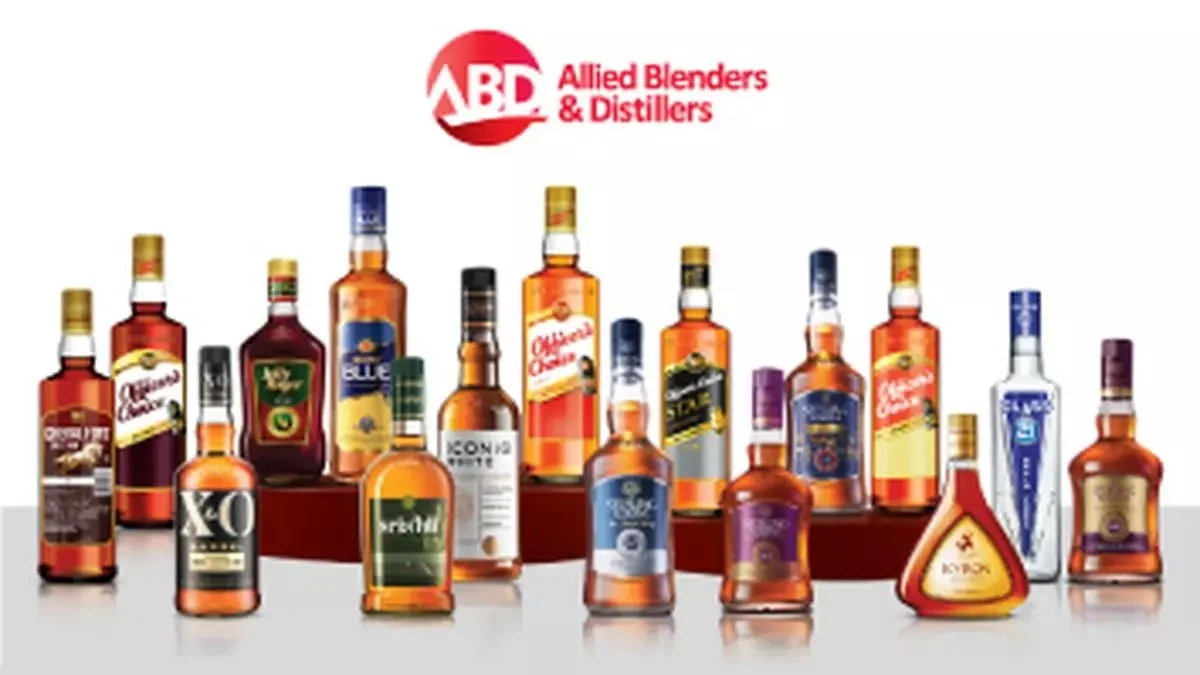
MUMBAI: In a landmark achievement that underscores the shifting landscape of the Indian spirits industry, Allied Blenders and Distillers (ABD) has crossed a monumental threshold. For the first time in its corporate history, the company recorded a quarterly sales volume of 10 million cases during the September quarter of FY27. This performance reflects not only a robust demand for the company’s core offerings but also a successful pivot toward premium and luxury segments, even as the company navigates the complexities of global supply chain volatility.
A Snapshot of Financial Performance: The Numbers Behind the Growth
The fiscal results for the September quarter (Q2 FY27) paint a picture of a company in transition, balancing aggressive expansion with the realities of operational costs.
ABD reported an income from operations of Rs 1,152 crore, representing a 15.8% increase year-on-year. On a sequential basis, the growth was even more pronounced, with revenue climbing 17.1%. Profitability metrics followed suit; EBITDA (Earnings Before Interest, Taxes, Depreciation, and Amortization) rose by 10% to Rs 143 crore, while Profit After Tax (PAT) climbed 9.7% to Rs 69 crore.
However, a closer look at the margins reveals the "investment phase" the company is currently undergoing. The EBITDA margin narrowed to 12.4% from 13.1% in the previous year. According to management, this contraction was a deliberate byproduct of heavy investment in the company’s super-premium and luxury portfolio, coupled with the fiscal headwinds caused by global supply-chain disruptions.
To provide a clearer view of its underlying health, ABD released "like-for-like" figures. Excluding a Rs 29 crore impact attributed to supply-chain inefficiencies, the company’s adjusted EBITDA would have reached Rs 172 crore—a staggering 32.3% year-on-year increase—resulting in a healthier 14.9% margin. Similarly, the adjusted PAT would have surged by 44.3% to Rs 91 crore, signaling that the core business remains fundamentally strong despite external economic pressures.
For the first half (H1) of FY27, the company reported an income of Rs 2,135 crore, a 10.9% increase, while EBITDA grew by 5.8% to Rs 263 crore. PAT for the half-year stood at Rs 114 crore, reflecting a marginal decline of 3.6% compared to the same period in the previous year.
Chronology of Expansion and Strategic Milestones
The current fiscal year has been defined by rapid infrastructure development and market expansion for ABD.
- October 2026: The company achieved a significant manufacturing milestone with the commissioning of a new bottling facility in Moradabad, Uttar Pradesh. Acquired for Rs 70 crore and subsequently upgraded with an additional Rs 40 crore investment, the plant adds an initial annual capacity of six million cases to the company’s network.
- Expansion of Distilling Capabilities: Complementing the bottling capacity, ABD commissioned a state-of-the-art malt distillery at Rangapur, Telangana. Representing an investment of approximately Rs 75 crore, this facility boasts an annual capacity of four million bulk litres. This is a critical strategic move designed to secure the supply chain for the company’s premium whisky portfolio and reduce its long-term reliance on external malt sourcing.
- International Footprint: The company has aggressively pursued global markets, expanding its international presence from 36 countries at the end of Q4 FY26 to 42 countries by the close of Q2 FY27. Notably, ABD entered a new phase of international production by announcing a co-bottling arrangement for its Officer’s Choice Blue brand in Malaysia.
- Product Innovation: In September, the company launched The Indian Edit, a premium whisky blend marrying Indian malts and grain spirits with imported Scotch malts. The product, currently available in seven states, is a testament to the company’s "premiumization" strategy. Simultaneously, the iconic Officer’s Choice Blue underwent a packaging refresh across four key states to maintain brand relevance.
The Push Toward Premiumization: A Strategic Shift
A core pillar of ABD’s current strategy is the move up the value chain. In H1 FY27, prestige and above brands accounted for 58% of the company’s total sales value, an increase from 56% in the previous year. While the volume share of these premium brands eased slightly from 47% to 46%, the shift in value underscores the company’s success in driving higher-margin sales.
The ICONiQ White whisky brand has been a standout performer, recording a volume growth of 20.6% to reach 3.2 million cases. This success is echoed in the accolades received by ABD Maestro, the subsidiary dedicated to the super-premium and luxury portfolio. At the Spiritz Conclave & Achievers’ Awards 2026, the brand RANGEELA Contemporary Indian Vodka secured the Grand Gold medal in a blind tasting, while YELLO Designer Whisky and AODH Irish Whiskey were awarded Gold medals.
Official Perspective: Managing Director’s Outlook
Amar Sinha, Managing Director of ABD, expressed optimism regarding the company’s trajectory. "Q2 FY27 marked an important milestone for ABD, with quarterly volumes crossing 10 million cases for the first time," Sinha noted.
Looking ahead, Sinha emphasized that the company is bracing for the festive season, which historically drives higher consumption. "We expect the topline momentum to continue through the festive season," he said, adding that the management remains committed to "operational efficiency and disciplined capital expenditure." The goal, he clarified, is to balance the aggressive expansion of the premium portfolio with the need for fiscal discipline to protect margins in the long run.
Implications for the Industry and Stakeholders
The performance of Allied Blenders and Distillers provides several key takeaways for the Indian spirits market:
- The Premiumization Trend is Irreversible: The shift in sales value toward prestige brands confirms that Indian consumers are increasingly willing to pay a premium for higher-quality, craft-oriented spirits. ABD’s success with The Indian Edit and ABD Maestro brands serves as a case study for legacy players needing to adapt to changing consumer palates.
- Infrastructure as a Moat: By investing in captive distilling and bottling capacity in states like Uttar Pradesh and Telangana, ABD is not just expanding capacity; it is insulating itself from the supply-chain disruptions that impacted its margins this quarter. Controlling the source of high-quality malt is a strategic imperative for any company aiming to compete in the luxury segment.
- Global Ambitions: The transition from being a primarily domestic player to one with a presence in 42 countries signals a broader trend among Indian distillers to take "Made in India" spirits to the global stage. The local production arrangement in Malaysia is a sophisticated, capital-light way to penetrate international markets without the friction of high import tariffs.
- Managing Margin Pressure: The contraction in EBITDA margins serves as a reminder of the "cost of growth." Investors will likely watch the next two quarters closely to see if the recent capital investments in Moradabad and Rangapur begin to translate into improved margin efficiency.
As ABD moves into the second half of the fiscal year, the company finds itself at a crossroads of maturity and expansion. Having successfully crossed the 10-million-case barrier, the challenge will now be to sustain that volume while simultaneously increasing the profitability of its high-end portfolio. With a renewed focus on premiumization and a strengthened domestic manufacturing backbone, Allied Blenders and Distillers appears poised to remain a dominant force in the competitive landscape of the Indian spirits industry.