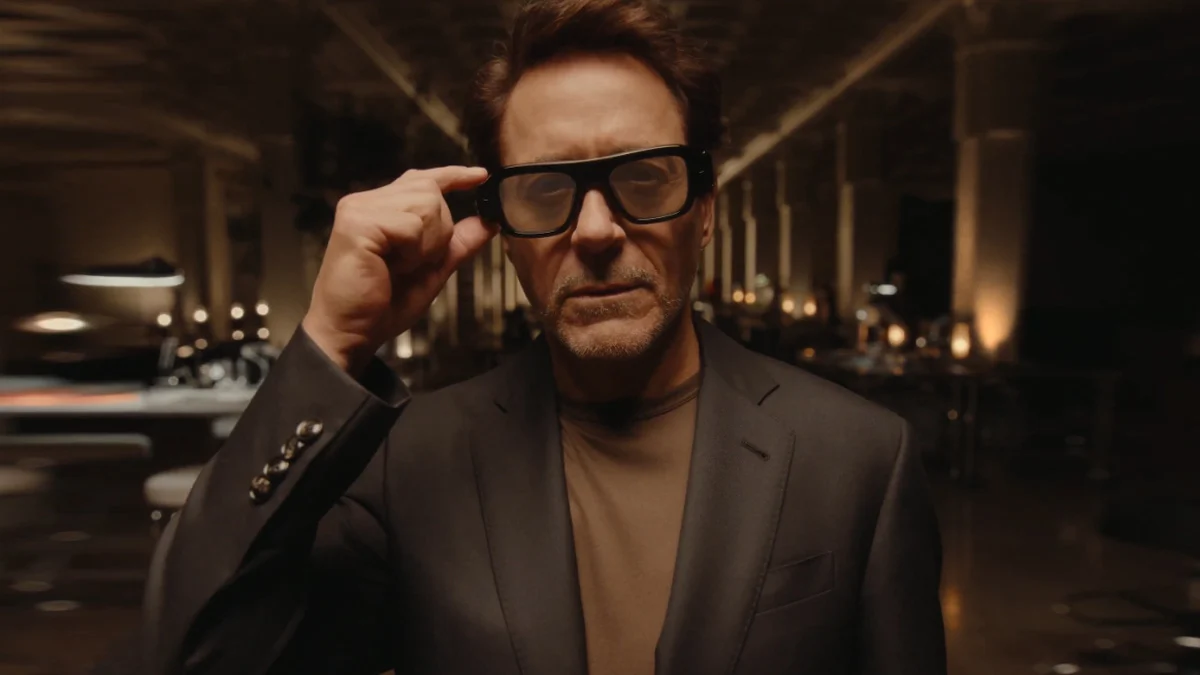
SANTA MONICA — In a move that bridges the gap between Hollywood’s visionary storytelling and Silicon Valley’s cutting-edge engineering, Snap Inc. has announced that Academy Award-winning actor Robert Downey Jr. has joined its augmented reality (AR) subsidiary, SPECS, as its honorary Chief Customer Experience Officer. This strategic partnership marks a pivotal moment for Snap, signaling an aggressive push to transition from a social media titan into a diversified hardware and computing powerhouse.
The Intersection of Entertainment and Engineering
The appointment of Downey Jr. is far more than a standard celebrity endorsement. According to Snap, the actor will be deeply embedded in the development of original content, the refinement of digital user experiences, and the curation of strategic hardware collaborations.
SPECS, a wholly owned subsidiary of Snap, has spent years refining its see-through eyewear—a sophisticated piece of hardware that acts as a wearable computer. By utilizing advanced optics and spatial computing, the glasses allow users to interface with digital overlays through intuitive hand gestures and voice commands, effectively blending the physical and digital worlds.
Downey Jr.’s mandate is broad. He is tasked with exploring how these AR capabilities can be cross-pollinated into diverse sectors, including high-stakes medicine, industrial engineering, manufacturing, and immersive education. The goal is to evolve the technology from a niche gadget into an essential utility that enhances human productivity and connectivity.
A Chronology of Innovation and Vision
The trajectory that led to this partnership began long before the formal announcement. Robert Downey Jr. has been a vocal proponent of emerging technologies for nearly two decades, frequently investing in companies focused on climate change, artificial intelligence, and advanced robotics.
- The Early Interest: Downey Jr.’s fascination with AR stems from his extensive work in the film industry, where he frequently interacted with the "Iron Man" suit’s heads-up display (HUD) technology. This cinematic experience sparked a genuine interest in the real-world applications of such interfaces.
- The First Encounter: According to the actor, his decision to join the team was solidified after a brief, sub-60-second trial of the SPECS hardware. "Trying is believing," he remarked, noting that the fluidity of the interface convinced him of the product’s market readiness.
- Strategic Integration: Over the past year, Snap and Downey Jr. have collaborated in stealth, developing a series of original content episodes designed to showcase the utility of the glasses.
- The Public Unveiling: The partnership went live this week, accompanied by the rollout of the first content series across the SPECS website and YouTube, with a high-profile broadcast debut scheduled for the New York Knicks versus Philadelphia 76ers tip-off game and Game 1 of the World Series on October 23.
Supporting Data: Why AR is the Next Computing Frontier
The decision to bring on a high-profile advocate like Downey Jr. reflects the immense pressure Snap faces to diversify its revenue streams. While Snapchat remains a cultural phenomenon, investors have long questioned the company’s ability to compete with the likes of Meta, Apple, and Google in the hardware space.
According to industry analysts, the global AR market is projected to reach unprecedented valuations by 2030, driven by the integration of AI and spatial computing. Snap’s SPECS subsidiary is positioning itself to be the "human-first" alternative in this landscape. Unlike VR headsets that isolate the user, SPECS glasses are designed to be worn in daily life, maintaining the user’s connection to the physical environment.
The current SPECS prototype demonstrates a 30% increase in spatial mapping accuracy compared to previous iterations, allowing for complex tasks like "virtual workspace" projection. Data from internal beta tests suggests that users interacting with digital tools via SPECS for professional tasks—such as architectural modeling or surgical simulation—experience a 25% reduction in task completion time compared to traditional 2D screen interfaces.
Official Responses and Strategic Rationale
Snap co-founder and CEO Evan Spiegel has been instrumental in securing the partnership. Spiegel, who has long maintained that AR is the future of human-computer interaction, believes that Downey Jr.’s involvement provides the necessary "human touch" that tech companies often lack.
"Robert’s longstanding interest in the intersection of humanity and technology is unparalleled," Spiegel said in a statement. "By bringing him into the fold, we are not just marketing a device; we are shaping a philosophy about how humans will coexist with digital information in the coming decades."
Downey Jr. himself has been equally effusive. "We are standing at a threshold where the screen is no longer a barrier, but a canvas," he noted. "My role is to help strip away the friction between the user and the digital experience. Whether it’s helping a parent teach a child to play piano or assisting a surgeon in a complex procedure, the potential is limited only by our capacity to design for the human experience."
Implications for the Future of Tech
The appointment of a "Chief Customer Experience Officer" with such a high public profile carries several significant implications for the tech industry at large.
1. The Humanization of Hardware
Silicon Valley has historically struggled with "techno-utopianism," often releasing products that are technically superior but practically unintuitive. By hiring a creative professional like Downey Jr., Snap is prioritizing the experience of the technology over the specs of the hardware. This shift suggests that the next generation of computing will be judged on its ability to integrate seamlessly into daily life rather than its raw processing power.
2. Beyond the Social Media Ecosystem
Snapchat has faced significant challenges in recent years, including saturation in the social media market and competition from platforms like TikTok. By doubling down on SPECS, Snap is effectively signaling that its future is not solely tied to a mobile app, but to a hardware platform. If successful, this could transform Snap into an infrastructure company, providing the AR foundation for other developers and industries to build upon.
3. The New Content Paradigm
The launch of original episodes—covering everything from golf swing practice to digital art creation—is a direct challenge to the traditional advertising model. By embedding the product into entertainment, Snap is creating "shoppable" or "demonstrable" content that bypasses the need for traditional commercials. The scheduling of these episodes during major sporting events like the World Series highlights a strategy aimed at the mainstream consumer rather than just the "early adopter" tech crowd.
4. Regulatory and Ethical Considerations
As SPECS brings digital content into the public sphere, the company faces mounting scrutiny regarding privacy and digital safety. Downey Jr. has indicated that he will be involved in the "ethical exploration" of AR, specifically regarding how these glasses can protect user data while still providing a personalized experience. This suggests that Snap is aware of the regulatory headwinds and is positioning its new hire to help navigate the complex intersection of user privacy and pervasive computing.
Conclusion: A Vision for Tomorrow
The partnership between Robert Downey Jr. and Snap’s SPECS is a bold gambit that challenges the traditional boundaries of both Hollywood and Silicon Valley. As the company prepares for the next phase of its evolution, the focus remains clear: creating a world where technology is a natural extension of human perception rather than a distraction from it.
While the market remains skeptical of the long-term viability of consumer AR, the combination of sophisticated hardware and high-level creative direction offers a compelling path forward. Whether or not SPECS becomes the next household name in computing remains to be seen, but one thing is certain: with Downey Jr. in the role of Chief Customer Experience Officer, the world will be watching to see if the future of computing is indeed as immersive and intuitive as they promise.
As the October 23rd World Series debut approaches, fans and tech enthusiasts alike will get a front-row seat to this new chapter. For Snap, it is a high-stakes moment of truth. For Robert Downey Jr., it is the next logical step in a career defined by pushing the boundaries of what is possible—both on the screen and in the world of real-world innovation.