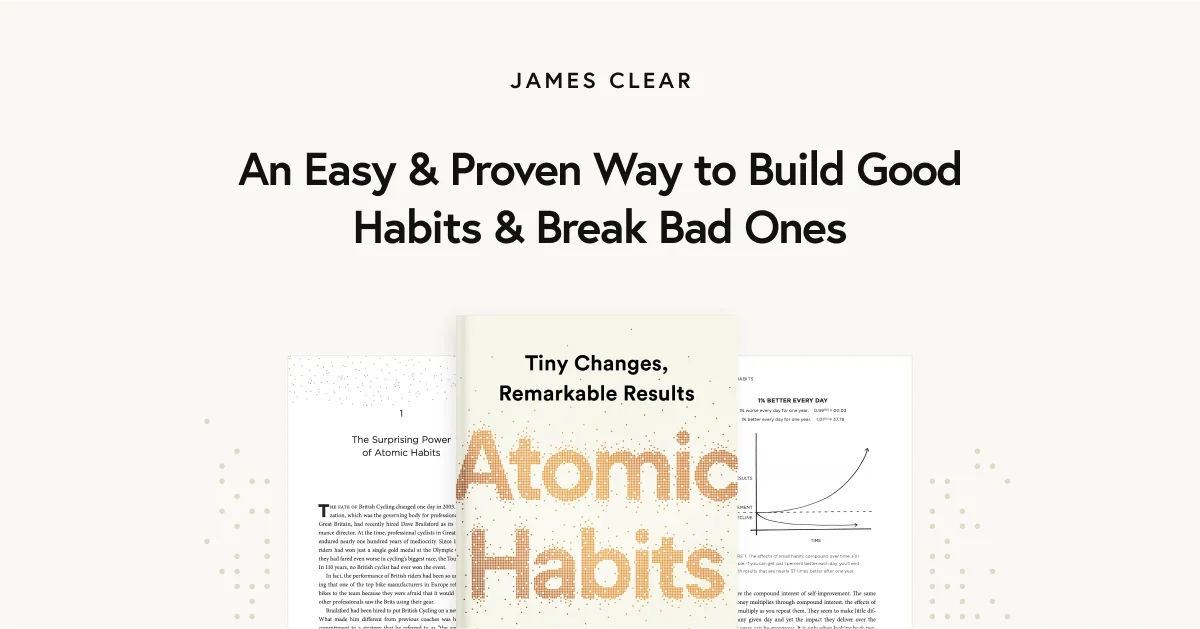
In the pursuit of personal development, the gap between reading self-help literature and implementing lasting change is often where ambition goes to die. However, for the millions of readers who have engaged with James Clear’s seminal work, Atomic Habits, the transition from theory to practice is being documented in real-time. By examining 30 "one-sentence stories"—brief, anecdotal accounts from individuals who have successfully navigated the complexities of behavioral psychology—we can discern a clear roadmap for how ordinary people are rewriting their daily routines.
These accounts, aggregated by Clear, serve as a testament to the efficacy of incremental, identity-based, and environment-driven change. They demonstrate that the path to transformation is not paved with grand, sweeping gestures, but rather with the quiet, consistent application of strategic, small-scale adjustments.
Main Facts: The Architecture of Behavioral Change
At the heart of the Atomic Habits methodology lies the premise that true change is not an outcome, but a fundamental shift in identity. The core philosophy posits that individuals should focus on the type of person they wish to become, rather than the specific, outcome-oriented goals they wish to achieve.
The data provided by these practitioners reveals that success often stems from several key pillars:
- Identity-based habit formation: Reframing internal narratives from "I am trying to quit" to "I am the type of person who does not smoke."
- Cue Alteration: Intentionally changing the environmental triggers that dictate behavior.
- Habit Stacking: Leveraging existing routines as "anchors" for new behaviors.
- Friction Management: Strategically increasing or decreasing the physical and mental barriers to specific actions.
Chronology of Adoption: A Step-by-Step Approach
While every individual’s journey is unique, the accounts shared by readers reveal a distinct, recurring chronology in how these habits are established.
Phase 1: The Mental Reframing
Before a physical change occurs, a psychological pivot is required. For Roland, a reader struggling with nutrition, the breakthrough occurred when he stopped focusing on the restriction of "unhealthy food" and began identifying as someone who inherently "lives a healthy life." This shift allowed him to bypass the willpower-depleting struggle of denial, transforming his dietary choices into an expression of his self-image.
Phase 2: Structural Modification
Once the identity is established, practitioners move to the structural phase. This involves changing the environment to favor the desired habit. Lisa, a reader who wished to read more, did not rely on spontaneous motivation. Instead, she created a system of "book flow" by keeping a consistent queue of 20 to 30 titles on hold at her local library. By treating her reading habit like a supply-chain management problem, she ensured the cue to read was always present and accessible.
Phase 3: The Integration of Anchors
After establishing the "what" and the "where," individuals turn to "when." Habit stacking, or "anchoring," involves linking a new, desired behavior to a non-negotiable existing one. David, a participant in these strategies, reported a seamless integration of mindfulness into his life by simply scheduling his 20-minute meditation immediately after his morning tooth-brushing routine. By attaching the new habit to a "keystone" behavior, the friction of starting is virtually eliminated.
Supporting Data: Why "Atomic" Strategies Succeed
The efficacy of these methods is supported by a growing body of behavioral science that suggests the human brain is highly responsive to environmental design and cues. The anecdotal evidence provided by these 30 stories illustrates three distinct modes of success:
The Friction Principle
The most effective way to eliminate a bad habit is to make it inconvenient. Cyd, a reader who struggled with impulsive snacking, implemented a "high-friction" environment by storing her temptation foods in a locked car, parked in the cold. By forcing a physical barrier between herself and the snack, she successfully disrupted the automaticity of the habit. Conversely, by reducing friction for good habits—such as laying out gym clothes the night before—readers like the 6 A.M. runner ensure that the path of least resistance is also the healthiest path.
The Power of Substitution
When a habit is deeply ingrained, it is often easier to replace it than to erase it. This "stair-step" approach to substitution—such as swapping beer for sparkling water, or smoking for a weight-lifting set—allows the brain to satisfy the underlying craving (stress relief or oral fixation) with a healthier alternative. This prevents the "void" that typically leads to relapse.
The Metric of Tracking
The final, and perhaps most critical, element is the visual feedback loop. Cindy, a reader who utilized a large wall calendar to mark "chains" of successful days, reported that the visual progress was more motivating than the outcome itself. By tracking small, manageable iterations—such as reading just one page or doing an abbreviated workout—readers ensure that their streak remains unbroken, even on low-energy days.
Official Responses and Expert Perspective
James Clear himself notes that these stories are not his own; rather, they are the byproduct of a community applying evidence-based strategies. From an expert perspective, the recurring theme across these accounts is the "abandonment of perfectionism."
"Many people fail because they think of habit building as an all-or-nothing endeavor," Clear writes. "The readers who succeed are the ones who focus on the scope of the habit. If they cannot do the full workout, they do a tiny version. If they cannot avoid the temptation entirely, they increase the friction."
This sentiment is echoed by those who have successfully conquered addictions. Suraj, who transitioned from substance abuse to powerlifting, highlights that the "healthy obsession" acts as a vital psychological replacement. The consensus among these practitioners is that habit change is not about willpower—it is about the intelligent design of one’s circumstances.
Implications for the Modern Practitioner
The implications for anyone looking to build better habits are profound. We are often led to believe that "discipline" is a trait one is born with, or a reservoir that can be tapped indefinitely. The data from these 30 stories suggests otherwise.
1. Design Your Environment, Don’t Rely on Willpower
Willpower is a finite resource. By using tools like QR-code-locked alarms, removing browser apps to stop net surfing, or keeping gym clothes on the bedroom floor, you offload the responsibility of "deciding" to your environment.
2. The Identity-First Approach
Do not start by asking what you want to achieve. Start by asking, "Who is the person that consistently does this?" When you change your internal label, your behavior follows the identity as a natural consequence.
3. Start Small, Then Optimize
The "one-sentence" nature of these successes underscores the importance of the "two-minute rule." Whether it is tracking a single page of reading or a daily workout, the key is showing up. Once the habit is established, the intensity can be scaled.
4. Use the "Stair-Step" for Bad Habits
If you are struggling to break a cycle, look for a bridge. Whether it is moving from beer to iced tea or from cigarettes to candy bars, temporary substitutions are a proven tactical bridge to long-term sobriety or health.
Conclusion: The Accumulation of Small Wins
The collective experience of these readers reveals that the "atomic" in Atomic Habits refers not just to the size of the changes, but to their fundamental nature—they are the building blocks of a new self. By focusing on identity, reducing environmental friction, anchoring new tasks to old ones, and tracking progress with visual aids, these individuals have demystified the process of personal growth.
In a world obsessed with overnight success and massive, disruptive transformations, these stories offer a quiet, steady alternative. They suggest that the most significant changes in our lives are not the result of a single, heroic act, but the product of hundreds of tiny, deliberate decisions. By applying these methods, anyone—regardless of their starting point—can move from the frustration of failed intentions to the consistent satisfaction of steady, incremental progress. The journey begins with a single sentence, a single change, and a single day.