By Reuters
Updated: October 26, 2026, 09:10 AM
Market Snapshot: A Volatile Trading Session
As political tensions dominate headlines, global and local markets are reflecting a day of significant adjustment. Investors remain cautious as uncertainty permeates both the geopolitical landscape and the commodity sector:
- SENSEX: 73,123.83 (-125.56)
- NIFTY: 22,600.00 (-87.65)
- CRUDE OIL: 9,783.00 (+299.00)
- GOLD: 142,160.00 (-1,149.00)
- SILVER: 195,900.00 (-3,699.00)
Main Facts: A Diplomatic Firestorm
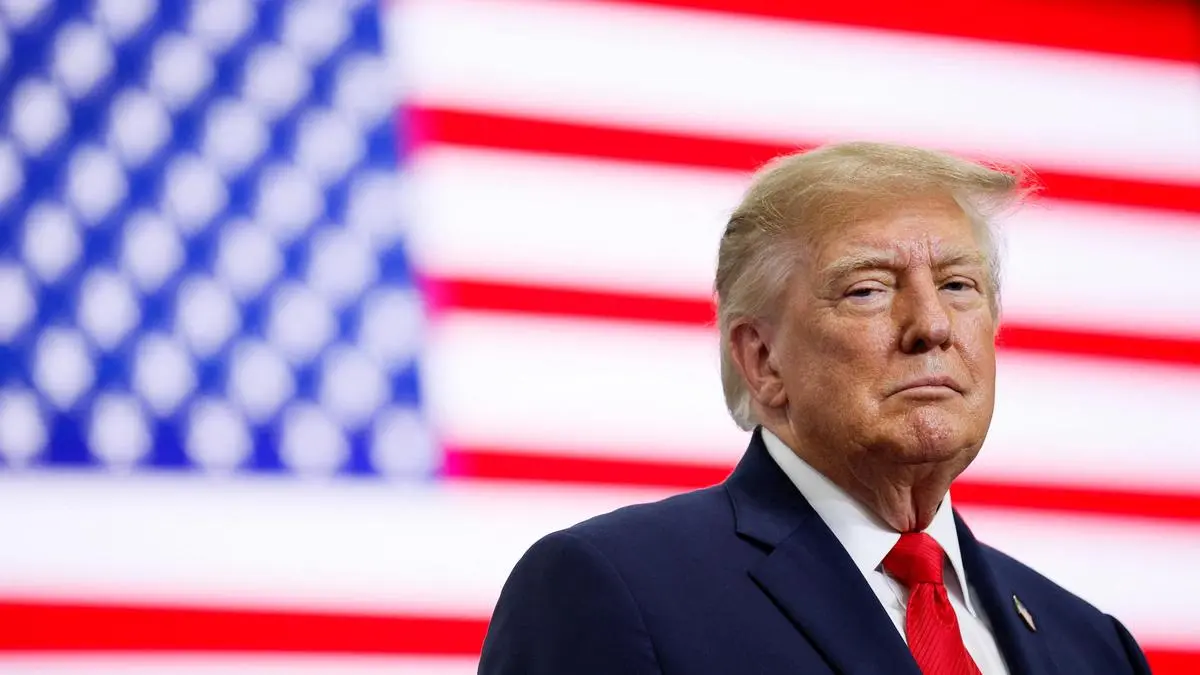
In a startling departure from traditional diplomatic discourse, U.S. President Donald Trump, speaking at a rally in Port Huron, Michigan, on Sunday, leveled a series of incendiary remarks against Norway. Linking domestic concerns over immigration to international relations, the President explicitly suggested that he would welcome immigrants from select nations, but maintained a hardline stance against Norwegian nationals.
The President’s rationale, delivered with characteristic bluntness, was tied to his perceived snub by the Nobel Committee. "I don’t want anybody from Norway," Trump declared, citing his failure to receive a Nobel Peace Prize as the primary motivation for his exclusion policy. He further characterized the Scandinavian nation using derogatory language, referring to it as a "shit house country." These comments have sent shockwaves through the international community, prompting questions about the intersection of personal grievance and federal immigration policy.
Chronology: From Policy Debates to Personal Grievance
The timeline of these remarks underscores a deepening trend in the current administration’s communication strategy:
- Mid-October 2026: Tensions regarding immigration policy intensify in the wake of civil unrest in France. The administration begins to frame European immigration models as cautionary tales for the American public.
- October 24, 2026: White House aides begin briefing the press on a potential "merit-based" overhaul of immigration, with the President hinting at "selective entry" based on geopolitical alignment.
- October 26, 2026 (Morning): Speaking in Michigan, President Trump pivots from a discussion on national security and the French unrest to a visceral critique of Norway. He explicitly links the Nobel Committee’s decision-making process to the standing of Norwegian citizens in the eyes of the U.S. government.
The Rhetoric of Exclusion: Supporting Context
The President’s latest comments appear to be a continuation of a broader ideological shift regarding who is considered "desirable" for entry into the United States. By attempting to correlate the social stability of a country with the personal accolades he feels he is owed, Trump has effectively turned a standard immigration debate into a personal vendetta.
Analysts note that this is not the first time the President has used inflammatory language to describe foreign nations. However, the explicit linking of the Nobel Peace Prize—a prestigious international award granted by an independent committee in Oslo—to the denial of immigration rights marks a significant escalation in how the administration weaponizes its foreign policy. The comment suggests that entry into the United States is no longer merely a matter of legal vetting, but a transactional reward for foreign entities that align with the President’s personal interests.
Official Responses and International Fallout
The international community has been quick to react. While official statements from the Norwegian government remain measured, diplomatic sources in Oslo have expressed "profound bewilderment" at the President’s logic.
"We believe in the integrity of the Nobel process, which remains entirely independent of the Norwegian government," a spokesperson for the Norwegian Ministry of Foreign Affairs noted. "To penalize individuals from a sovereign nation based on the decisions of a private committee is a distortion of both diplomacy and logic."

Domestic critics, meanwhile, have labeled the remarks as "un-presidential" and a violation of the spirit of the U.S. immigration system. Constitutional scholars have begun to question whether such a litmus test—based on the President’s personal grievances—could withstand legal challenges should it be codified into executive action.
Implications: Beyond the Headlines
The implications of the President’s speech are multi-faceted, affecting both the domestic political climate and international relations:
1. The Erosion of Diplomatic Norms
The normalization of using derogatory language to describe established allies like Norway signals a shift toward a more isolationist and transactional foreign policy. If a country’s status in the eyes of the U.S. President is tied to his personal approval ratings or awards, the stability of long-standing treaties and alliances could be jeopardized.
2. Immigration as a Political Tool
By blaming unrest in France on immigration and then pivoting to a condemnation of Norway, the President is attempting to construct a narrative where the U.S. is the final arbiter of which cultures are "compatible" with American society. This rhetoric is likely to energize his base in the short term, but it risks alienating key European partners at a time when the administration may need their cooperation on trade and security issues.
3. Market and Economic Stability
As noted in the day’s market snapshot, the intersection of political uncertainty and economic indicators—such as the sharp decline in Gold and Silver prices—often points to a flight to liquidity. Investors are monitoring the situation closely. When political leaders make erratic statements, the uncertainty premium in global markets rises. The volatility in crude oil and precious metals suggests that the "Trump effect" is once again moving markets, forcing investors to weigh the risk of a more unstable geopolitical environment.
4. The Future of the Nobel Peace Prize
The President’s comments have inadvertently placed a spotlight on the Nobel Committee. By publicly lamenting his lack of a Nobel Prize, Trump has turned the award into a central point of his domestic political platform. It is expected that the Nobel Committee will issue a statement clarifying its autonomy, yet the damage to the diplomatic relationship between the U.S. and Norway may be harder to repair.
Conclusion
As the political dust settles, the core issue remains the President’s tendency to merge private grievances with public policy. Whether this is a calculated attempt to distract from broader issues or a genuine reflection of his decision-making process, the result is the same: a more unpredictable, and potentially more isolated, United States.
For the American public, the coming weeks will likely see further debates on the nature of executive power and the role of the President in setting the tone for international relations. For now, the administration has signaled that it is willing to burn bridges—even with the most stable of allies—if the price of entry is anything less than personal validation.
As the markets continue to fluctuate in response to these tensions, the world watches to see if this is merely a rhetorical flourish or the beginning of a new, more restrictive era in U.S. immigration and foreign policy. The path forward remains uncertain, but one thing is clear: the relationship between Washington and Oslo has reached a historic, if unfortunate, nadir.