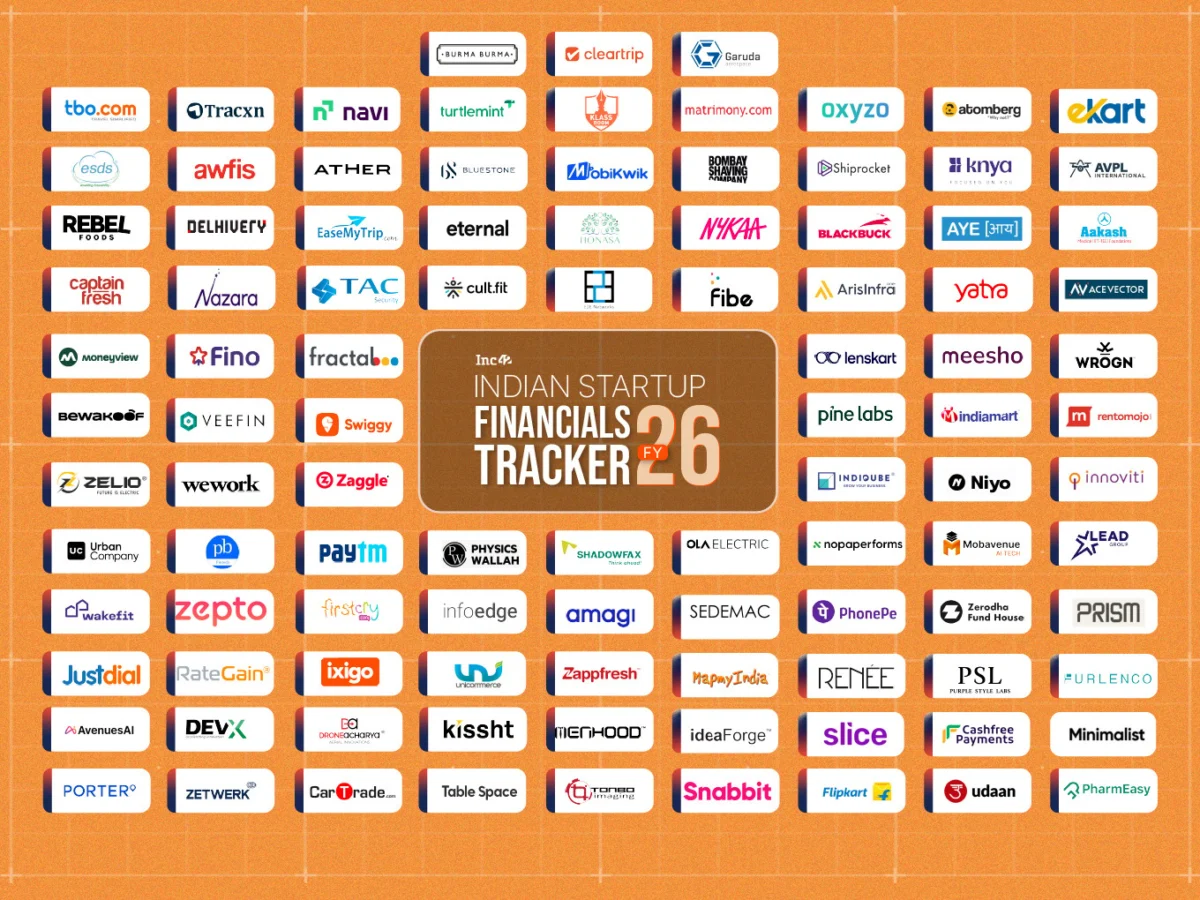
The Indian startup ecosystem reached a critical juncture in Fiscal Year 2026, characterized by a transition from aggressive growth-at-all-costs to a disciplined focus on unit economics and sustainable profitability. Amidst shifting funding realities and global geopolitical headwinds that defined the fourth quarter, the ecosystem demonstrated remarkable resilience. A significant hallmark of this maturity was the robust activity in the public markets, with 22 new-age tech companies making their IPO debuts in FY26, a marked increase from the 13 recorded in FY25.
As startups continue to navigate a complex macroeconomic environment, the data from the newly launched Inc42 FY26 Financial Tracker reveals a tale of two realities: companies that have successfully cracked the code to profitability, and those still heavily investing in scale at the cost of bottom-line stability.
Key Financial Trends: Scaling Amidst Rationalization
The aggregate performance of the 106 companies analyzed in this report paints a picture of a sector that remains firmly in growth mode. The collective operating revenue for these firms reached ₹4.89 Lakh Cr in FY26, a substantial 33.17% jump from the ₹3.67 Lakh Cr reported in FY25.
However, the path to profitability remains bifurcated. Of the 106 startups tracked, 66 (approximately 62.3%) reported profits for the fiscal year. These 66 entities collectively generated a net profit of ₹14,546.9 Cr. Conversely, the remaining 40 startups posted a cumulative loss of ₹31,797.2 Cr. This disparity highlights that while a majority of the ecosystem has achieved operational self-sufficiency, a significant portion—often those in high-burn sectors like quick commerce and logistics—remains focused on capturing market share.
The Push for Profitability: A Sectoral Analysis
The shift toward profitability is not merely a strategic choice but a necessity driven by a "funding winter" that has forced founders to rationalize costs.
Fintech and Lending: The Profit Powerhouses
The fintech sector saw a mixed bag of results, with established players and those focused on lending tech showing strong margins. AvenuesAI reported a 25% jump in profit, reaching ₹294.9 Cr, while Kissht saw its bottom line surge to ₹281.5 Cr. Fibe and LenDenClub also showcased impressive growth, with profits jumping 126% and 183%, respectively. These companies have leveraged technology to lower customer acquisition costs (CAC) and improve credit underwriting, proving that digital lending can be a highly lucrative business model.
Logistics and Quick Commerce: The Battle for Scale
The quick commerce and logistics sectors remain the most capital-intensive areas of the ecosystem. Zepto, which doubled its revenue to ₹22,623.6 Cr, still reported a widened loss of ₹5,905 Cr, underscoring the massive investment required to sustain rapid-delivery models. Similarly, Swiggy’s losses grew to ₹4,154 Cr as it doubled down on its Instamart expansion. In contrast, Delhivery and BlackBuck showed signs of stabilization, with the latter turning profitable at ₹163.7 Cr.
SaaS and B2B Tech: Stability and Maturity
The B2B SaaS and enterprise tech segments have shown the most consistency. Capillary Technologies saw its profit skyrocket by 271% to ₹52.4 Cr, while Fractal maintained a steady upward trajectory with a 30% rise in net profit. Amagi Media Labs successfully turned profitable, recording a net profit of ₹71.7 Cr, reflecting the growing global demand for Indian SaaS solutions.
Chronology of Financial Performance: Selected Highlights
The financial year witnessed a series of notable pivots and milestones for major players:
- Q1-Q2 (The Lean Phase): Many startups, including Aakash Educational Services and Atomberg, focused heavily on cost-cutting measures, with Aakash successfully narrowing its loss by 15.5%.
- Q3 (The Pivot Period): Companies like BlueStone and slice reported their first full year of profitability, signaling a shift in business model efficacy as they scaled their offline and banking operations respectively.
- Q4 (The Aggressive Push): The final quarter saw heavy investment cycles, particularly from the likes of Zepto and Swiggy, as they competed for dominance during the festive and peak demand season. Nykaa continued its offline expansion, contributing to a 182% surge in annual profits.
Supporting Data: Operational Revenue and Profitability Metrics
| Company Name | Operating Revenue (FY26) | Profit/Loss (FY26) | YoY Rev Change |
|---|---|---|---|
| Flipkart | ₹1,45,880 Cr | -₹8,468 Cr | 18% |
| Eternal (Zomato) | ₹54,364 Cr | ₹366 Cr | 168.56% |
| Zepto | ₹22,623.6 Cr | -₹5,905.2 Cr | 103.63% |
| Delhivery | ₹10,508.3 Cr | ₹152.5 Cr | 17.65% |
| Nykaa | ₹10,022.3 Cr | ₹203.9 Cr | 26.07% |
| Lenskart | ₹8,814 Cr | ₹500.9 Cr | 32.49% |
| Paytm | ₹8,437 Cr | ₹552 Cr | 22.28% |
(Note: Data reflects consolidated figures as per the Inc42 FY26 Financial Tracker.)
Implications: What Lies Ahead for Indian Startups?
The financial performance in FY26 carries several implications for the future of the Indian startup ecosystem:
1. The End of "Growth at Any Cost"
Investors are increasingly prioritizing "Profitable Growth." Startups that continue to burn cash without a clear path to EBITDA positivity are finding it harder to raise follow-on rounds. The performance of companies like Furlenco and RentoMojo, which saw multifold jumps in profit, suggests that investors are rewarding companies that can balance revenue growth with operational efficiency.
2. The Rise of the "Phygital" Model
Companies that have bridged the gap between online and offline—such as Lenskart, BlueStone, and Nykaa—have shown superior financial health compared to pure-play online retailers. The ability to control the supply chain and provide an omni-channel experience has become a key competitive advantage.
3. Public Market Readiness
The successful IPOs of 22 companies in FY26 suggest that Indian public markets are becoming increasingly receptive to tech startups. However, these markets are also highly unforgiving. Companies like Paytm and PB Fintech have demonstrated that once a startup goes public, the pressure to maintain consistent quarterly growth and bottom-line expansion is relentless.
4. Regulatory and Macro Headwinds
The financial performance of startups like Ather Energy and Ola Electric highlights the vulnerability of the ecosystem to supply chain disruptions and regulatory shifts. Ather’s production challenges due to import restrictions on rare earth magnets served as a reminder that even the most innovative startups remain tethered to global trade dynamics.
Conclusion
FY26 will be remembered as the year Indian startups grew up. While the headline figures of massive revenues continue to capture the imagination, the real story lies in the quiet, consistent work of companies achieving profitability. As we look toward FY27, the divide between the "sustainable" and the "subsidized" will only widen. For founders, the mandate is clear: build for longevity, maintain a tight leash on expenses, and ensure that every rupee spent contributes to long-term value creation.
Editor’s Note: The metrics provided in this report are based on self-disclosed financial filings and represent a snapshot of the startup ecosystem. This is a living document and will be updated as more companies release their finalized annual reports.