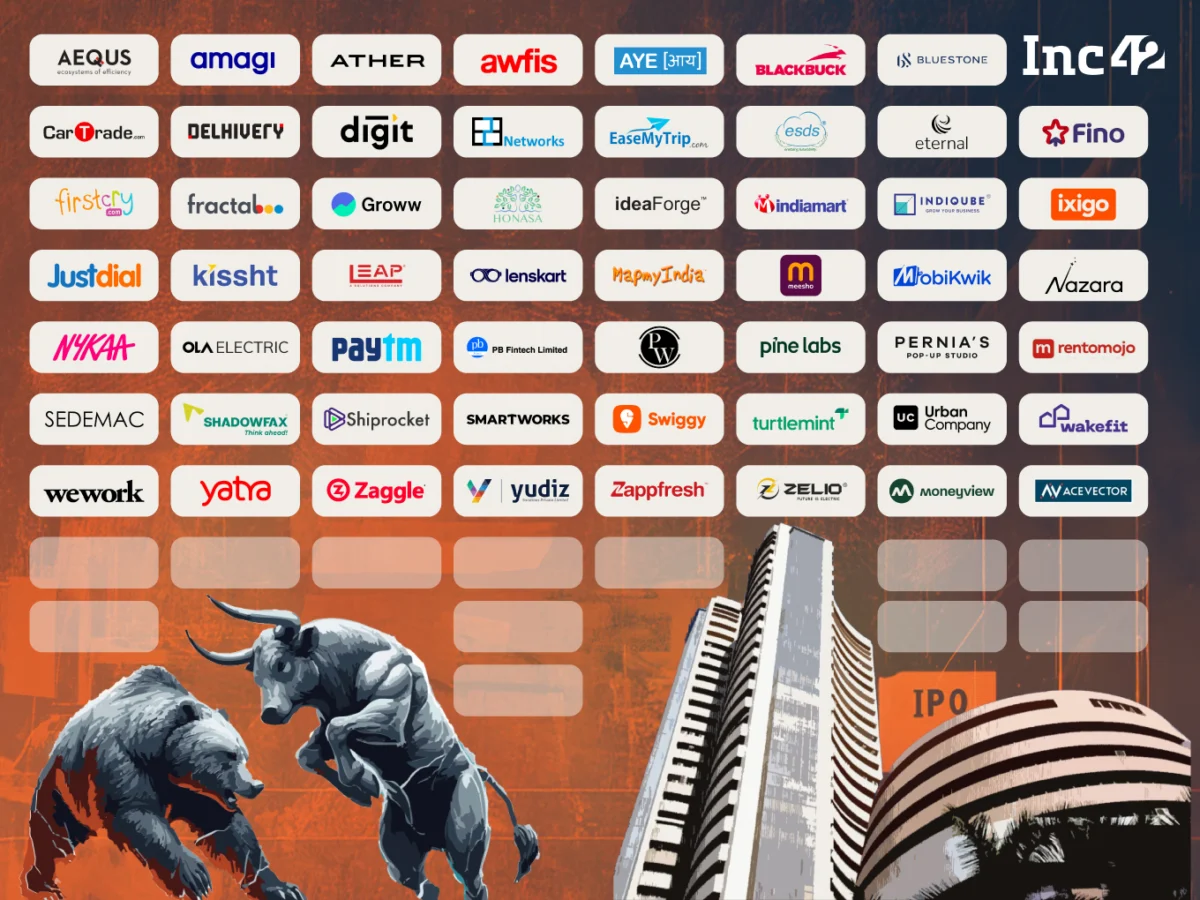
For years, the Indian startup ecosystem was viewed through the lens of potential—a landscape defined by high-burn, high-growth, and the relentless pursuit of market share. Today, that narrative has shifted fundamentally. The Indian startup ecosystem has transitioned from its "adolescent" phase into a period of institutional maturity, with the public markets serving as the ultimate validator of this evolution.
As of late 2026, the Indian stock exchanges have become home to over 70 new-age technology companies. This collective footprint represents a staggering cumulative market capitalization exceeding $173 billion, signaling that the Indian retail and institutional investor base is increasingly comfortable betting on the digital future of the nation’s economy.
The Milestone of Public Listing: A Rite of Passage
For an Indian startup, an Initial Public Offering (IPO) is no longer just a liquidity event; it is a declaration of operational stability and transparency. It marks the transition from private capital dependence to public market accountability.
This journey has accelerated significantly in recent years. While 2025 set a high-water mark for startup listings, 2026 has maintained that velocity with 15 major debuts, including high-profile names such as AceVector, Moneyview, Rentomojo, ESDS, Purple Style Labs, Turtlemint, Klassroom, Shiprocket, LEAP India, Kissht, Aye Finance, Fractal Analytics, Amagi, Shadowfax, and SEDEMAC.

The implications for the broader ecosystem are profound. A successful public listing provides a clear exit pathway for early-stage venture capital and private equity investors, recycling liquidity back into the ecosystem to fuel the next generation of founders. Furthermore, the scrutiny of quarterly reporting forces these companies to shift their focus from "growth at all costs" to sustainable, profitable business models.
Chronology of Evolution: From "Loss-Making" to "Market-Ready"
The road to Dalal Street has been paved with significant structural changes. The "funding winter" of 2022 served as a harsh, necessary reality check for the industry. Prior to this period, many startups prioritized top-line revenue growth, often at the expense of massive bottom-line losses.
However, the market’s appetite changed. Investors began demanding a clear path to profitability before supporting IPO filings. This shift in sentiment forced founders to overhaul their business strategies.
Key Phases of the IPO Wave:
- The Early Pioneers (Pre-2020): Companies like Info Edge (2006) and Justdial (2013) laid the groundwork, proving that Indian tech could thrive on public bourses.
- The Scaling Phase (2020–2022): Fueled by the pandemic-era digital boom, companies like Zomato, Nykaa, and Paytm made high-profile entries, though they faced subsequent volatility.
- The Efficiency Era (2023–Present): The current wave is defined by fiscal discipline. Startups are now entering the market with more balanced books, often achieving profitability in the fiscal years leading up to their listing.
The median time taken for a startup to move from inception to public listing is now approximately 11 years. While some, like ArisInfra, have achieved this in as little as four years, others have taken nearly two decades, reflecting the varied nature of the tech sectors represented on the exchanges.

Data-Driven Insights: Who Leads the Pack?
The performance of these listed entities varies significantly, but the underlying data reveals a clear trend: profitability is the new currency of the markets.
As of the latest data for FY26, Groww has emerged as a leader in the fintech space, reporting a net profit of ₹2,083 Cr. Other giants like Paytm (₹553 Cr) and Eternal (₹366 Cr) underscore the dominance of the financial services sector in the public markets.
Conversely, the journey remains challenging for many. Companies like Urban Company have shown that the path to profitability is rarely linear. After reporting a net profit of approximately ₹240 Cr in FY25, the company returned to a net loss of ₹234.8 Cr in FY26, despite a robust 36% year-on-year revenue growth. This highlights the inherent risks of public-market participation, where investors demand consistent performance across multiple quarters.
Sectoral Dominance
The concentration of listed startups mirrors the distribution of venture capital funding over the last decade. The "Big Three" sectors continue to lead:

- Fintech: With 14 listed entities, this sector remains the most active, driven by India’s rapid digitization of payments and lending.
- Ecommerce: Also boasting 14 listed names, this sector continues to expand as consumer habits shift toward online platforms.
- Enterprise Tech: With 13 listed startups, the B2B tech space has proven to be a resilient and scalable pillar of the Indian market.
The Regional Supremacy: Why Delhi NCR is Winning
While Bengaluru is traditionally recognized as the "Silicon Valley of India," the IPO race tells a different story. The Delhi National Capital Region (NCR) has firmly established itself as the hub for listed tech giants.
Delhi NCR is home to 27 listed new-age tech companies, compared to Bengaluru’s 19 and Mumbai’s 15. The region’s dominance is even more pronounced in terms of value; Delhi NCR companies contribute roughly $90 billion to the total $167 billion market capitalization of the listed new-age tech sector. Gurugram, specifically, has become a hotbed for logistics and ecommerce giants like Delhivery and Lenskart, while Noida houses major fintech players like Paytm.
Implications for Investors and Founders
The current landscape offers a nuanced view of the Indian tech sector. For investors, the "Indian Listed New-Age Tech Company Tracker" provides a vital resource for navigating this volatility. The data shows that while some stocks have seen exponential growth—such as E2E Networks, which saw a 10,348% increase from its debut market cap—others have faced significant correction as they struggle to maintain margins.
For future founders, the message is clear: the public markets are no longer a place for speculative growth stories. The bar has been raised. A successful IPO now requires:

- A Proven Business Model: Evidence of a sustainable path to profit.
- Transparency: Robust corporate governance and financial reporting standards.
- Scale with Efficiency: Demonstrating that the company can grow its top line without incurring unsustainable customer acquisition costs.
Conclusion: The Road Ahead
As we look toward the remainder of 2026 and into 2027, the IPO pipeline remains robust. Companies like OYO and Zepto are reportedly preparing for their own public debuts, suggesting that the "IPO wave" is far from reaching its crest.
The maturation of the Indian tech ecosystem is a testament to the resilience and adaptability of its entrepreneurs. While the volatility of the stock market will always be a factor, the shift toward public accountability marks a permanent change in how Indian startups operate. They are no longer just "startups" in the traditional sense; they are becoming the foundational pillars of the Indian economy, driving innovation, employment, and wealth creation on a national scale.
As these companies continue to navigate the complexities of the public markets, the focus will undoubtedly remain on long-term value creation. For the ecosystem, the "kid" has indeed become an adult, and it is now ready to compete on the global stage.
Disclaimer: This report is based on current market data as of October 2026. Market capitalization figures and financial performance metrics are subject to market volatility. Investors are advised to conduct their own due diligence.