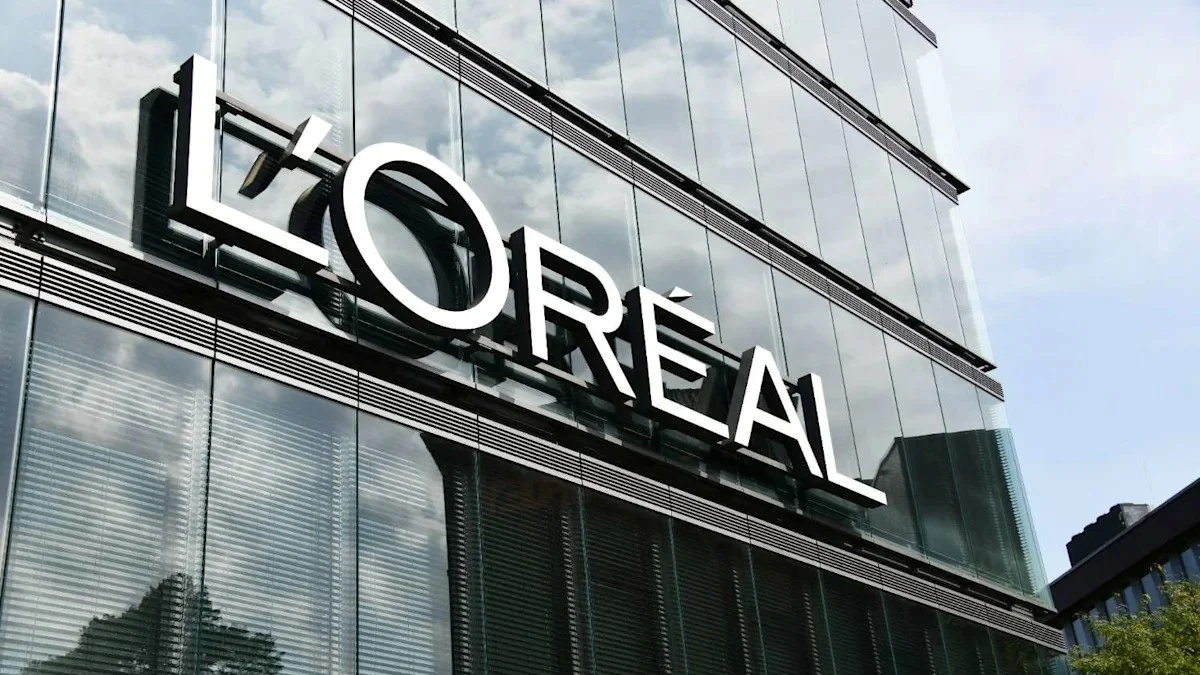
PARIS – In a landscape where consumer preferences are shifting rapidly toward premiumization and digital-first experiences, L’Oréal has demonstrated remarkable resilience and agility. The French cosmetics giant, a bellwether for the global beauty industry, has reported a robust performance for the nine months ended September 30, 2026. With sales reaching €35.34 billion—a 7.7% increase compared to the previous year—the company is not merely participating in the global beauty market; it is consistently outperforming it.
As the industry grapples with uneven demand across various geographies and inflationary pressures, L’Oréal’s strategy of balancing a diverse product portfolio with aggressive digital expansion has proven to be a winning formula.
1. The Main Facts: A Global Performance Overview
L’Oréal’s financial results for the first three quarters of 2026 paint a picture of a company firing on all cylinders. The group reported a like-for-like sales growth of 6.9%, with an acceleration to 7.7% in the third quarter alone. This performance was not localized to a single region or category; rather, it was broad-based, with all four primary business divisions and all five geographic regions contributing to the positive trajectory.
The core of this success lies in the company’s ability to pivot toward high-demand sectors. Fragrances, premium haircare, and dermatological skincare have emerged as the primary engines of revenue. Furthermore, the digital transformation strategy, which saw e-commerce sales climb by approximately 17%, has allowed L’Oréal to outstrip the growth of the broader online beauty market.
2. Chronological Analysis: A Nine-Month Trajectory
The journey through the first nine months of 2026 reveals a steady climb in operational momentum:
- Q1 & Q2 2026: The year began with a focus on supply-chain stabilization and the aggressive rollout of new product lines, particularly in the dermatological and professional haircare segments.
- Mid-Year: As the company moved into the second half of the year, it solidified its market share in emerging economies. The focus shifted toward consolidating gains in India and Southeast Asia while managing volatility in North Asia.
- Q3 2026: The third quarter served as the highlight of the year to date. Adjusted like-for-like growth accelerated to 7.7%, driven by a mix of volume growth and effective price-product positioning. The company successfully navigated seasonal shifts in consumer demand, particularly in the luxury fragrance segment, which saw high engagement from younger demographics.
3. Supporting Data: Divisional and Regional Breakdown
To understand L’Oréal’s dominance, one must look at the granular data across its diverse business divisions and geographic footprints.
Divisional Performance
- Professional Products: This was the group’s fastest-growing segment, boasting an adjusted like-for-like sales increase of 12.3%. Brands such as Kérastase, Redken, and L’Oréal Professionnel were instrumental in this growth, capitalizing on the rising trend of "skinification" of hair, where consumers apply high-end skincare-grade ingredients to haircare routines.
- Dermatological Beauty: Recording an 11.6% rise in sales, this division benefited from the clinical credibility of brands like La Roche-Posay, CeraVe, and SkinCeuticals. As consumers prioritize efficacy and science-backed solutions, this division has become a cornerstone of the company’s portfolio.
- Consumer Products: As the largest division by volume, it contributed €12.69 billion to the total. While growth was more modest at 4.2%, it remained stable, anchored by strong performances from L’Oréal Paris and NYX Professional Makeup.
- L’Oréal Luxe: Generating €12.17 billion, this division saw a significant recovery in the third quarter. Fragrances remain the star performer, with iconic scents from Yves Saint Laurent, Prada, and Armani driving engagement.
Geographic Highlights
- SAPMENA-SSA (South Asia, Pacific, Middle East, North Africa, and Sub-Saharan Africa): This region emerged as the growth leader, with a staggering 15.8% adjusted like-for-like sales increase. India, in particular, has cemented its status as a key growth engine.
- Europe: Delivering a solid 7% growth, markets like Spain, Portugal, and the Poland-Baltics cluster outperformed expectations.
- North America: The region grew by 6.3%, fueled by a strong demand for dermatological skincare and professional haircare, supported by strategic retail partnerships.
- North Asia: While tourism remains subdued in Japan, the region recorded 5.5% growth, with China continuing to act as a vital contributor despite market complexities.
- Latin America: This remains the most challenging region (2.4% growth). While Brazil showed strong results, supply-chain bottlenecks and inventory adjustments in Mexico weighed on the overall regional performance.
4. Official Responses and Leadership Vision
L’Oréal’s Chief Executive Officer, Nicolas Hieronimus, expressed a sense of measured optimism regarding the company’s trajectory. In a recent statement, Hieronimus remarked: "The first nine months give me confidence that L’Oréal will deliver another year of growth in sales and profit, whilst strengthening our global leadership."
The leadership team emphasizes that the current growth is not merely a result of pricing power but is deeply rooted in the company’s innovation pipeline. By investing heavily in R&D and collaborating with research powerhouses like South Korea’s Cosmax, L’Oréal is ensuring that its "next-generation" product offerings remain ahead of shifting consumer trends.
Furthermore, the company’s commitment to sustainability remains a pillar of its corporate identity. The L’AcceleratOR programme, bolstered by a €100 million fund, continues to identify and scale startups that address circularity and climate challenges, earning the company "Prime" status in the ISS ESG Corporate Rating for the 15th consecutive year.
5. Implications: Why India and Digital-First Brands Matter
L’Oréal’s aggressive expansion in India is perhaps the most significant strategic move of 2026. By acquiring a majority stake in Innovist, a digital-first personal care company, L’Oréal is signaling a fundamental shift in how it views the Indian market. It is no longer just about pushing mass-market products; it is about owning the digital ecosystem where modern Indian consumers discover and interact with brands.
The partnership between L’Oréal’s corporate venture fund, BOLD, and the Indian beauty retailer Nykaa creates a unique synergy. This alliance allows the company to act as an incubator, identifying and nurturing high-growth wellness and beauty brands before they hit the mainstream. This "ecosystem" approach mitigates the risk of missing out on localized trends and ensures that L’Oréal remains relevant in a market characterized by rapid digital adoption.
The Financial Strategy
The company’s decision to issue a €2 billion, three-part bond reflects its strong balance sheet and creditworthiness. With ratings of AA (S&P) and Aa1 (Moody’s), L’Oréal is well-positioned to fund its general corporate requirements and continued M&A activities without compromising its financial stability.
Conclusion: The Path Forward
As L’Oréal enters the final quarter of 2026, the company finds itself in a position of strength, yet not without challenges. The global economic environment remains characterized by currency volatility and uneven demand patterns. In markets where consumers are increasingly bombarded by new, digitally-native beauty brands, the battle for "share of wallet" is fierce.
However, L’Oréal’s ability to leverage its massive scale while maintaining the nimbleness of an innovator—as evidenced by its performance in the dermatological and professional haircare segments—suggests that it is well-equipped to navigate these headwinds. The success in India, the robust performance of its fragrance portfolio, and the accelerated growth in e-commerce provide a solid foundation for the remainder of the year.
Ultimately, L’Oréal’s 2026 story is one of transformation: a legacy giant that has successfully evolved into a tech-forward, data-driven, and highly diversified beauty powerhouse. As the year draws to a close, the company’s focus will likely remain on sustaining its momentum in emerging markets while continuing to redefine what it means to be a global leader in the beauty industry.